Choryang Dwaeji Galbi — Busan's Pork Rib Alley Across from Busan Station: Refugee-Era Origins, Taste and the Ibagu-gil Walk
Soy-marinated pork ribs on cast-iron grills, from dock workers' dinners to a food alley across from Busan Station
Choryang dwaeji galbi (초량 돼지갈비) is soy-marinated pork ribs grilled in the pork rib alley along Choryangcheon stream in Choryang-dong, Dong-gu, just across from Busan Station. It is said to have begun around the Korean War, when refugees and dock workers lived in Choryang and street stalls near the stream grilled marinated meat left on rib bones; the alley grew into a food street in the 1970s–80s. At its peak there were 38 restaurants; about a dozen remain. It pairs well with a walk on Choryang Ibagu-gil and the 168 Stairs.
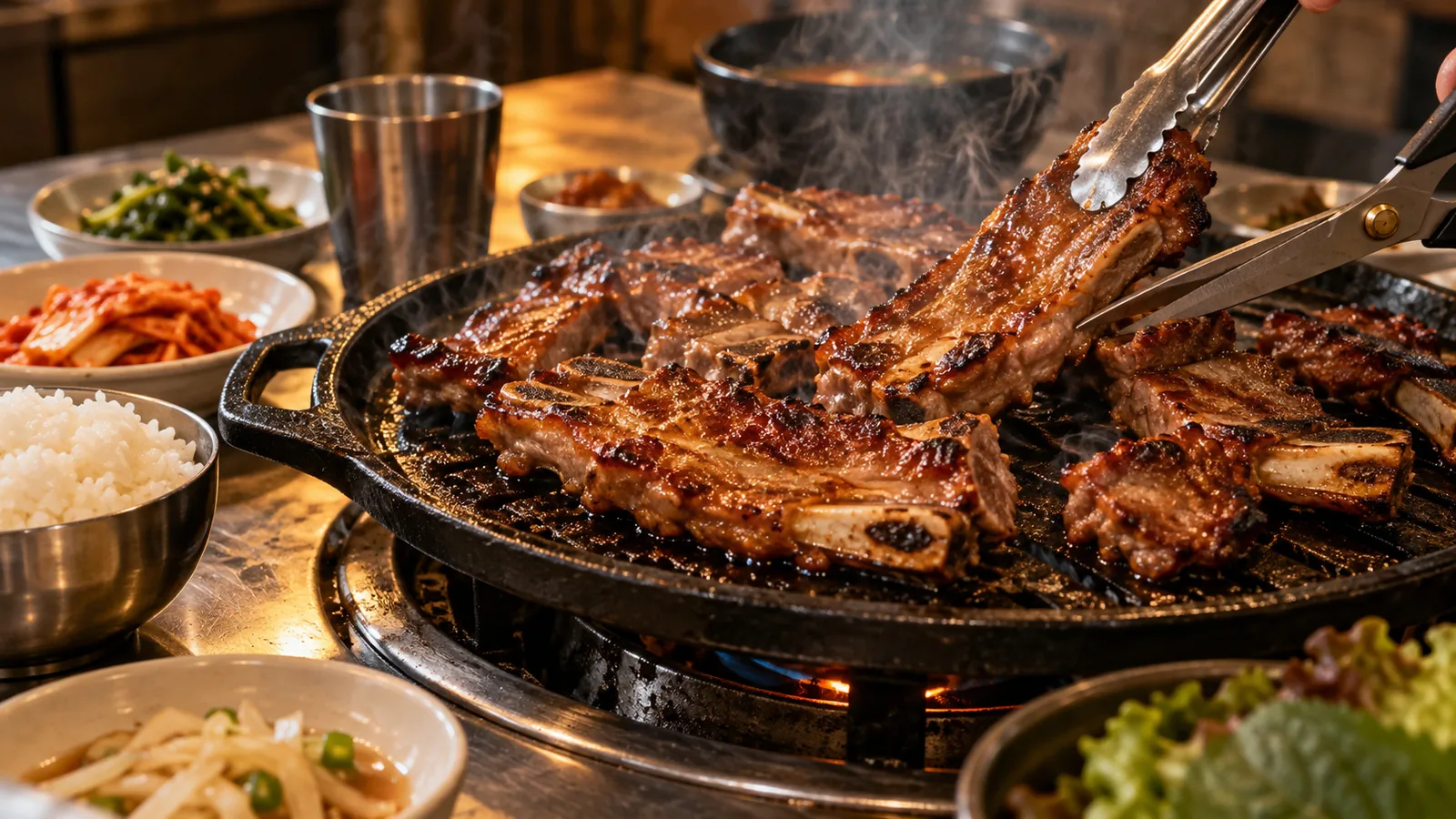
Choryang dwaeji galbi in one line
Cross one road from Busan Station and you reach the pork rib alley of Choryang-dong, where soy-marinated pork ribs are grilled at the table. It is less a glossy restaurant street than a place where you can still feel the evenings of Busan's working port.
| Korean | 초량 돼지갈비 (Choryang dwaeji galbi) — Choryang 초량 (the neighborhood) + dwaeji 돼지 (pork) + galbi 갈비 (ribs) |
|---|---|
| Made of | Pork ribs marinated in a soy-based sauce (often with sugar, garlic and fruit), grilled at your table. Served with rice and side dishes. |
| Diet notes | Pork; soy sauce contains wheat and soy. Not vegetarian, not halal. |
| Spice | Not spicy — sweet and savory. Side dishes may be spicy. |
| When | Dinner, especially on the day you arrive in or leave Busan by train. |
Where it came from — refugees and dock workers
According to a 2026 KNN report, refugees from all over Korea gathered in Choryang during the Korean War (1950–53), and as goods flowed through Busan Port, dock workers settled here too. Pork ribs started at street stalls near Choryangcheon stream, where the little meat left on rib bones was marinated and cooked over a fire.
Stories also tell of dock workers, dusty after a day's work right after the war, eating pork ribs at Choryang Market (Bravo My Life, 2019). Through industrialization and company dinner culture in the 1970s–80s, the alley became one of Busan's best-known food streets.
The number of restaurants rose to 38 at its peak; about 12 remain today, and younger diners looking for an old-time atmosphere have been coming back (KNN, 2026).
The “pork bulgogi set meal (dwaeji bulbaek) street” near Choryang Six-way Junction is a different alley that started in the 1980s. The names are easy to mix up.
What it tastes like
- Soy marinade: each restaurant has its own soy-based marinade, so the balance of sweet and salty varies — and regulars have their favorites.
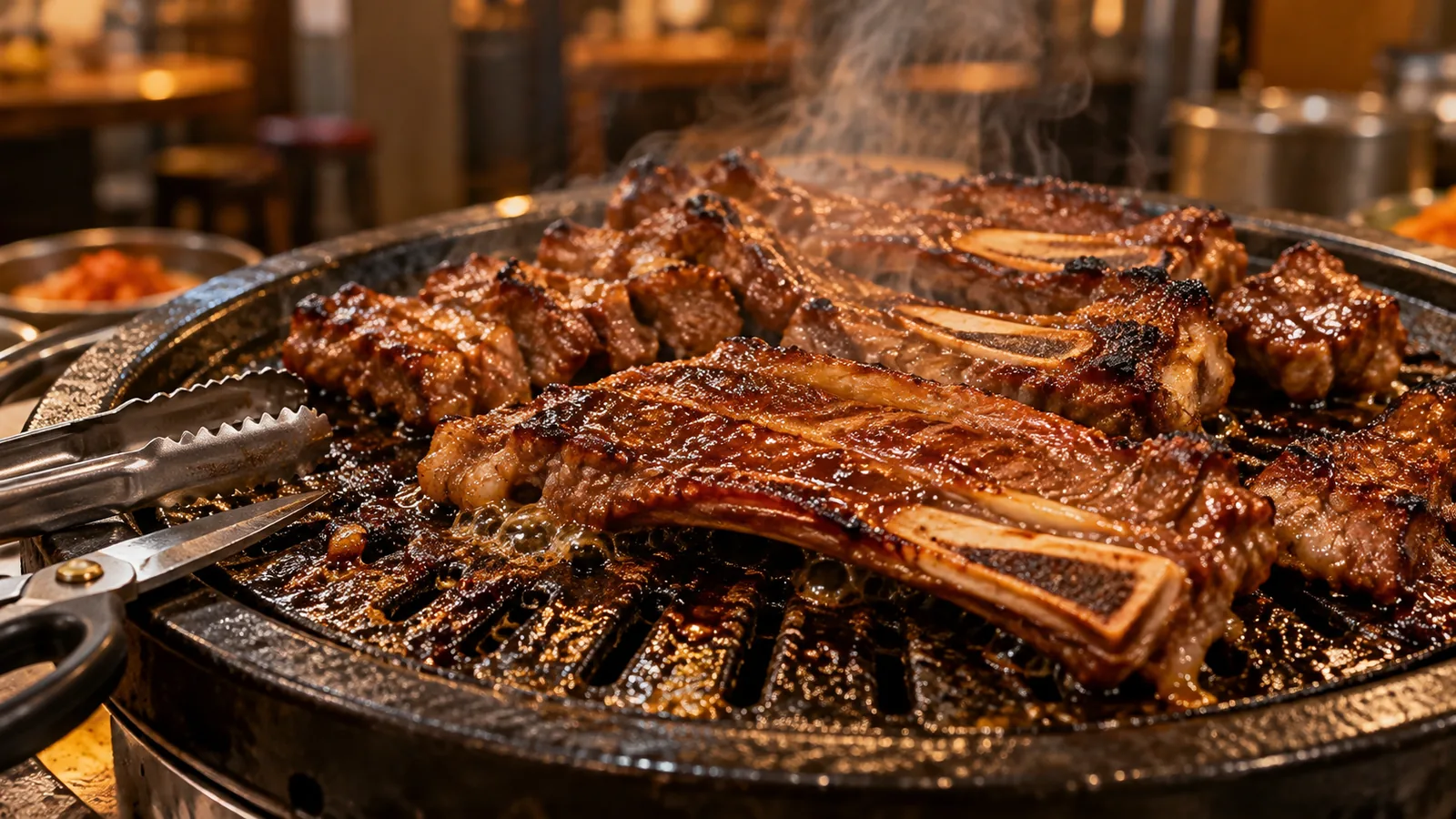
- Cast-iron grill: shop owners say they use thick cast-iron plates that keep the heat even (KNN).
- Meat and handwork: what the alley's owners stress most is the quality of the pork and the care in marinating it.
For another Busan pork rib story, see Samdae Dwaeji Bulgogi, a three-generation pork rib house in Sajik-dong.
Walk it with Choryang Ibagu-gil
The rib alley connects well with Choryang Ibagu-gil (“story road”). Opened in 2013, this roughly 1.5 km route runs from the old Namseon Warehouse site across from Busan Station up to the hillside Sanbok-doro road, passing the former Baekje Hospital building (1922), the 168 Stairs and the Kim Min-bu Observatory (Seoul Shinmun, 2015).
- Afternoon: climb the 168 Stairs along Ibagu-gil (there is also a small monorail) and look out over Busan Port from the observatory.
- Evening: come down through Choryang Traditional Market and have dinner in the rib alley.
- Nearby: Busan's Chinatown special zone, right in front of Busan Station, is also within walking distance.
| Getting there | Walk from Busan Station (KTX and Metro Line 1) or Metro Line 1 Choryang Station. See our Getting to Busan guide for trains and luggage storage at Busan Station. |
|---|
We don't rank or recommend specific restaurants. Prices and hours vary.
How to eat it
- Turn often: soy marinade burns quickly. If the grill is hot, flip more often.
- Bones last: cut off and eat the meat first with scissors, then grill the bits on the bone until crisp and pick them off at the end.
- Rice and stew: the marinade is rich, so it goes well with rice. Stews or noodles to finish differ by restaurant — check the menu.
- Finish with a night view: after dinner, head up toward Sanbok-doro for a view of the port at night.
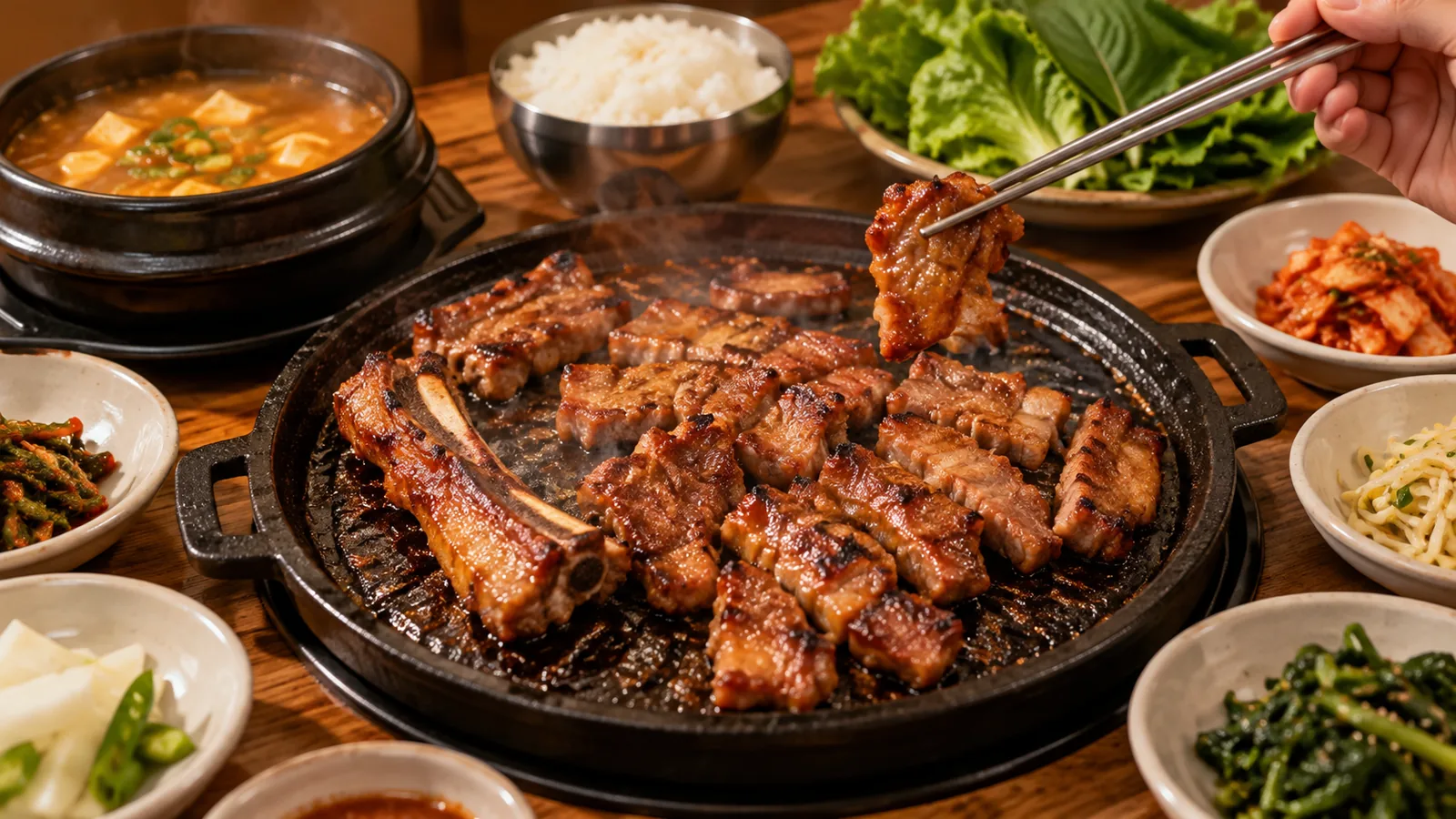
Ordering in Korean
| Pork ribs for two, please | 돼지갈비 2인분 주세요 (dwaeji galbi i-inbun juseyo) — most places require at least two servings |
|---|---|
| A bowl of rice, please | 공깃밥 하나 주세요 (gonggitbap hana juseyo) |
| Could you change the grill? | 불판 갈아 주세요 (bulpan gara juseyo) |
| The check, please | 계산해 주세요 (gyesan hae juseyo) |
FAQ
Where is the Choryang pork rib alley?
In Choryang-dong, Dong-gu, along Choryangcheon stream, across the road from Busan Station. You can walk from Busan Station or Choryang Station on Metro Line 1.
How old is the Choryang pork rib alley?
It is said to have started around the Korean War, when refugees and dock workers lived in Choryang and street stalls near the stream grilled marinated pork ribs. It became a food street in the 1970s–80s.
How many restaurants are there now?
There were 38 at its peak; about 12 remain, according to 2026 reports.
Is Choryang dwaeji galbi spicy?
No. The ribs are marinated in a sweet and savory soy-based sauce. Some side dishes may be spicy.
What can I see nearby?
Choryang Ibagu-gil (the 168 Stairs, Kim Min-bu Observatory, the former Baekje Hospital), Choryang Traditional Market and Busan's Chinatown are all within walking distance.
Sources
- [오래된 미래] 부산의 맛 초량돼지갈비골목...추억과 새로운 맛이 공존하는 공간 — KNN, May 22, 2026
- 피란수도 부산의 추억을 더듬는 길 '초량이바구길' — Bravo My Life (브라보마이라이프), Jan 21, 2019
- [명인·명물을 찾아서] 골목마다 짙게 묻어나는 서민들의 애환 — Seoul Shinmun (서울신문), Aug 3, 2015
Prices, minimum orders and opening hours differ by restaurant. This article is a food explainer, not a restaurant ranking or advertisement.
More Busan food
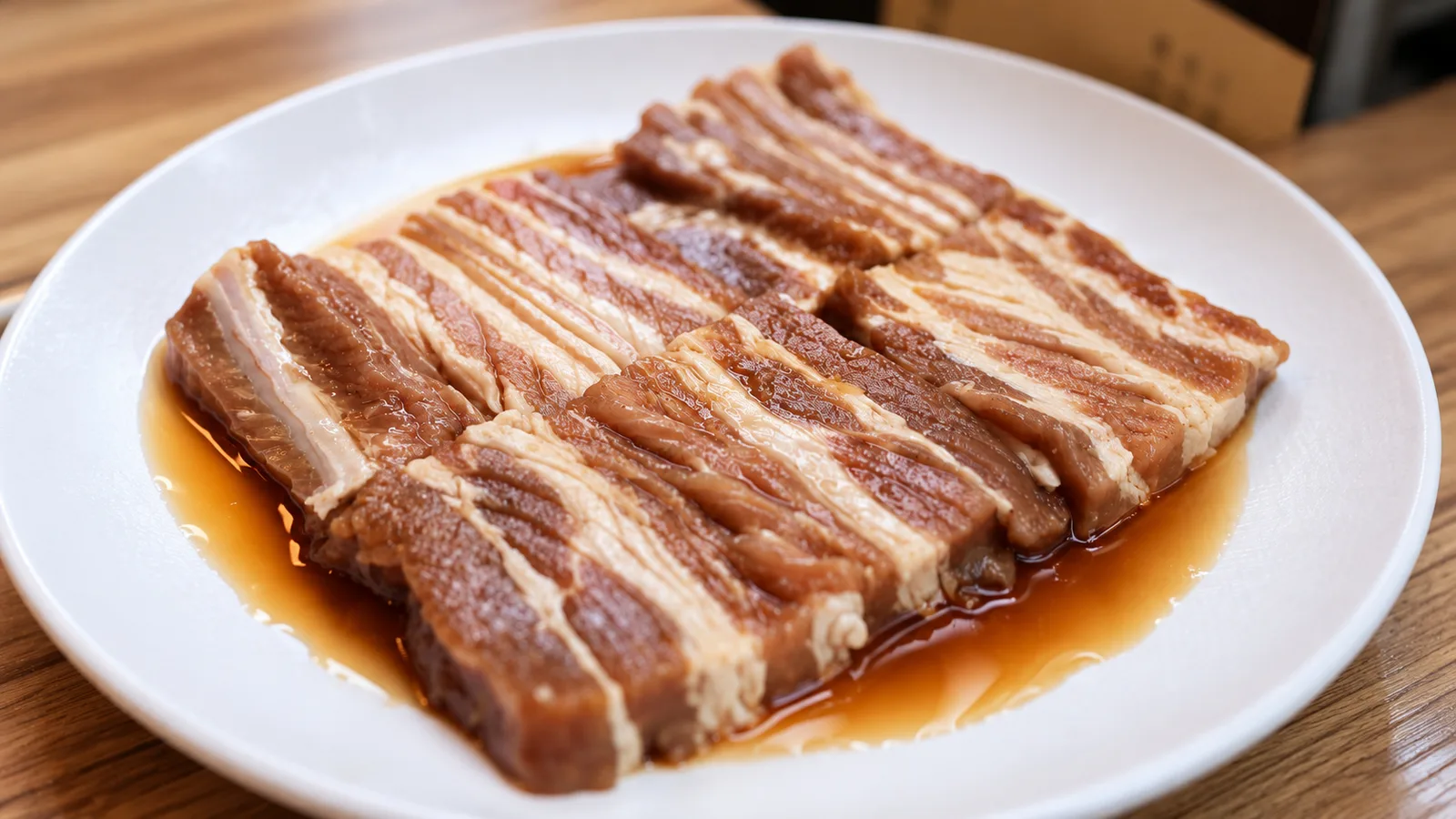
Samdae Dwaeji Bulgogi (Sajik-dong)
From a nameless coal-fire rib stall in Beomil-dong to Sajik-dong: grandmother, daughter and granddaughter
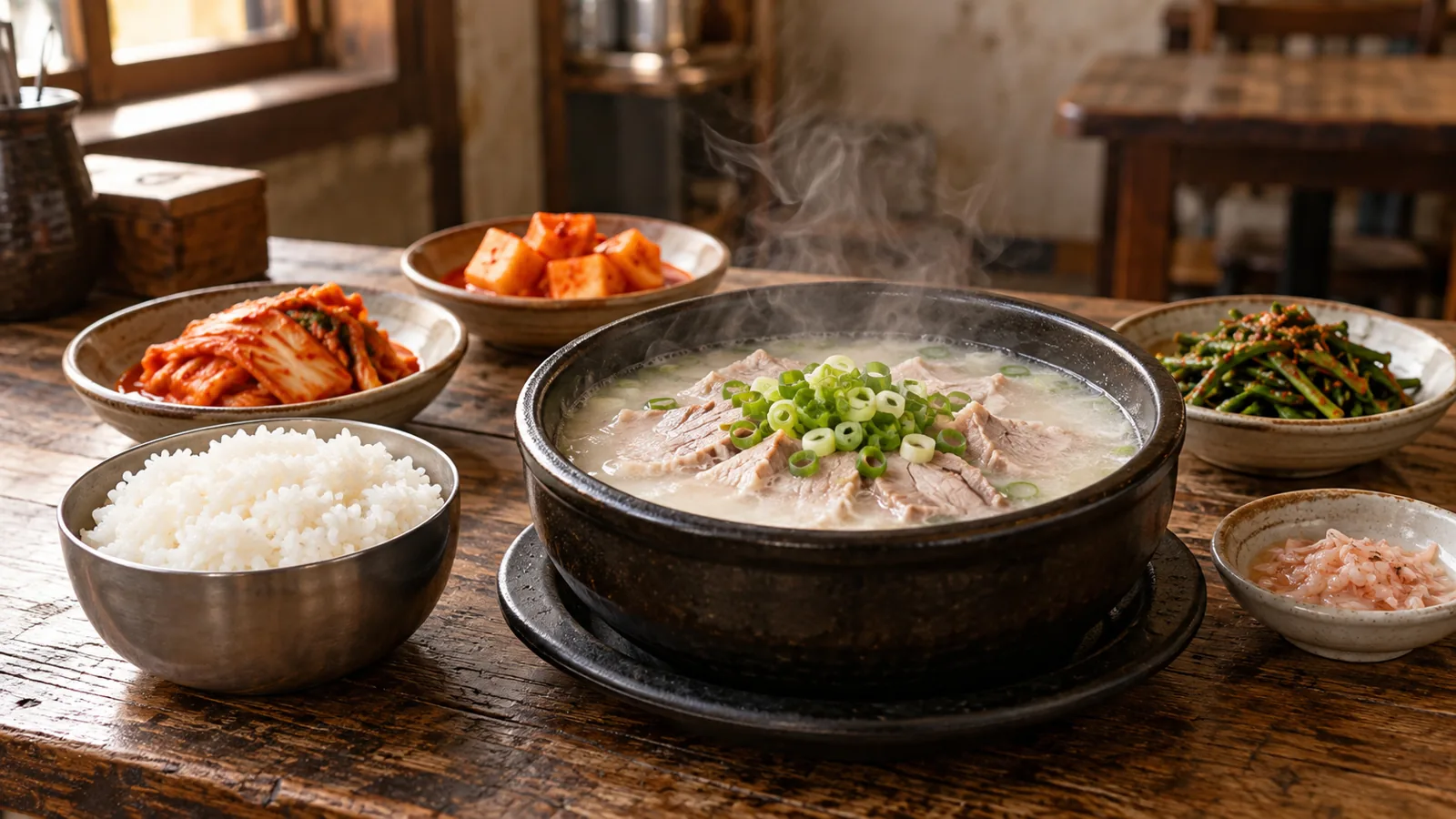
Dwaeji-gukbap (Busan Pork Rice Soup)
A fast, cheap, filling bowl that fed refugees and dock workers — and still Busan's go-to meal at any hour
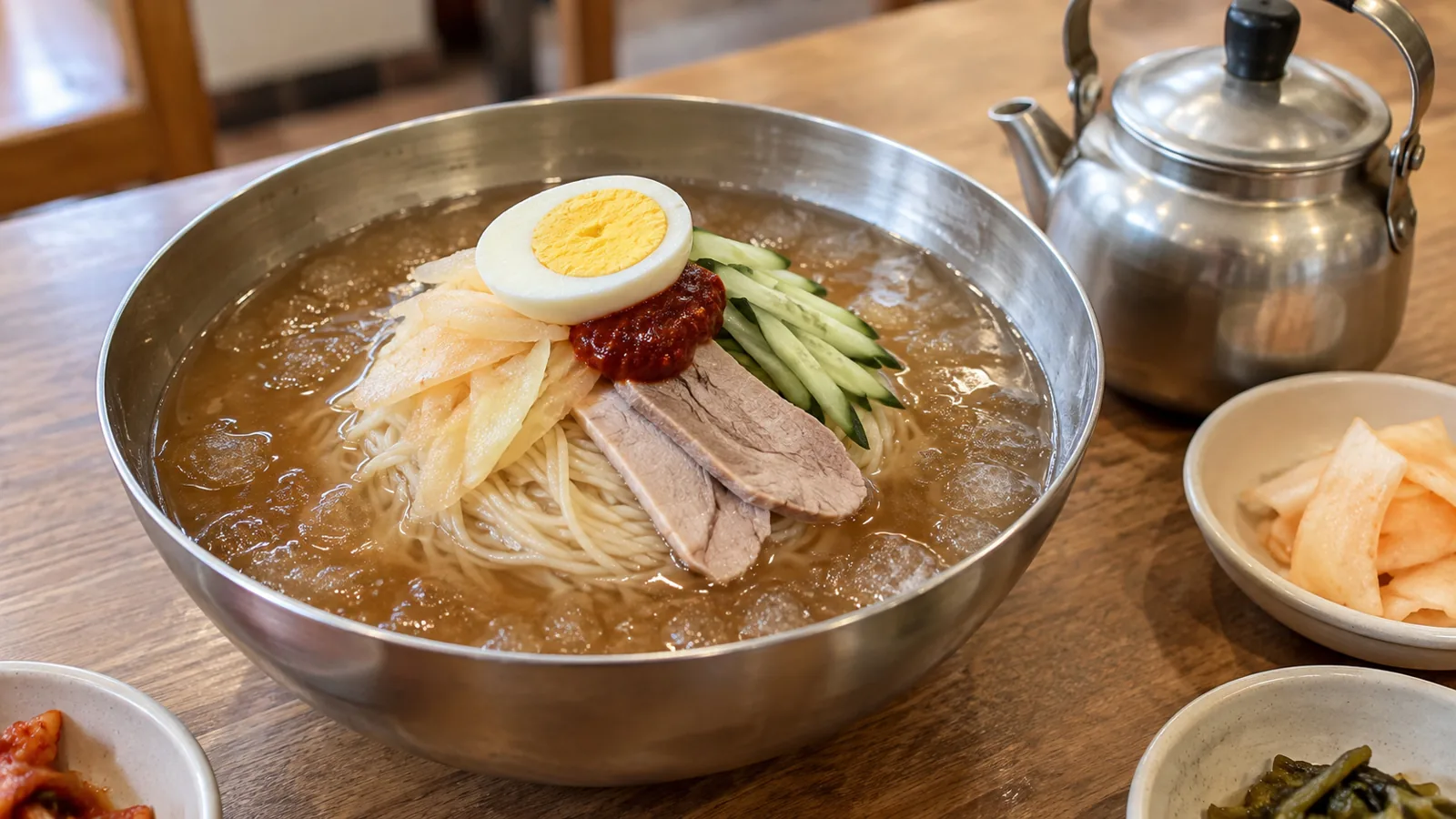
Milmyeon (Busan Wheat Noodles)
Born in the Korean War when refugees swapped buckwheat for aid flour — Busan's favourite summer noodle, eaten year-round
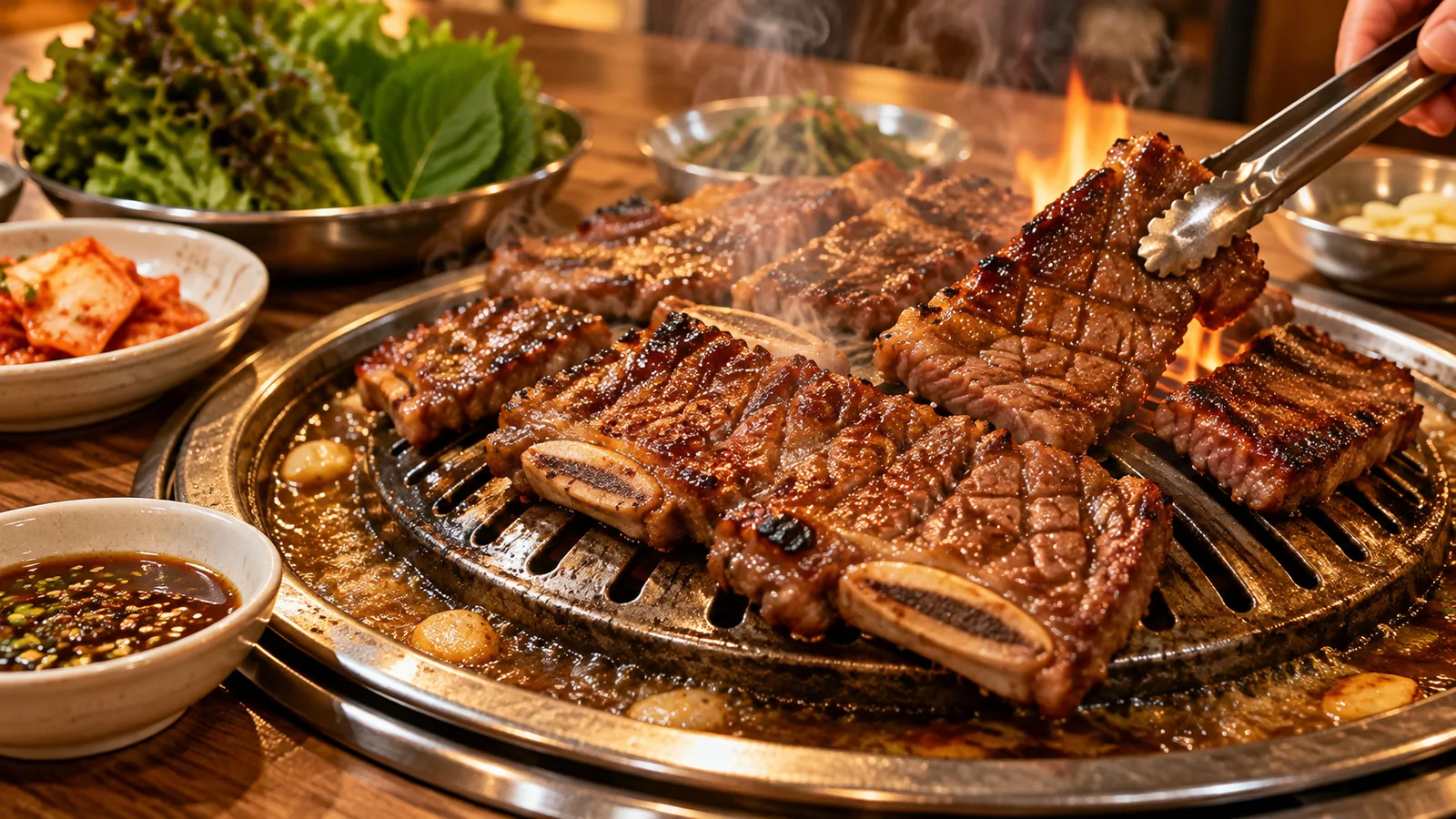
Haeundae Sogalbi (Beef Short Ribs)
Finely scored, lightly marinated beef ribs on a domed grill, finished with potato noodles cooked in the juices
← All Busan food · What to eat in Busan · Busan festivals & events