What to Eat in Busan — 25 Local Foods, From Pork Soup to Seed Hotteok
Busan's local dishes explained: soups, market snacks, seafood and grilled meats
Busan's food grew out of its port, its fish markets and the refugees who arrived during the Korean War. Must-tries are dwaeji-gukbap (pork and rice soup), milmyeon (cold wheat noodles), fish cakes, seed-filled hotteok and grilled seafood by the sea. This guide explains 25 local dishes and where they're usually eaten, with links to our detailed Korean articles.
Busan food in one minute
If you only have a day, eat a bowl of dwaeji-gukbap, a plate of milmyeon, fish cakes and ssiat-hotteok at the markets around Nampo-dong, and grilled shellfish or eel by the sea in the evening. Many Busan dishes are cheap, filling market food that took shape after the Korean War, when the city filled with refugees. We list dishes, not restaurant rankings.
| Where | What to eat |
|---|---|
| Nampo-dong · Jagalchi · Gukje & Kkangtong Markets | Fish cakes, seed hotteok, tteokbokki, glass noodles, grilled tripe, hagfish |
| Busan Station · Choryang | Pork ribs, pork soup |
| Haeundae · Gwangalli | Beef ribs, raw fish, grilled shellfish |
| Gijang | Sea eel, anchovies (spring), hagfish |
Soups and noodles
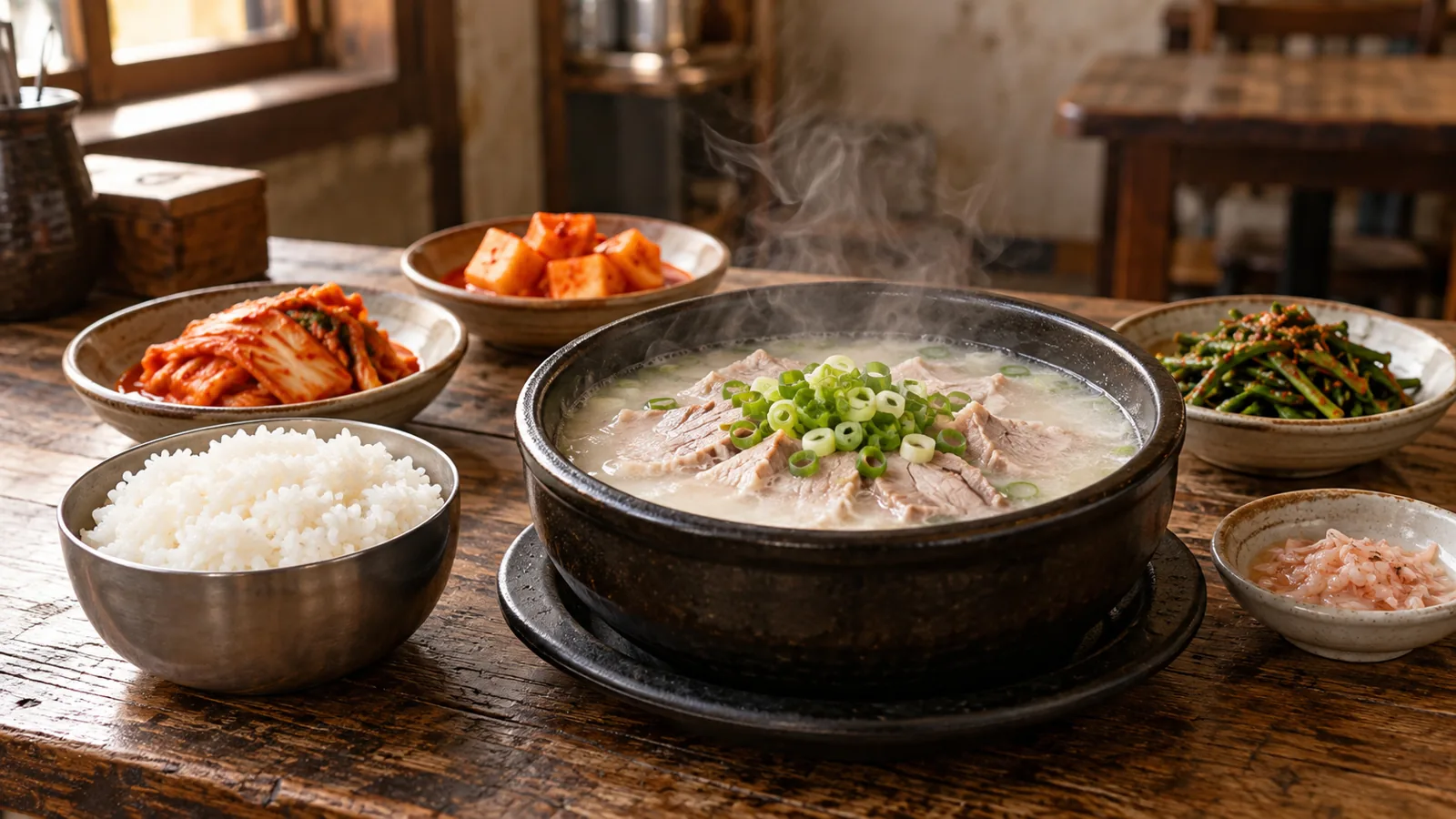
Dwaeji-gukbap — pork and rice soup 돼지국밥
Busan's signature dish: slices of boiled pork in a long-simmered pork bone broth, served with rice. Season it yourself with chives (jeonggu-ji), salted shrimp and chili paste. The most popular story links it to refugees in Busan during the Korean War, though some trace it to earlier market towns. More (Korean) →
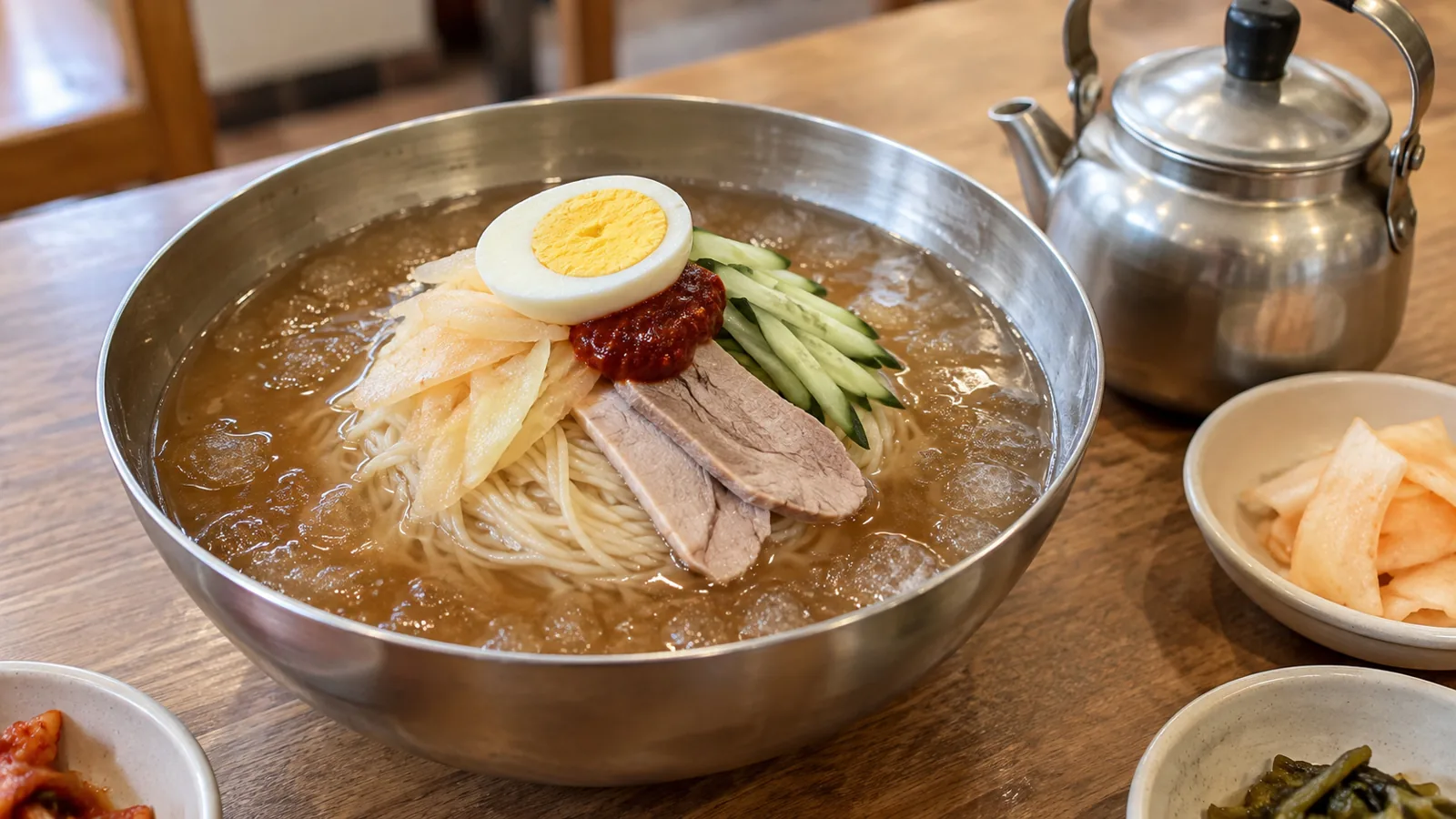
Milmyeon — Busan cold noodles 밀면
Chewy wheat-and-starch noodles in icy beef broth or a sweet-spicy sauce. It is said to have started when North Korean refugees in Busan, unable to find buckwheat, made naengmyeon with wheat flour from relief supplies. Perfect after grilled meat or on a hot day. More (Korean) →
Bokguk — pufferfish soup 복국
A clear, refreshing soup of prepared pufferfish with bean sprouts, water parsley and radish — a classic hangover cure, with specialist restaurants around Jagalchi and Nampo-dong. Choose clear (jiri) or spicy (maeuntang). More (Korean) →
Jaecheop-guk — marsh clam soup 재첩국
A light, clear soup of tiny clams from the Nakdong River estuary, topped with chives. Once sold door to door at dawn, it is still a Busan breakfast and hangover favorite. More (Korean) →
Daegutang — cod soup 대구탕
A clear winter soup of cod with radish, green onion and water parsley. Cod returns each winter to the bay around Gadeokdo, long famous for its catch. More (Korean) →
Market snacks
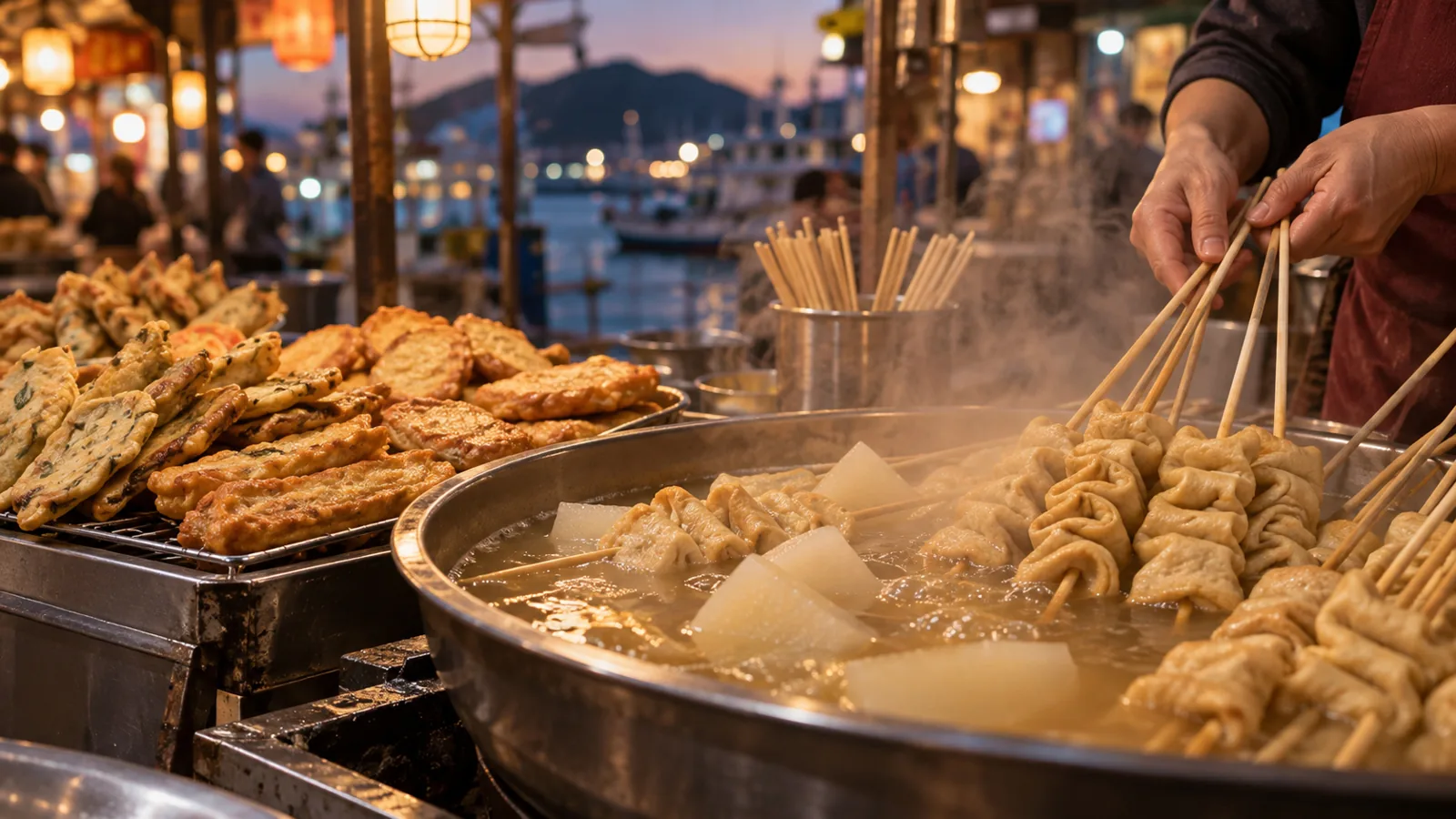
Busan eomuk — fish cakes 부산어묵
Busan has made fish cakes for over a century, from Bupyeong Market to the factories of Yeongdo. Eat skewers from a steaming pot at a market stall and drink the broth. More (Korean) →
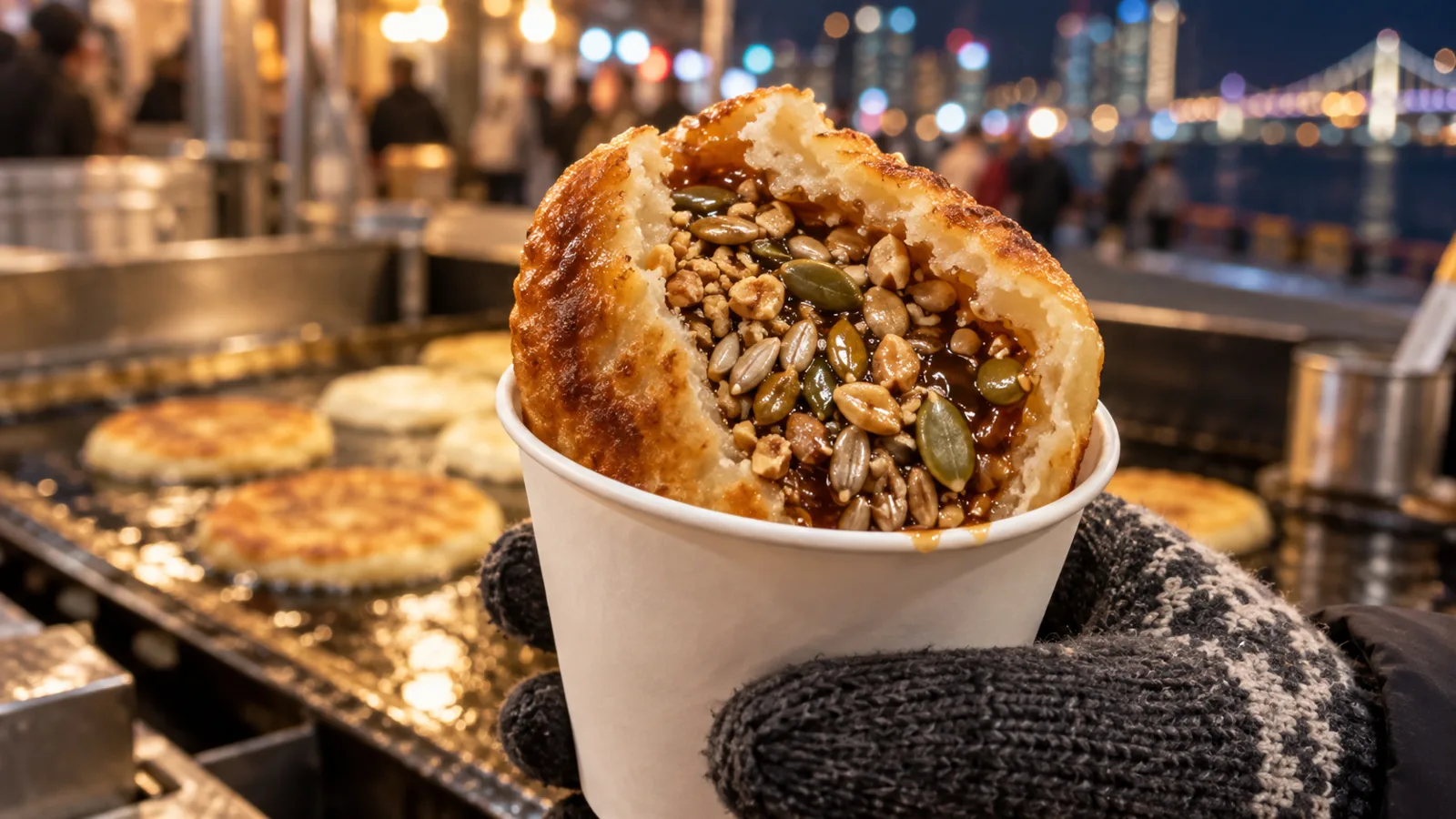
Ssiat-hotteok — seed-filled pancakes 씨앗호떡
A fried sweet pancake split open and stuffed with sunflower seeds, pumpkin seeds and peanuts — the street snack of BIFF Square in Nampo-dong, said to date from the 1980s. More (Korean) →
Busan tteokbokki and mulddeok 부산 떡볶이 · 물떡
Busan market tteokbokki uses thick, long rice cakes simmered whole in red sauce — cut them with scissors. Next to it you'll find mulddeok: rice cake skewers soaked in fish-cake broth. More (Korean) →
Bibim-dangmyeon — mixed glass noodles 비빔당면
Boiled glass noodles mixed with spicy sauce, pickled radish, fish cake and spinach — a cheap, quick bowl from the food alleys of Gukje Market and Bupyeong Kkangtong Market. More (Korean) →
Yubu-jumeoni — tofu pouches 유부주머니
Fried tofu pouches stuffed with glass noodles and vegetables, cooked in hot broth — a winter favorite at Bupyeong Kkangtong Market. More (Korean) →
Seafood
Gomjangeo — grilled hagfish 곰장어(꼼장어)
Hagfish grilled over charcoal or straw fire with a spicy sauce or just salt — a classic Busan drinking snack around Jagalchi and Gijang. More (Korean) →
Hoe-guksu — spicy raw-fish noodles 회국수
Thick noodles with vegetables and chewy raw skate, mixed with sweet-sour chili sauce. A dock-side dish that became a Nampo-dong favorite. More (Korean) →
Bungjangeo-hoe — finely sliced sea eel 붕장어회
Sea eel sliced finely with its tiny bones, squeezed dry and piled high, eaten with soybean-powdered greens and chili sauce. Chilam in Gijang is the eel village. More (Korean) →
Jogae-gui — grilled shellfish 조개구이
Scallops, pen shells and clams grilled at seaside restaurants in Taejongdae, Cheongsapo and Songdo's Amnam Park. Eat them when the shells open and the juice bubbles. More (Korean) →
Go-galbi — grilled mackerel 고갈비
Salted mackerel grilled over high heat — once the cheap drinking snack of students, with an old go-galbi alley in Gwangbok-dong. More (Korean) →
Gijang anchovies (spring) 기장 멸치
Big anchovies caught at Daebyeon Port in Gijang, eaten in spring as raw anchovy salad, stew or lettuce wraps. More (Korean) →
Grilled meats and spicy pots
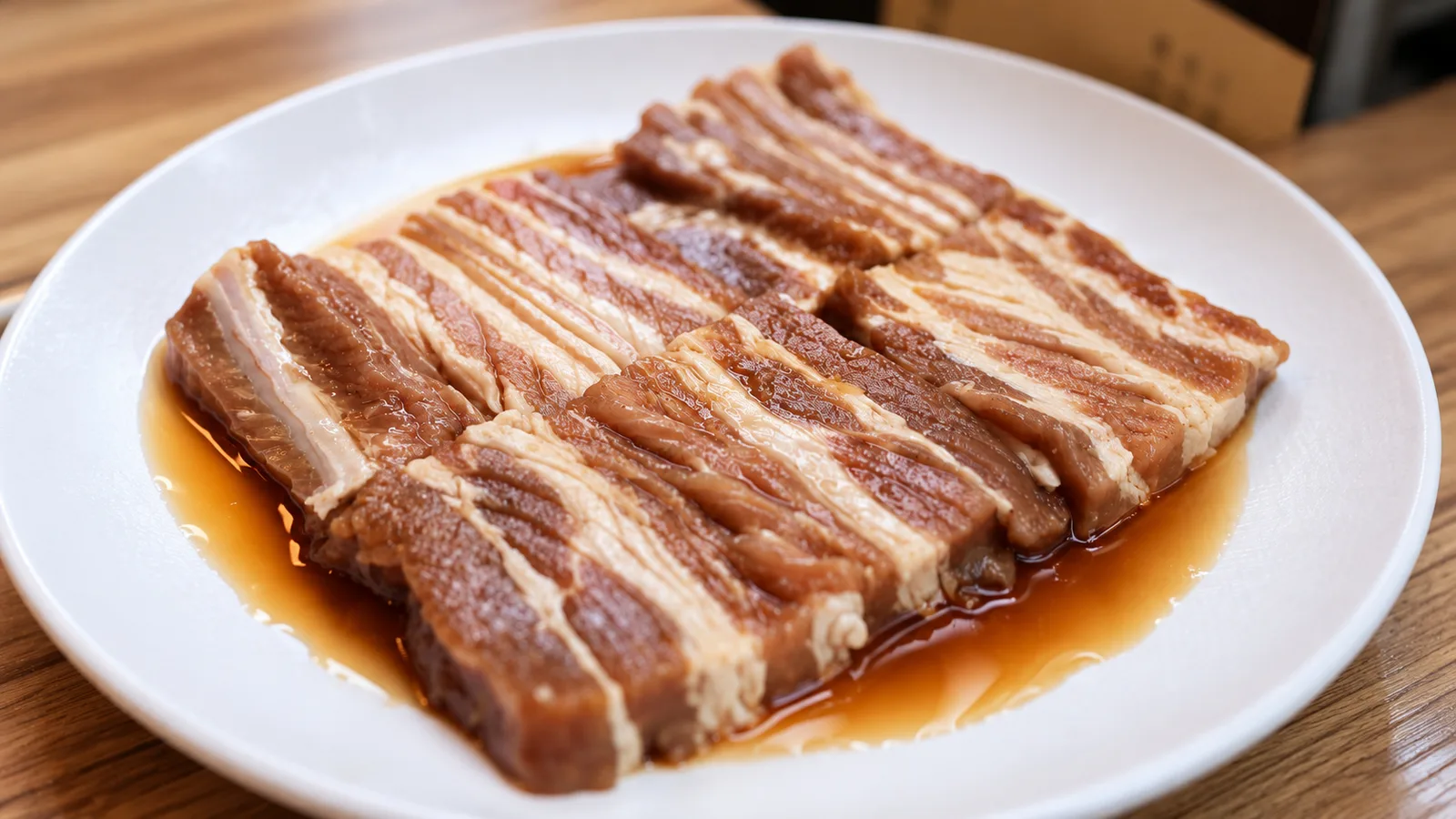
Busan pork ribs — Samdae Dwaeji Bulgogi 사직동 삼대돼지불고기
Started in 1970 by a grandmother who grilled pork ribs over coal briquettes in Beomil-dong, this rib house has been passed from grandmother to daughter to granddaughter and is now in Sajik-dong. Thick ribs in a light soy marinade aged with wild herbs and sweetened with Naju pears; not a chain. More (Korean) →
Choryang pork rib alley 초량 돼지갈비
An alley of marinated pork rib restaurants across from Busan Station, said to have begun with refugees and dock workers grilling ribs at street stalls after the Korean War. More (Korean) →
Haeundae beef ribs 해운대 소갈비
Haeundae's famous beef short ribs, finely scored and lightly marinated, grilled on a domed plate — finish with potato noodles cooked in the juices. More (Korean) →
Yang-gopchang — grilled tripe and intestines 양곱창
Beef tripe and intestines grilled over charcoal in the alley next to Jagalchi Market — smoky and rich. More (Korean) →
Nakgopsae — spicy octopus, tripe and shrimp 낙곱새
A spicy pot of small octopus, beef intestines and shrimp, eaten over rice — born near the old Joseon Textile factory in Beomil-dong. More (Korean) →
More local favorites
Dongnae-pajeon — green onion pancake 동래파전
A thick pancake of whole green onions, seafood, rice-flour batter and egg, steamed under a lid — said to have been offered to the king in the Joseon era. More (Korean) →
Naengchae-jokbal — cold pig's trotters 냉채족발
Sliced pig's trotters with jellyfish and vegetables under a sharp garlic-mustard sauce — the star of the Bupyeong-dong jokbal alley. More (Korean) →
Gupo-guksu — Gupo noodles 구포국수
Noodles in anchovy broth, named after Gupo in Buk-gu, once home to many noodle factories. More (Korean) →
Geumjeong Sanseong makgeolli 금정산성막걸리
Traditional rice wine brewed with wheat nuruk in the mountain fortress village of Geumjeongsan — designated Korea's first traditional folk liquor in 1980. More (Korean) →
Tips for eating in Busan
- Many gukbap and market stalls open early and some close by mid-afternoon; seafood restaurants by the sea are busiest in the evening.
- Most places take cards; small market stalls may prefer cash.
- Menus are often Korean only — photos or the Korean dish names in this guide help when ordering.
- Dishes with raw fish and shellfish are seasonal; ask what's fresh.
FAQ
What food is Busan famous for?
Dwaeji-gukbap (pork and rice soup), milmyeon (cold wheat noodles), fish cakes (eomuk), seed-filled hotteok, and seafood such as grilled hagfish, sea eel and grilled shellfish.
Where can I try Busan street food?
Around Nampo-dong: BIFF Square, Gukje Market and Bupyeong Kkangtong Market have fish cakes, seed hotteok, tteokbokki and glass noodles.
What is milmyeon?
Busan's cold noodles, made with wheat flour and starch and served in icy broth or a spicy sauce. It is said to have been created by refugees as a substitute for buckwheat naengmyeon.
Sources
- Busan.net Korean food articles (sources listed on each page) — Busan.net, Oct 25, 2026
Schedules, seats and traffic plans can change. Please check the official notice before you go.
More Busan guides
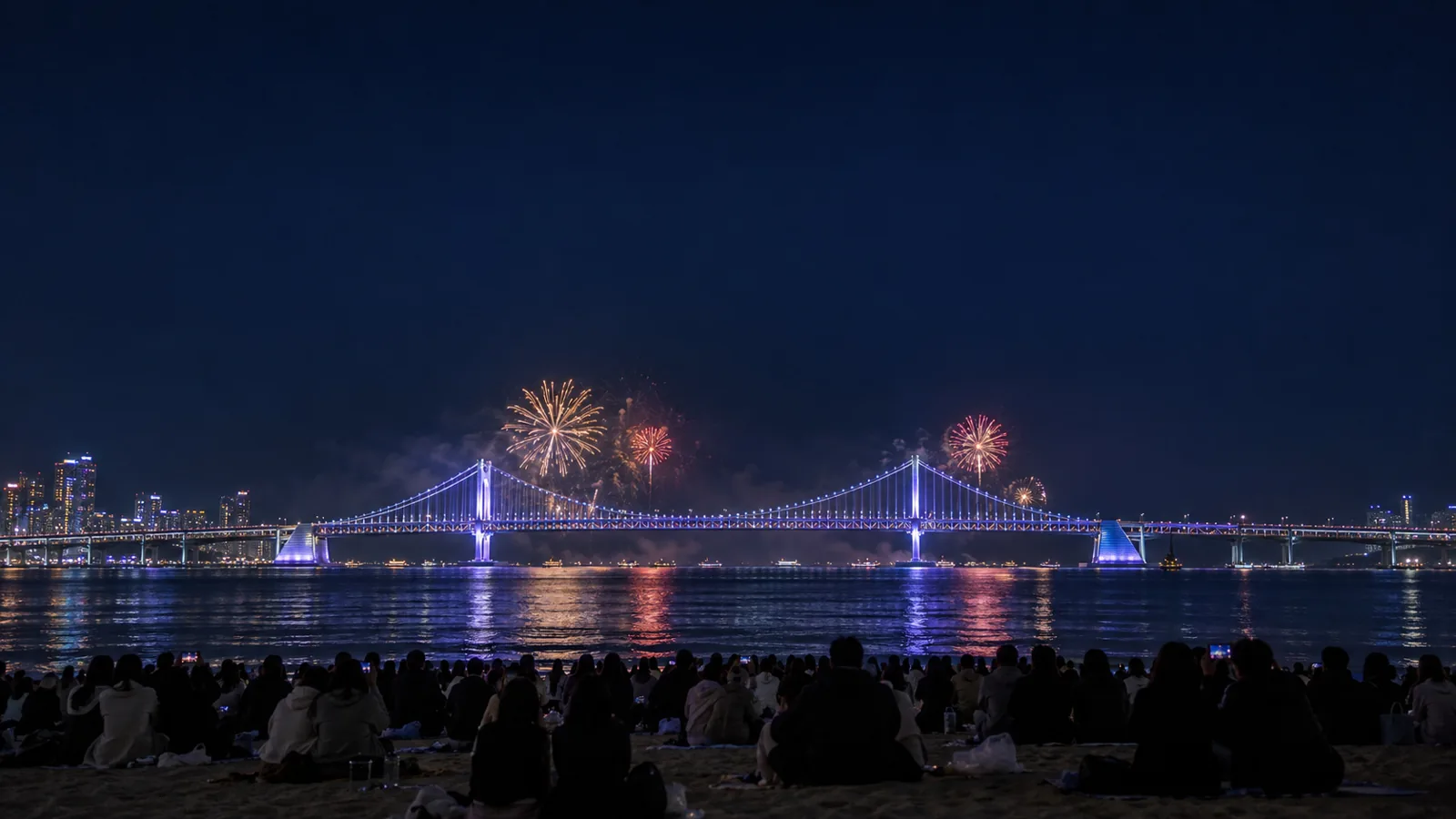
Busan Fireworks Festival 2026
Saturday, November 7, 2026 · Gwangalli Beach and Gwangan Bridge
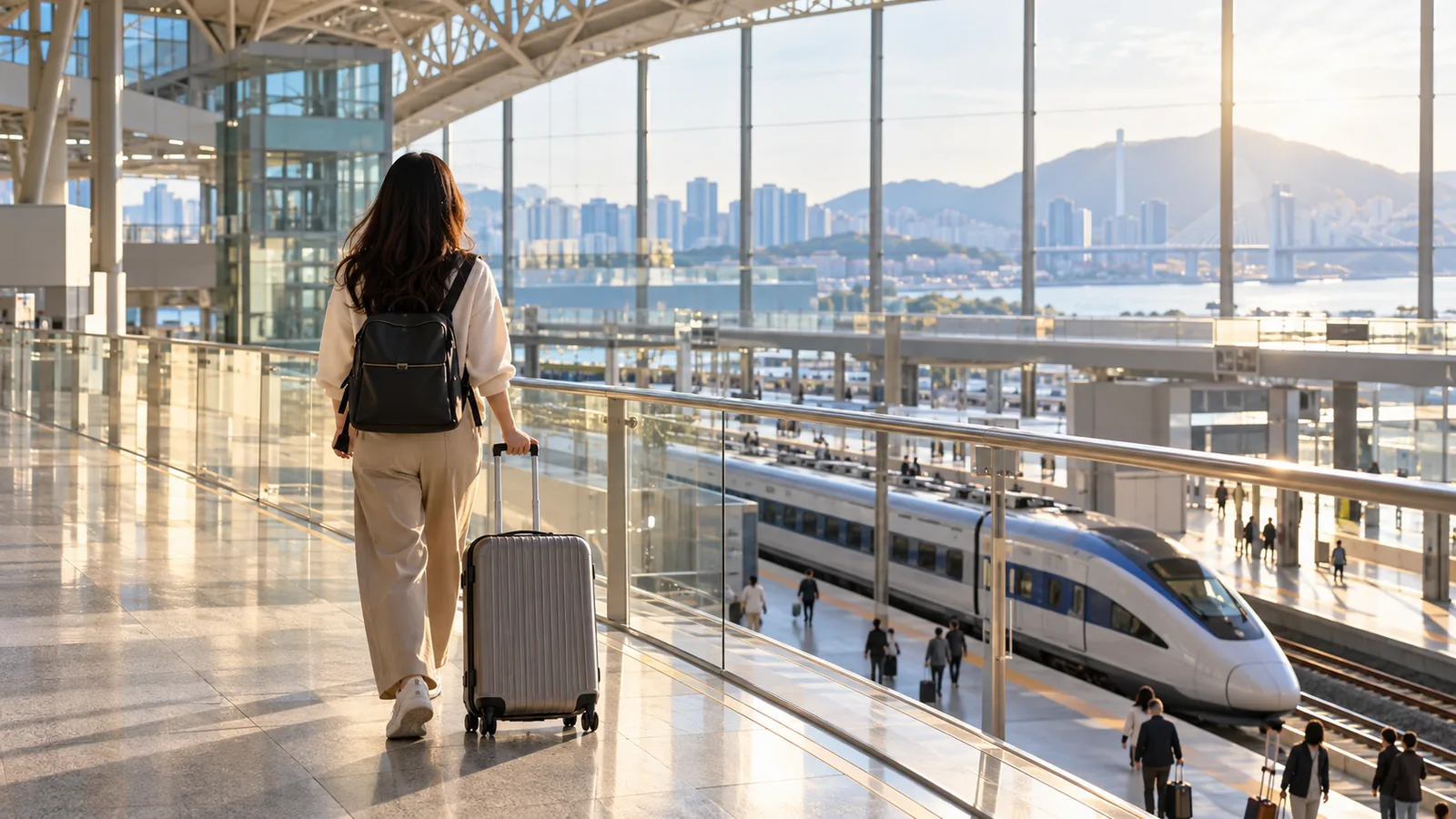
Getting to Busan
Airport rail, limousine buses, KTX from Seoul, ferries from Japan, and getting around once you arrive

G-STAR 2026
Korea's biggest game show · BEXCO, Haeundae-gu, Busan · Online tickets only
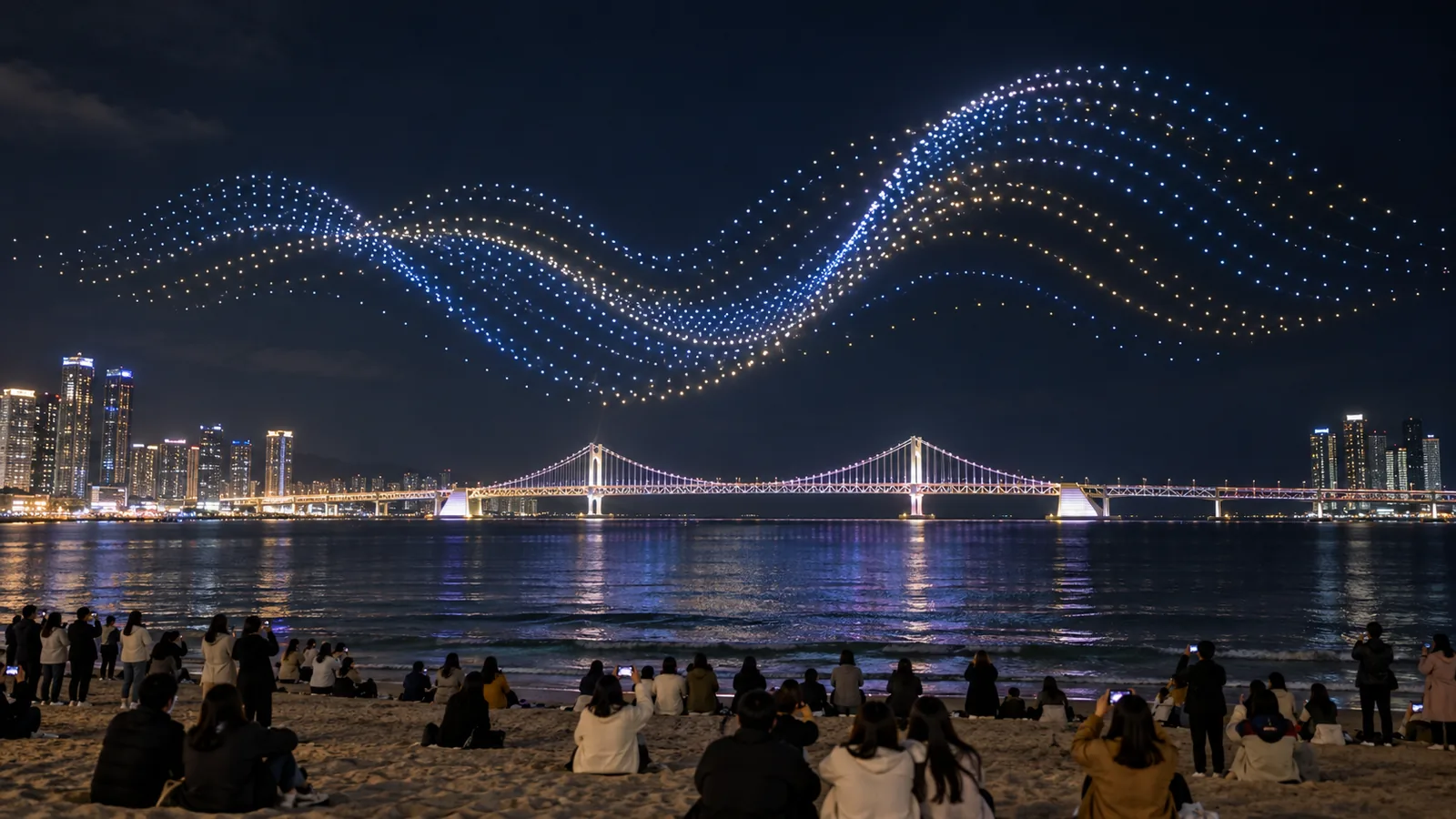
Gwangalli Drone Light Show
Free · every Saturday evening over Gwangalli Beach, Busan
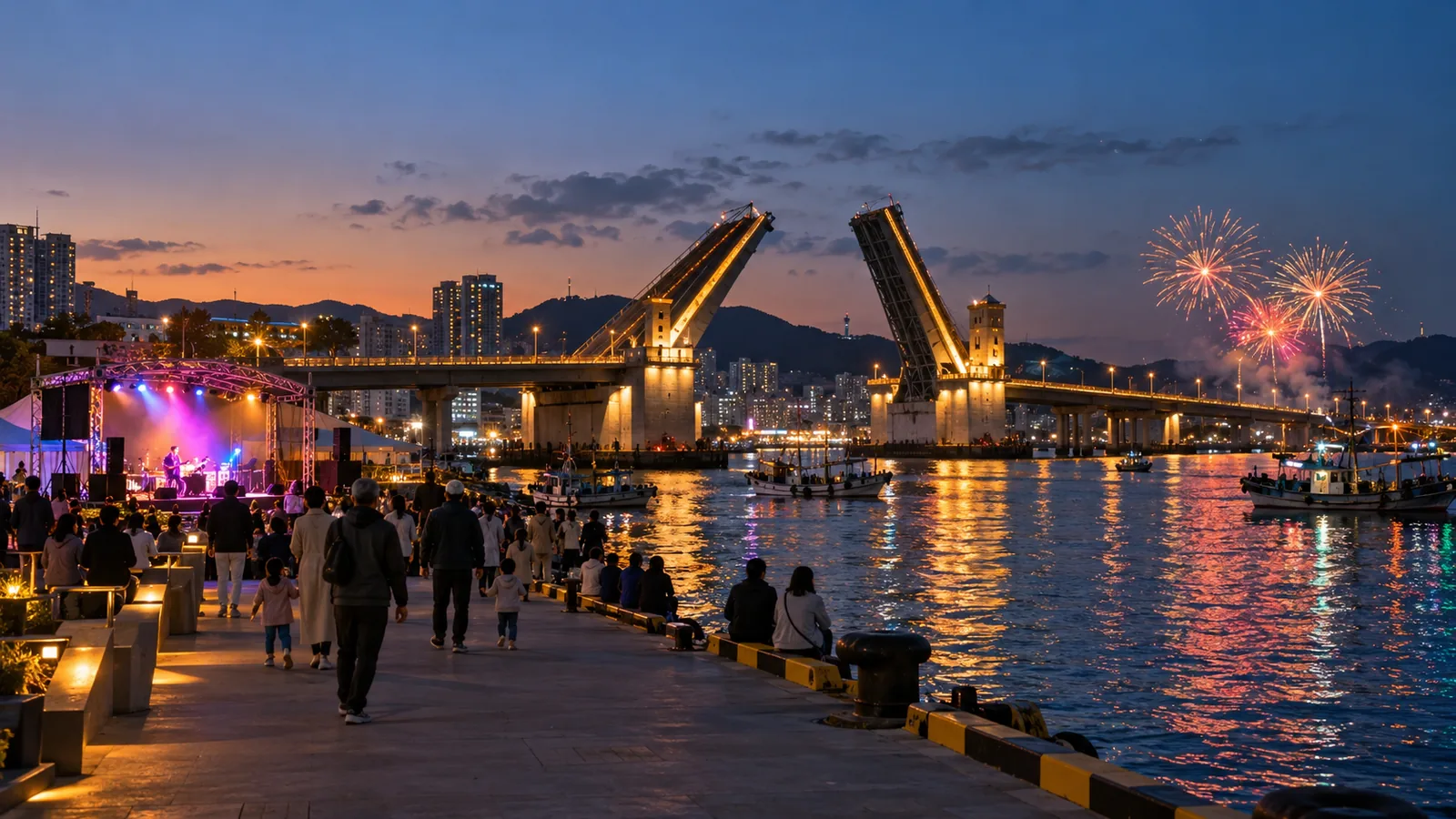
Yeongdo Bridge Festival 2026
Free festival on Yeongdo island · harbor-side stage, sea fireworks, a parade on the drawbridge
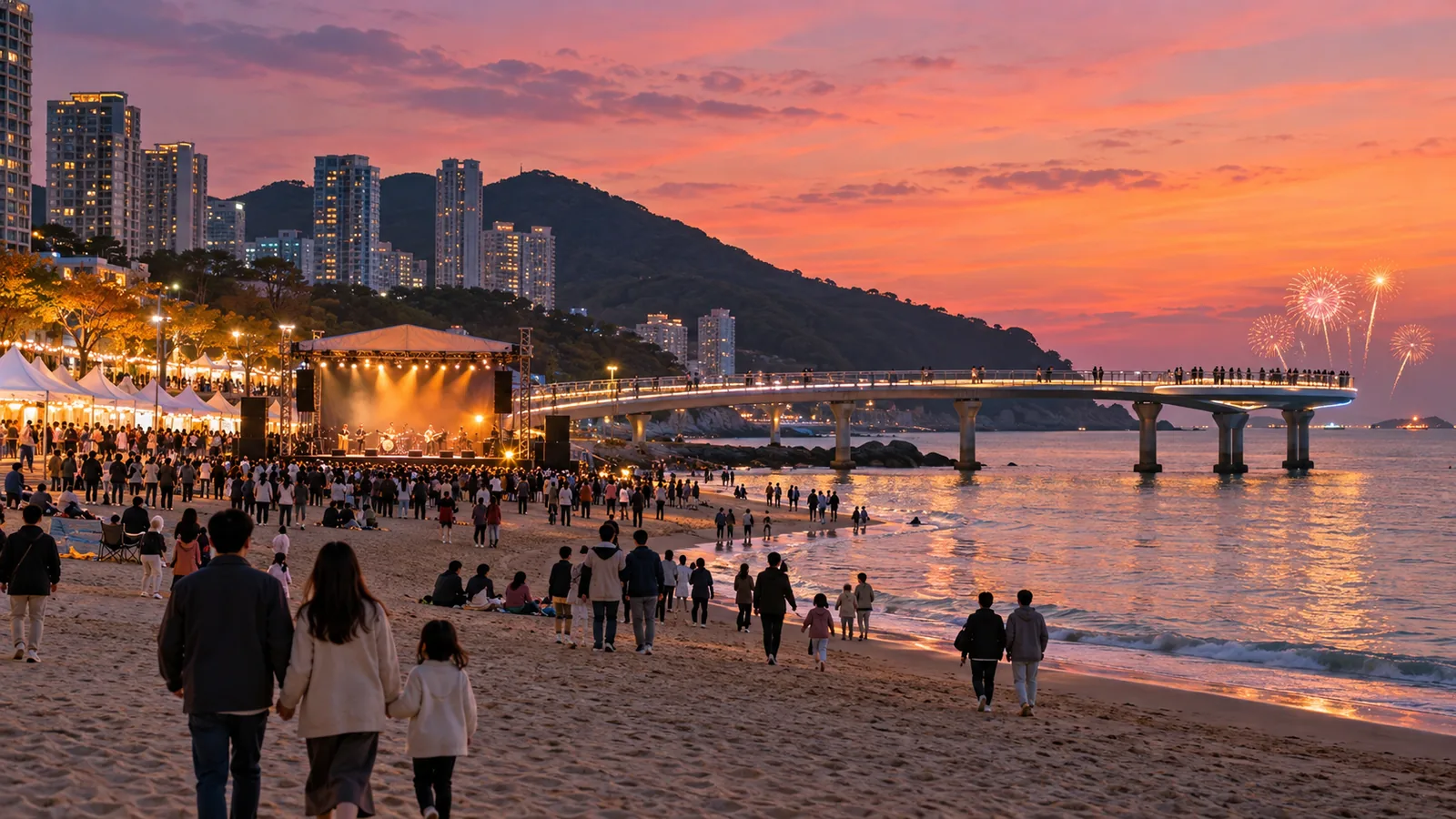
Busan Mackerel Festival 2026
Free seaside festival at Songdo Beach · bare-hand mackerel catching, auctions, opening-night fireworks