Milmyeon — Busan's Cold Wheat Noodles: Origin, Taste, How to Eat It
Born in the Korean War when refugees swapped buckwheat for aid flour — Busan's favourite summer noodle, eaten year-round
Milmyeon (밀면, "wheat noodles") is Busan's own version of naengmyeon: chewy noodles made from wheat flour mixed with sweet-potato or potato starch, served in an icy, slightly sweet beef or pork broth or with a sweet-spicy chili sauce. It is widely said to have begun during the Korean War, when North Korean refugees in Busan couldn't get buckwheat and used aid wheat flour instead. It's cheap, quick and sold all over the city.
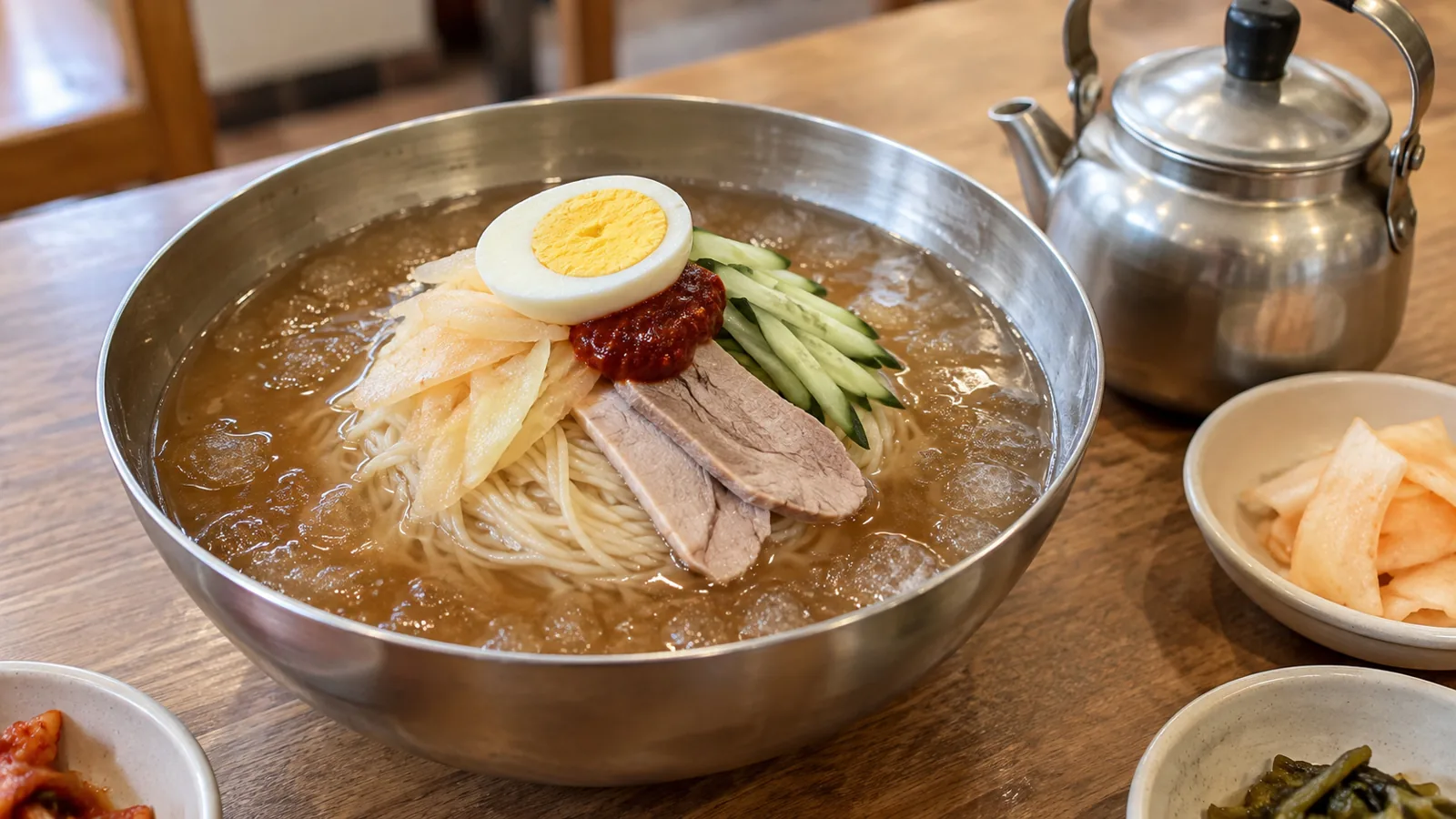
Milmyeon in one line
It looks like naengmyeon (Korean cold noodles), but the noodles are made with wheat flour instead of buckwheat, so they're softer and chewier. For Busan locals it's the first thing that comes to mind on a hot day.
| Korean | 밀면 (mil-myeon) — "wheat noodles" |
|---|---|
| Two styles | Mul milmyeon (물밀면) in cold broth · Bibim milmyeon (비빔밀면) with spicy sauce |
| Contains | Wheat (gluten), beef or pork broth, usually meat slices and a boiled egg. Not vegetarian. |
| Spice | Mul: mild, the red sauce is stirred in. Bibim: noticeably spicy and sweet. |
| Price | Usually a little cheaper than naengmyeon, which averaged about ₩11,700 a bowl in Busan in April 2026 (Korea Consumer Agency survey). |
Origin — refugees' naengmyeon becomes Busan's milmyeon
- Refugees missing home: During the Korean War (1950–1953), refugees from Hamhung and Pyongyang wanted their hometown cold noodles, but buckwheat flour and potato starch were hard to find in Busan.
- Aid flour: They used wheat flour that arrived as US aid. Because it was plentiful and cheap, milmyeon spread as a working people's meal.
- Trial and error: Wheat alone made noodles that broke easily, so cooks added sweet-potato starch to get the springy texture.
- Refugee neighbourhoods: The first milmyeon shops appeared where refugees lived, such as Uam-dong's Somak village in Nam-gu and the Gaegeum, Gaya and Danggam-dong area.
A shop in Uam-dong is often called the first, but no record settles who was first, so several shops tell their own history. In hard times people drank cups of warm broth to fill up — which is why many milmyeon shops still serve a kettle of hot broth with your bowl.
What it tastes like — noodles, broth, sauce
Noodles
Wheat flour mixed with sweet-potato or potato starch. The starch keeps them springy even when ice-cold. They're softer than buckwheat naengmyeon and a little thicker than thin somyeon.
Broth
Usually made from pork bones or beef. Many shops add medicinal herbs such as angelica root and licorice to remove meaty smells, so you may notice a faint herbal aroma. The broth is generally sweeter than naengmyeon broth, and every shop's recipe is different.
Toppings
A sweet-spicy chili paste, thin slices of meat, cucumber strips, pickled radish and half a boiled egg.
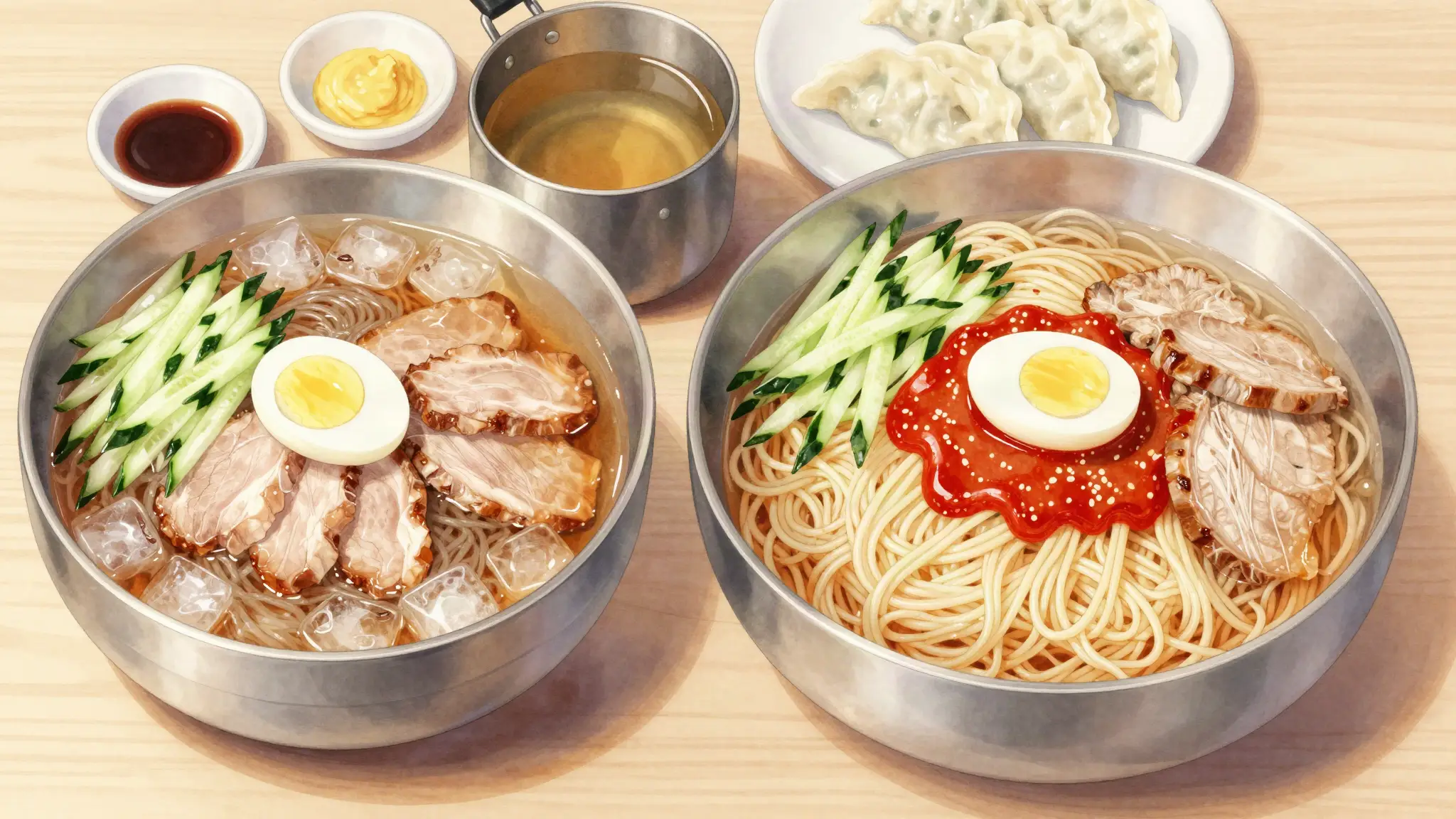
Mul milmyeon or bibim milmyeon?
| Mul milmyeon (물밀면) | Bibim milmyeon (비빔밀면) | |
|---|---|---|
| How | In cold broth | Mixed with spicy sauce, little or no broth |
| Taste | Refreshing, sweet-sour, broth-forward | Spicy, sweet and rich |
| Good for | First-timers, hot days, mild palates | People who like spicy food |
Some shops also sell on-milmyeon (온밀면) in warm broth for the winter.
How to eat it
- Taste the broth first: Each shop's broth is different, so try it plain.
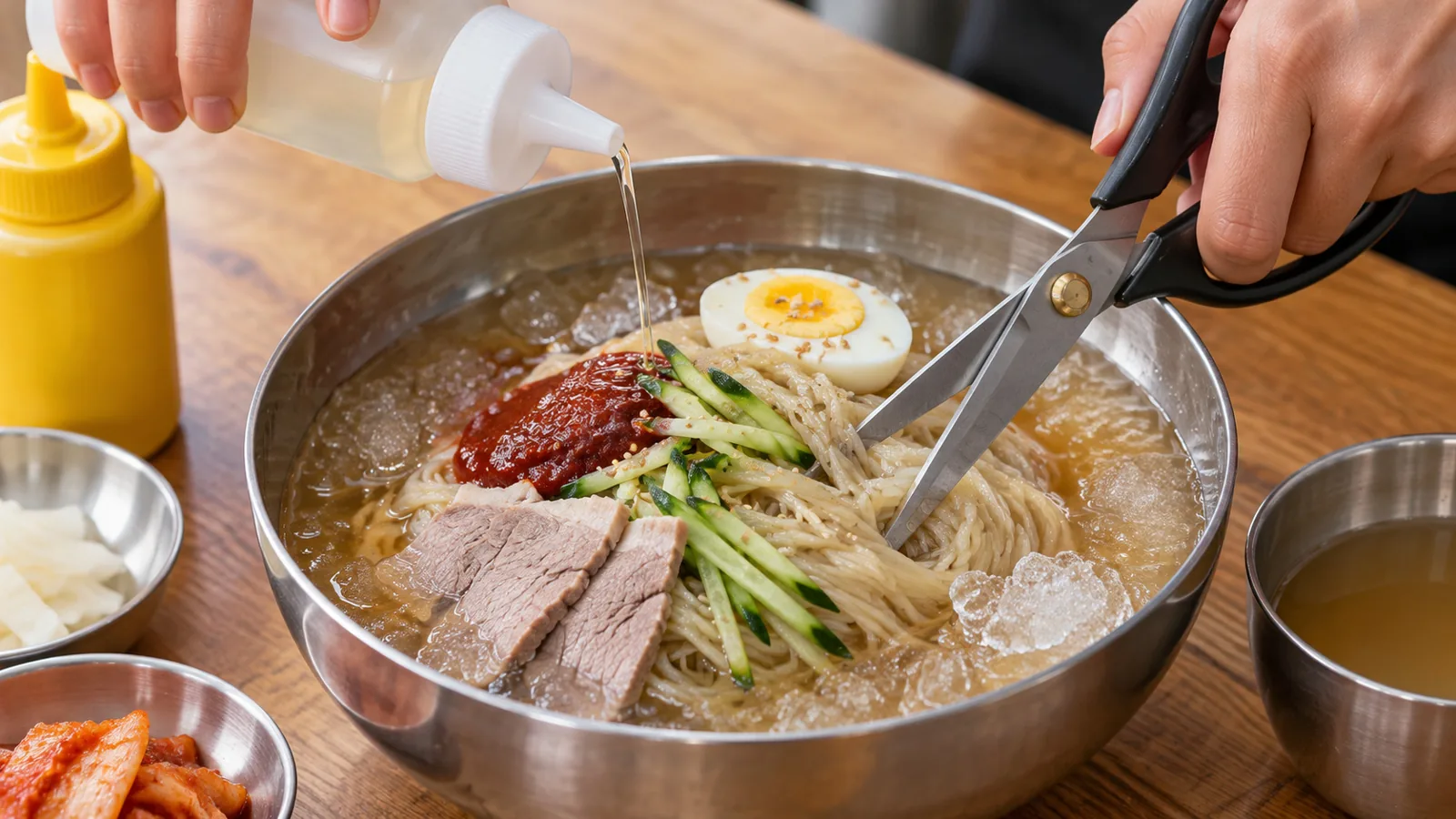
- Add vinegar and mustard later: Halfway through, add a little vinegar (식초) and mustard (겨자) from the table to change the flavour.
- Scissors, but only once or twice: Staff may offer scissors; the noodles are soft, so one or two cuts is enough.
- Sip the warm broth: With bibim milmyeon, the hot broth from the kettle calms the spice and the chill.
- Add dumplings: Many milmyeon shops also sell mandu (dumplings).
Useful Korean: "물밀면 하나 주세요" (mul-milmyeon hana juseyo) — "One cold-broth milmyeon, please." Ask "덜 맵게 해 주세요" (deol maepge hae juseyo) for less spicy.
Where: Milmyeon shops are everywhere in Busan, with many around Seomyeon, Busan Station, Daeyeon (Nam-gu) and Gaegeum. Look for the word 밀면 on the sign. Prefer pork soup on a cold day? Busan's other refugee-era dish is dwaeji-gukbap.
FAQ
What is the difference between milmyeon and naengmyeon?
Naengmyeon noodles are mainly buckwheat or potato starch; milmyeon noodles are wheat flour mixed with sweet-potato or potato starch, so they're softer and chewier. Milmyeon broth is usually sweeter, often with a light herbal aroma.
Is milmyeon spicy?
Mul milmyeon (in broth) is mild — you can leave the red sauce unmixed. Bibim milmyeon (with sauce) is clearly spicy. You can ask for less spicy: "덜 맵게 해 주세요".
Is milmyeon vegetarian or halal?
Usually not. The broth is made from beef or pork, and toppings normally include meat. It also contains wheat (gluten).
Can I eat milmyeon in winter?
Yes. Most shops are open all year, and some also serve on-milmyeon in warm broth.
When did milmyeon start?
It is widely said to have started during the Korean War (1950–1953), when refugees in Busan used aid wheat flour because buckwheat was hard to get.
Sources
- [오래된 미래] 피란민의 한 그릇, 부산 밀면의 탄생 — KNN, Jul 29, 2026
- [K-로컬푸드 스토리] 피란민 음식서 부산 대표 먹거리로…밀면 — Food Today, Apr 14, 2026
- 냉면 지역별 평균 가격 (한국소비자원 참가격 2026년 4월 기준) — Wikitree, May 26, 2026
Prices and recipes differ by shop. This article is a food explainer, not a restaurant ranking or advertisement.
More Busan food
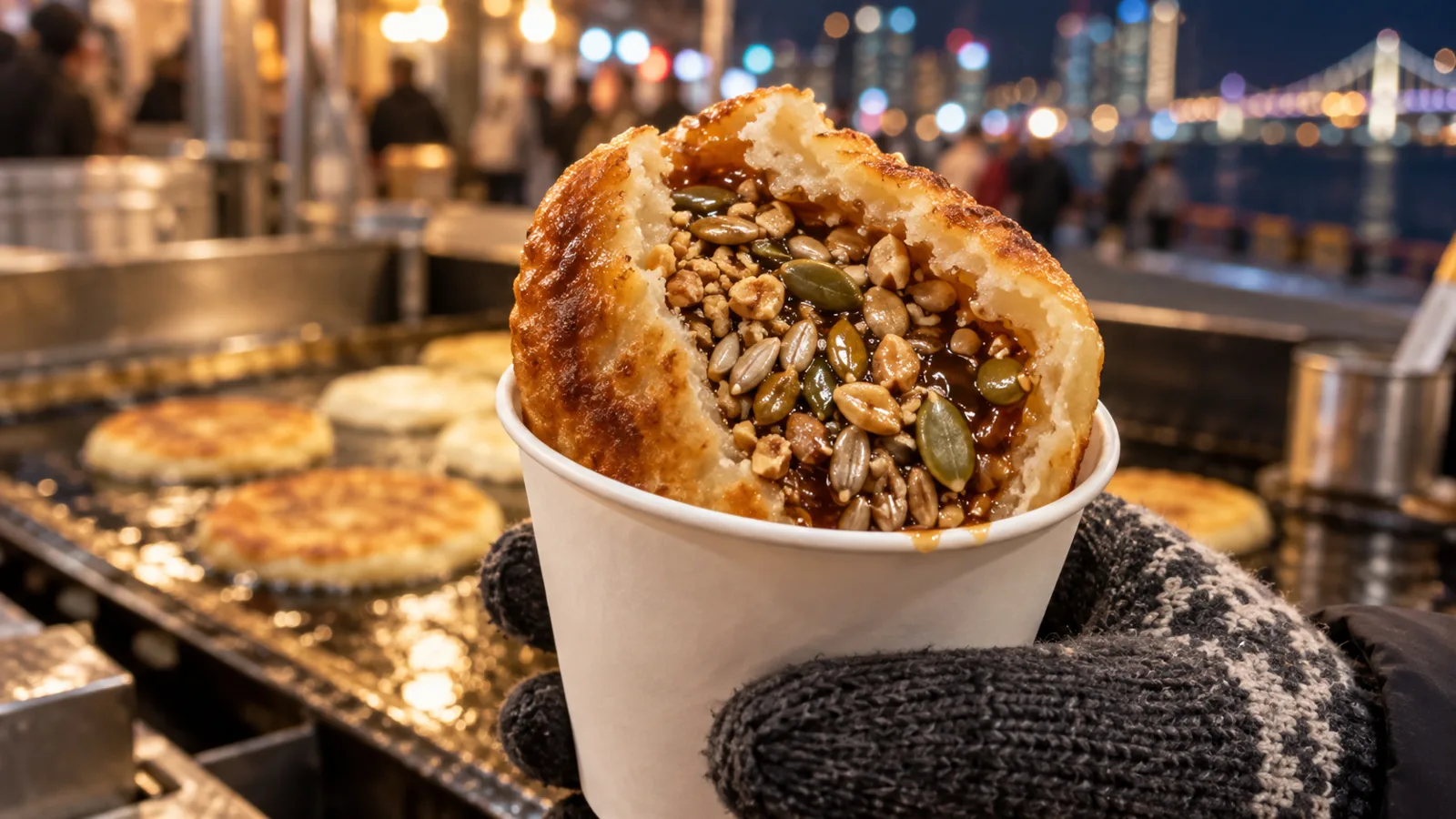
Ssiat Hotteok (Seed Hotteok)
A fried sweet pancake split open and stuffed with sunflower seeds, pumpkin seeds and peanuts — Nampo-dong's famous street snack
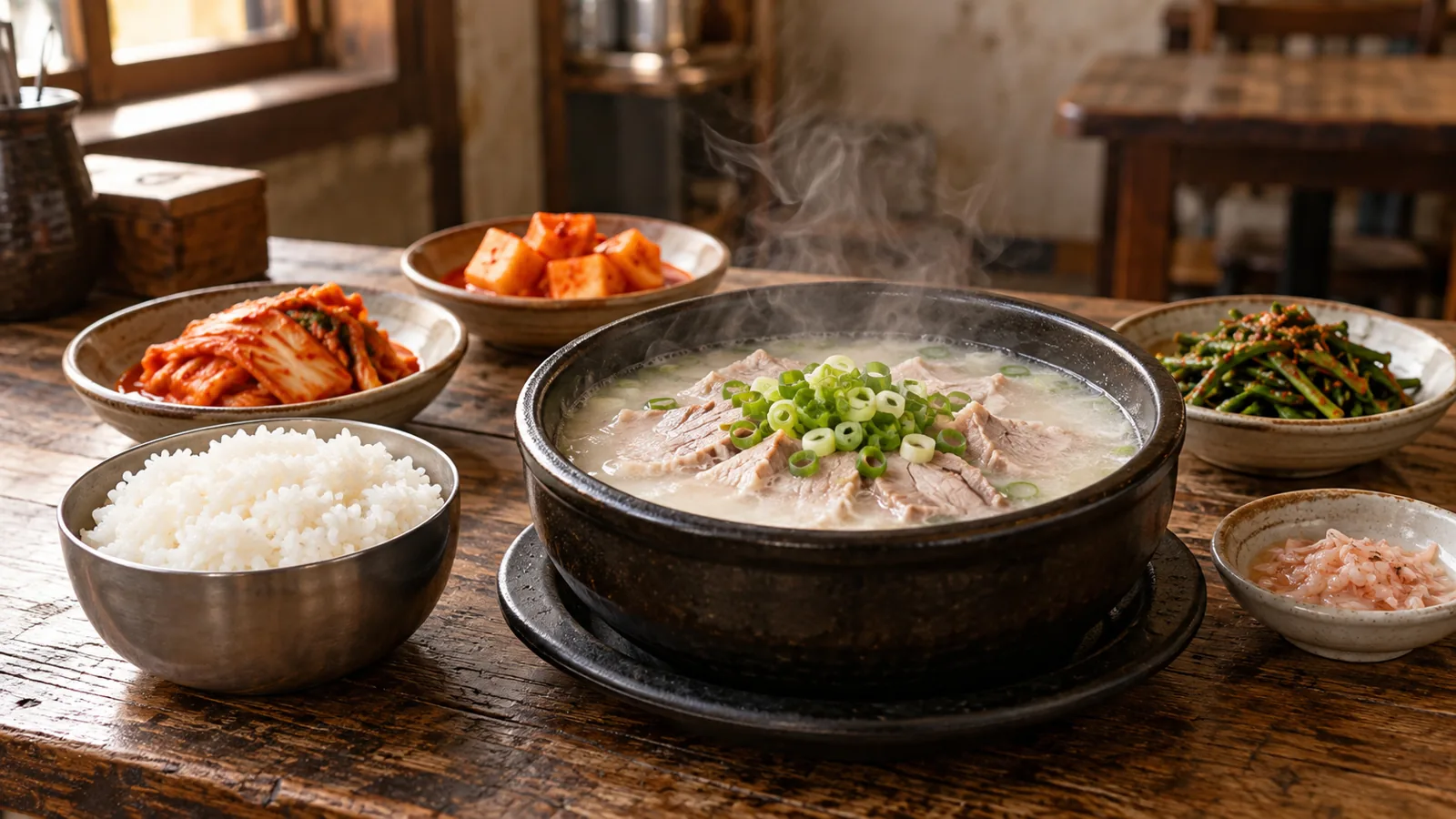
Dwaeji-gukbap (Busan Pork Rice Soup)
A fast, cheap, filling bowl that fed refugees and dock workers — and still Busan's go-to meal at any hour
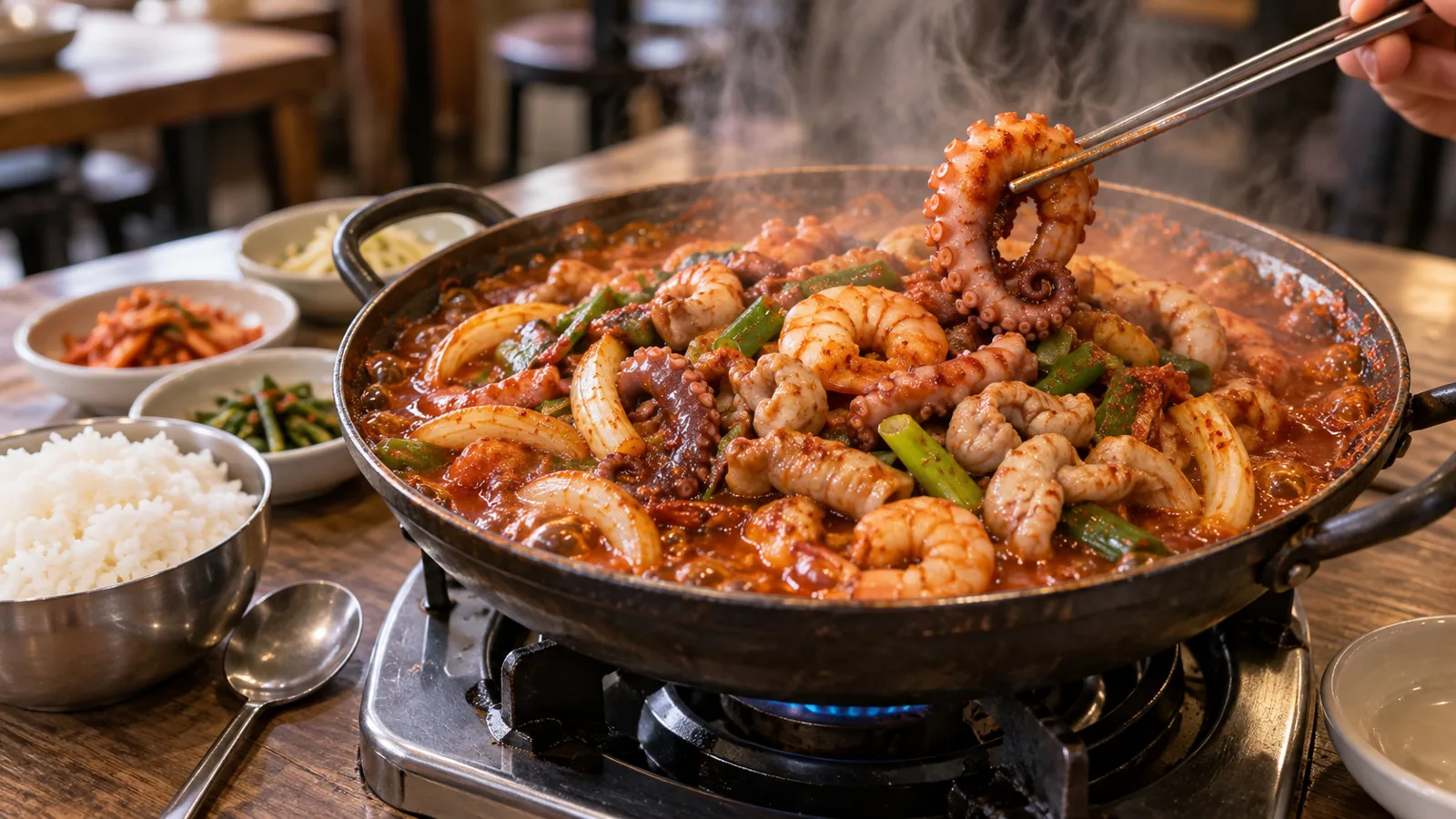
Nakgopsae (Spicy Octopus, Gopchang & Shrimp)
Nak-gop-sae = nakji (small octopus) + gopchang (intestines) + saeu (shrimp): a spicy pot born outside an old Busan textile mill
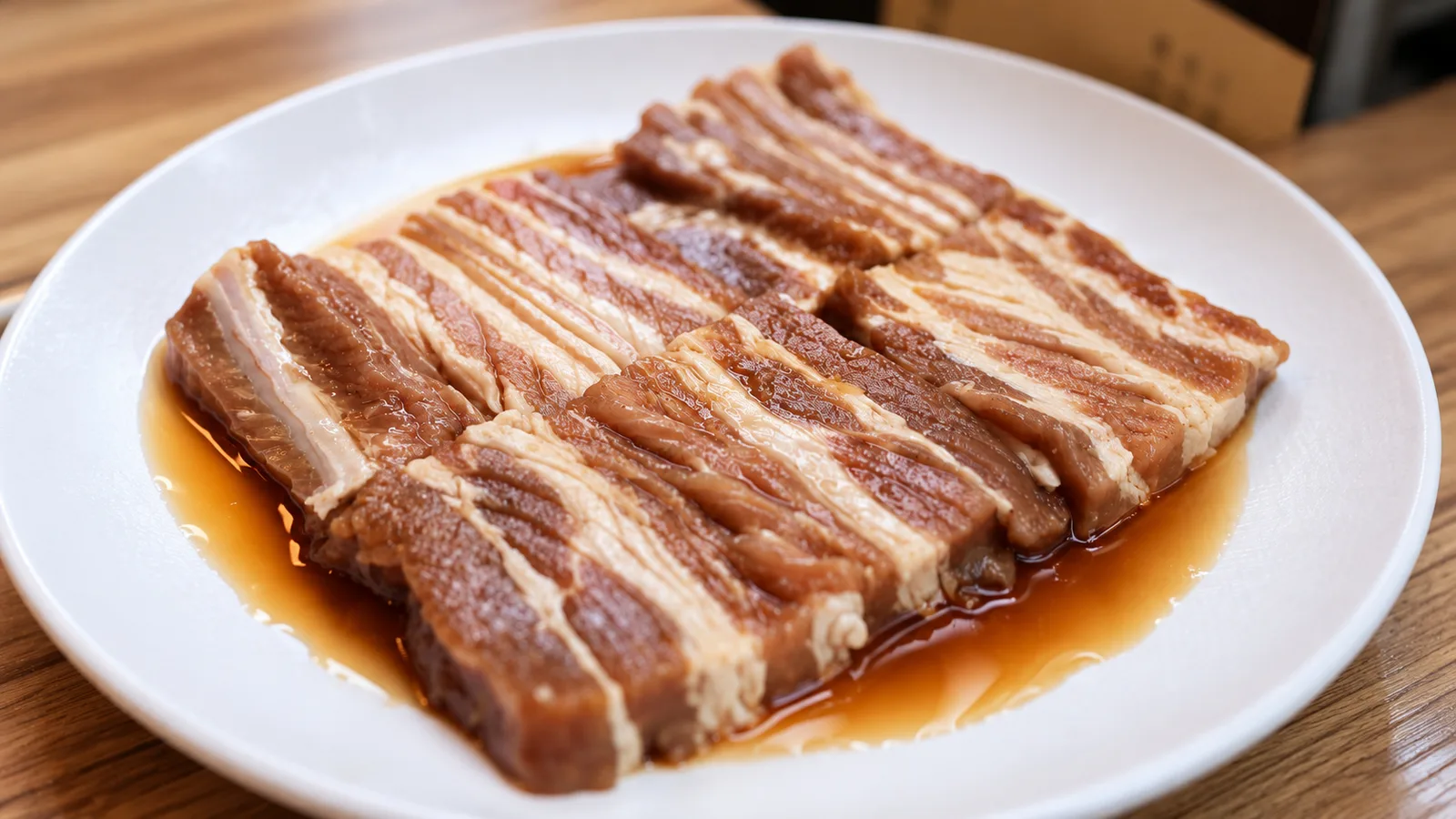
Samdae Dwaeji Bulgogi (Sajik-dong)
From a nameless coal-fire rib stall in Beomil-dong to Sajik-dong: grandmother, daughter and granddaughter
← All Busan food · What to eat in Busan · Busan festivals & events