Haeundae Sogalbi — Busan's Scored Beef Short Ribs and Potato Noodles: Origins Since 1964 and How to Eat Them
Finely scored, lightly marinated beef ribs on a domed grill, finished with potato noodles cooked in the juices
Haeundae sogalbi (해운대 소갈비), often called Haeundae amso-galbi (cow ribs), is grilled beef short rib famous in Busan's Haeundae beach area. A rib restaurant that opened in Haeundae in 1964 is usually named as the origin. The ribs are scored in a fine diamond pattern and only lightly marinated in soy sauce so the beef flavor comes first. They are grilled on a domed plate, and the meal ends with chewy potato noodles cooked in the juices that collect around the rim.
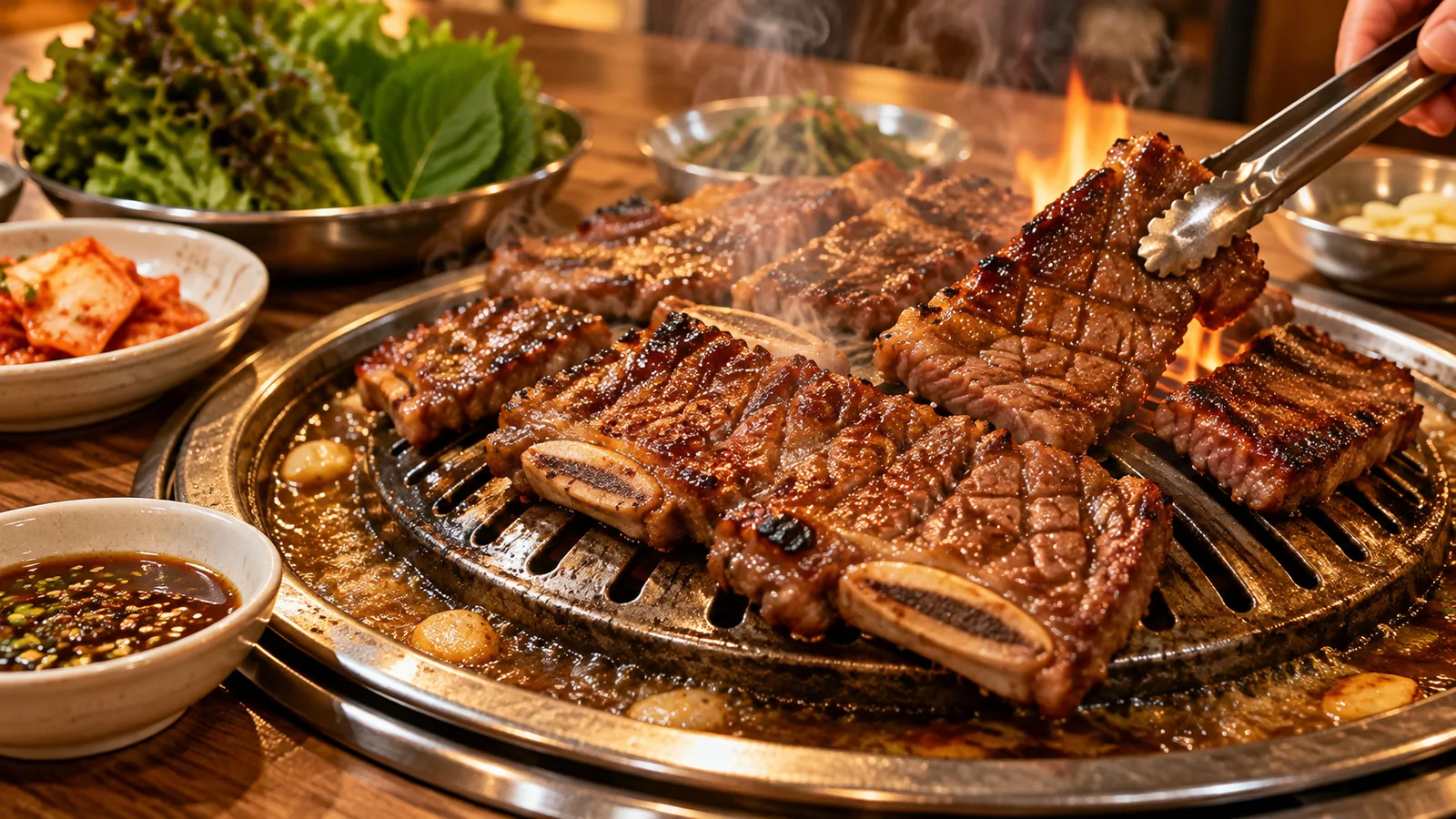
Haeundae sogalbi in one line
A beach town famous for its summer crowds is also known for grilled beef short ribs. Locals often call it amso-galbi — “cow ribs” — because it is said to use ribs from cows that have calved, and many people remember it most for the finish: potato noodles boiled on the grill after the meat is gone.
| Korean | 해운대 소갈비 (Haeundae sogalbi) — so 소 (beef) + galbi 갈비 (ribs). Also 해운대 암소갈비 (amso-galbi, “cow ribs”) |
|---|---|
| Made of | Korean beef (hanwoo) short ribs, scored and lightly marinated in soy sauce, or served unmarinated (saeng-galbi). Grilled at your table. |
| Diet notes | Beef; the marinade contains soy sauce (wheat, soy). Not vegetarian; not halal-certified. |
| Spice | Not spicy. Some side dishes and the dipping sauce for the noodles may be. |
| Price | Hanwoo ribs are not cheap, and prices vary widely by restaurant and cut. Check the menu before you order. |
Where it came from — a 1964 rib house in Haeundae
The restaurant usually named as the start of Haeundae sogalbi opened in Haeundae in 1964. According to a column by chef Park Chan-il, who has written about Korea's old restaurants (Bizhankook, 2017), its founder was a cook trained in traditional Korean cuisine at a restaurant in the Dongnae hot-spring district. It began with three small rooms and became well known from the late 1960s.
The same column links the ribs' fame to the Gyeongbu Expressway and express buses from Seoul. As a summer at Haeundae became a nationwide dream, the beach town's rib houses became famous with it. It also notes that Busan was a city of many cattle slaughterhouses even in the colonial era, so beef ribs were already a local favorite.
It is widely said that this restaurant was the first to score ribs in a diamond pattern, but we could not find a record confirming it. Take it as “so the story goes.”
What makes it different
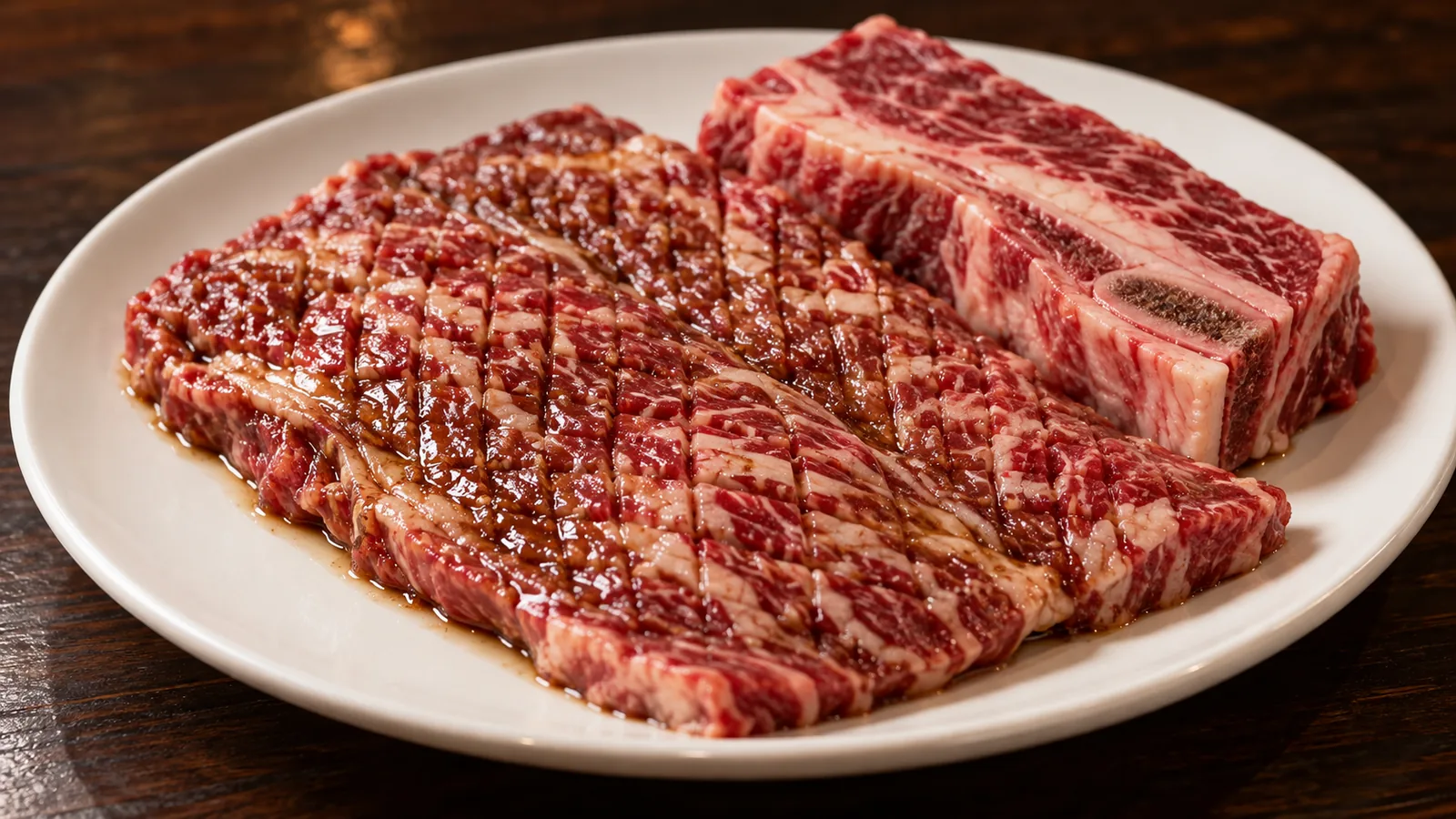
- Fine scoring: the rib meat is cut in a close diamond pattern, so the marinade soaks in evenly and the meat cooks quickly and stays tender.
- Light marinade: not much soy sauce is used, so the taste of the beef leads. Marinating times differ by restaurant.
- Plain or marinated: some places also serve unmarinated ribs (saeng-galbi). A common tip is to eat the plain ribs first, then the marinated ones.
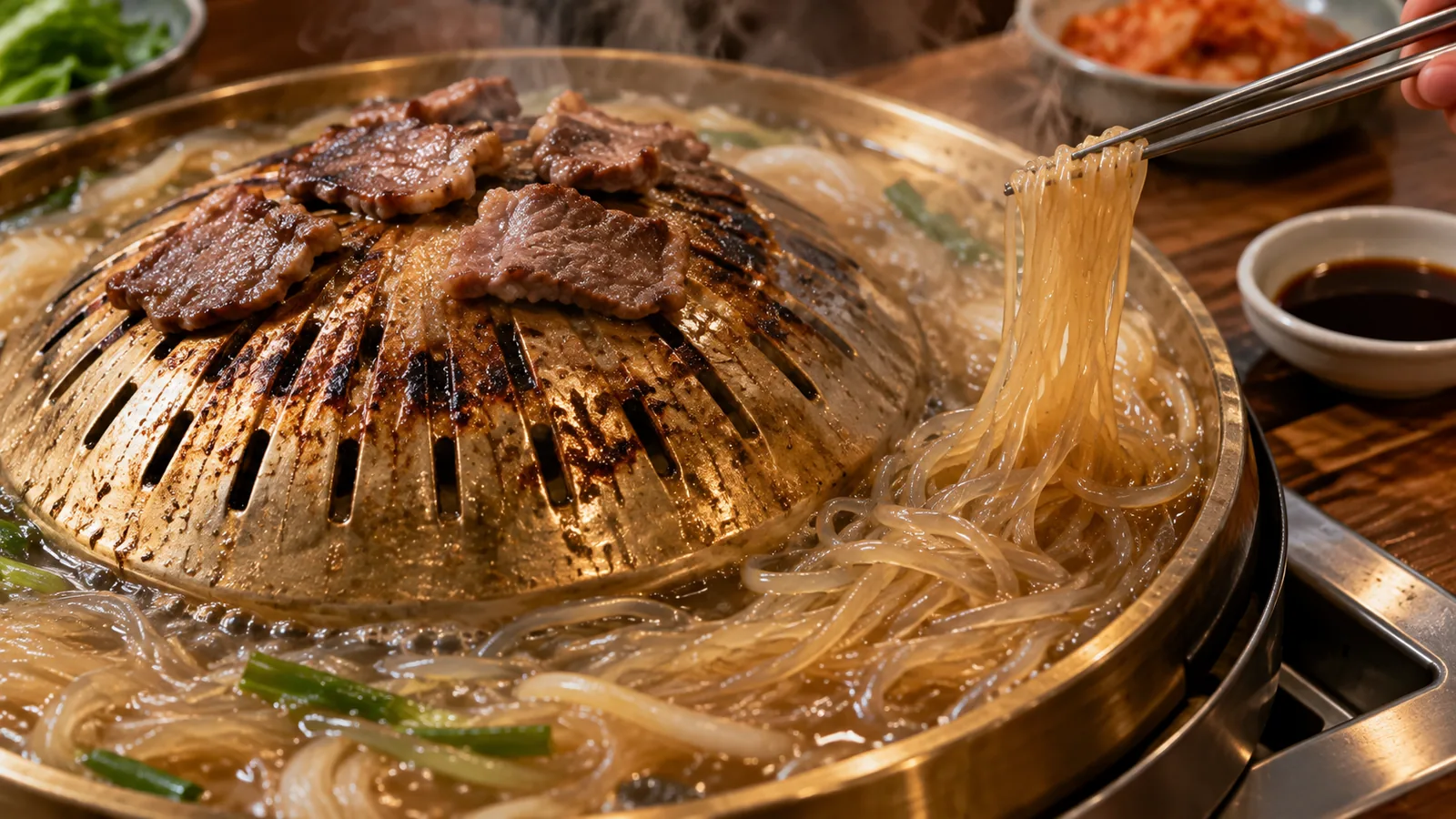
- Domed grill: fat and juices run down to the rim of the domed plate and collect there — the base for the noodles at the end.
| Haeundae sogalbi vs Suwon wang-galbi (another famous Korean rib style) | |
| Shape | Scored rib meat vs large ribs with a long bone attached |
| Seasoning | Light soy marinade vs known for a salt-based seasoning |
| Finish | Potato noodles around the grill rim vs varies by restaurant |
How to eat it
- Plain ribs first: if there are unmarinated ribs, dip them lightly in salt and eat them before the marinated ones.
- Don't overcook: thanks to the scoring, the meat cooks fast. Turn it as soon as the surface changes color.
- Potato noodles: when the meat is finished, the staff pour broth into the juices around the rim and cook chewy potato noodles (gamja-guksu sari). Dip them in the sauce.
- Soybean stew: some places serve doenjang-jjigae (soybean paste stew) with rib bones to finish.
Unmarinated ribs are limited and can sell out early. If that is what you want, check before you go.
Make a day of it in Haeundae
Beef ribs pair well with a day by the sea. Walk Haeundae Beach, Dongbaekseom Island or the Blue Line Park coastal train and sky capsules during the day, then have ribs for dinner. For a lighter meal in the same neighborhood, dwaeji-gukbap (pork and rice soup) and bokguk (pufferfish soup) are common choices.
For Busan's pork rib traditions, see the Choryang pork rib alley and Samdae Dwaeji Bulgogi. Festivals and events around Haeundae are on our Busan events calendar.
| Getting there | Metro Line 2 Haeundae Station or Dongbaek Station. From Gimhae Airport or Busan Station, see our Getting to Busan guide. |
|---|
We don't rank or recommend specific restaurants. Prices and hours vary.
Ordering in Korean
| Marinated beef ribs for two, please | 양념갈비 2인분 주세요 (yangnyeom-galbi i-inbun juseyo) — many places require two servings |
|---|---|
| Do you have unmarinated ribs? | 생갈비 있어요? (saeng-galbi isseoyo?) |
| Potato noodles, please | 감자 사리 주세요 (gamja sari juseyo) |
| The check, please | 계산해 주세요 (gyesan hae juseyo) |
FAQ
Why is it called amso-galbi (cow ribs)?
The name comes from the story that the ribs are from cows that have calved. Haeundae's famous grilled beef ribs are often called Haeundae amso-galbi.
How long has Haeundae sogalbi been famous?
A rib restaurant that opened in Haeundae in 1964 is usually named as the start, and it became well known from the late 1960s, as more summer visitors came to Haeundae after the Gyeongbu Expressway opened.
How is it different from other Korean galbi?
The rib meat is finely scored and only lightly marinated so the beef flavor comes first, it is grilled on a domed plate, and the meal ends with potato noodles cooked in the juices.
How do you eat the potato noodles?
After the meat is finished, broth is poured into the juices around the rim of the grill and potato noodles are cooked in it. Dip them in the sauce.
Is it expensive?
It is Korean beef (hanwoo), so it costs more than pork ribs. Prices vary widely by restaurant and cut — check the menu first.
Sources
- [박찬일 노포열전] '가든'은 못 따라하는 소갈비의 역사, 해운대 소문난 암소갈비집 — Bizhankook (비즈한국), Jan 5, 2017
- Haeundae Rib Barbecue Restaurant (해운대 암소갈비집) — MICHELIN Guide,
- [한국의 맛] 수원갈비…세계인이 반한 '뼈대있는 맛' — Kyunghyang Shinmun (경향신문), Nov 13, 2002
Prices, minimum orders and opening hours differ by restaurant. This article is a food explainer, not a restaurant ranking or advertisement.
More Busan food
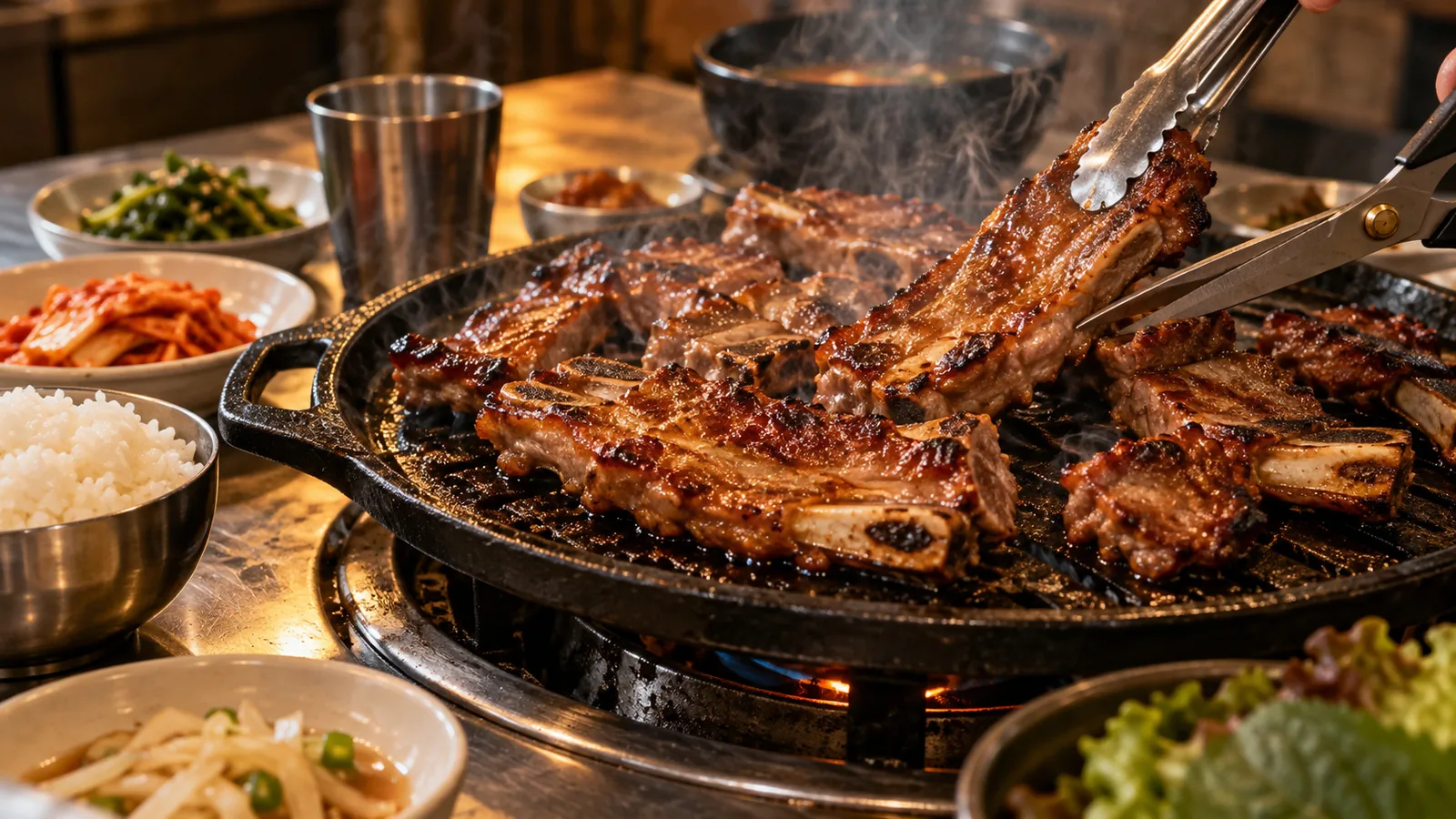
Choryang Dwaeji Galbi (Pork Rib Alley)
Soy-marinated pork ribs on cast-iron grills, from dock workers' dinners to a food alley across from Busan Station
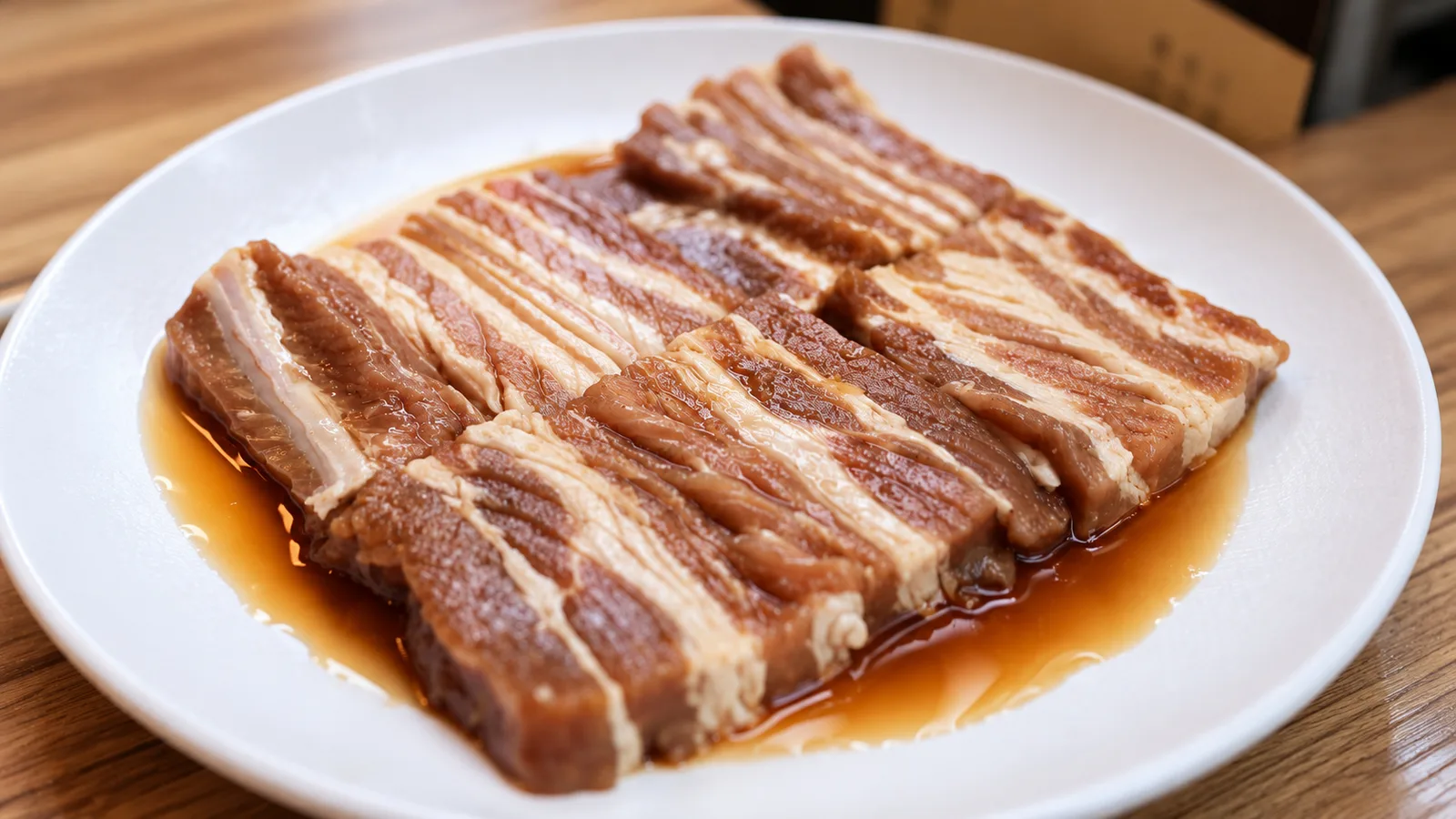
Samdae Dwaeji Bulgogi (Sajik-dong)
From a nameless coal-fire rib stall in Beomil-dong to Sajik-dong: grandmother, daughter and granddaughter
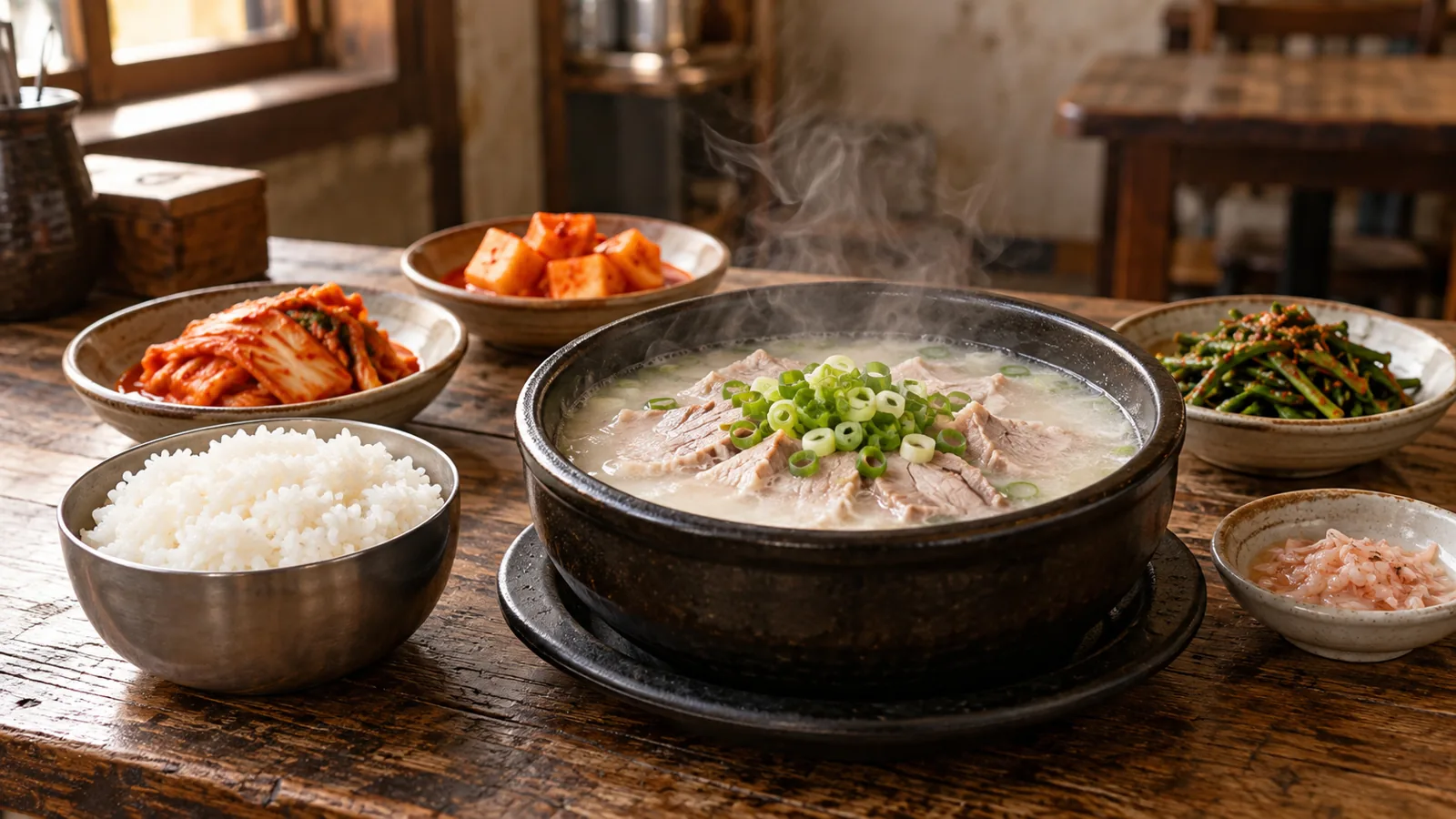
Dwaeji-gukbap (Busan Pork Rice Soup)
A fast, cheap, filling bowl that fed refugees and dock workers — and still Busan's go-to meal at any hour
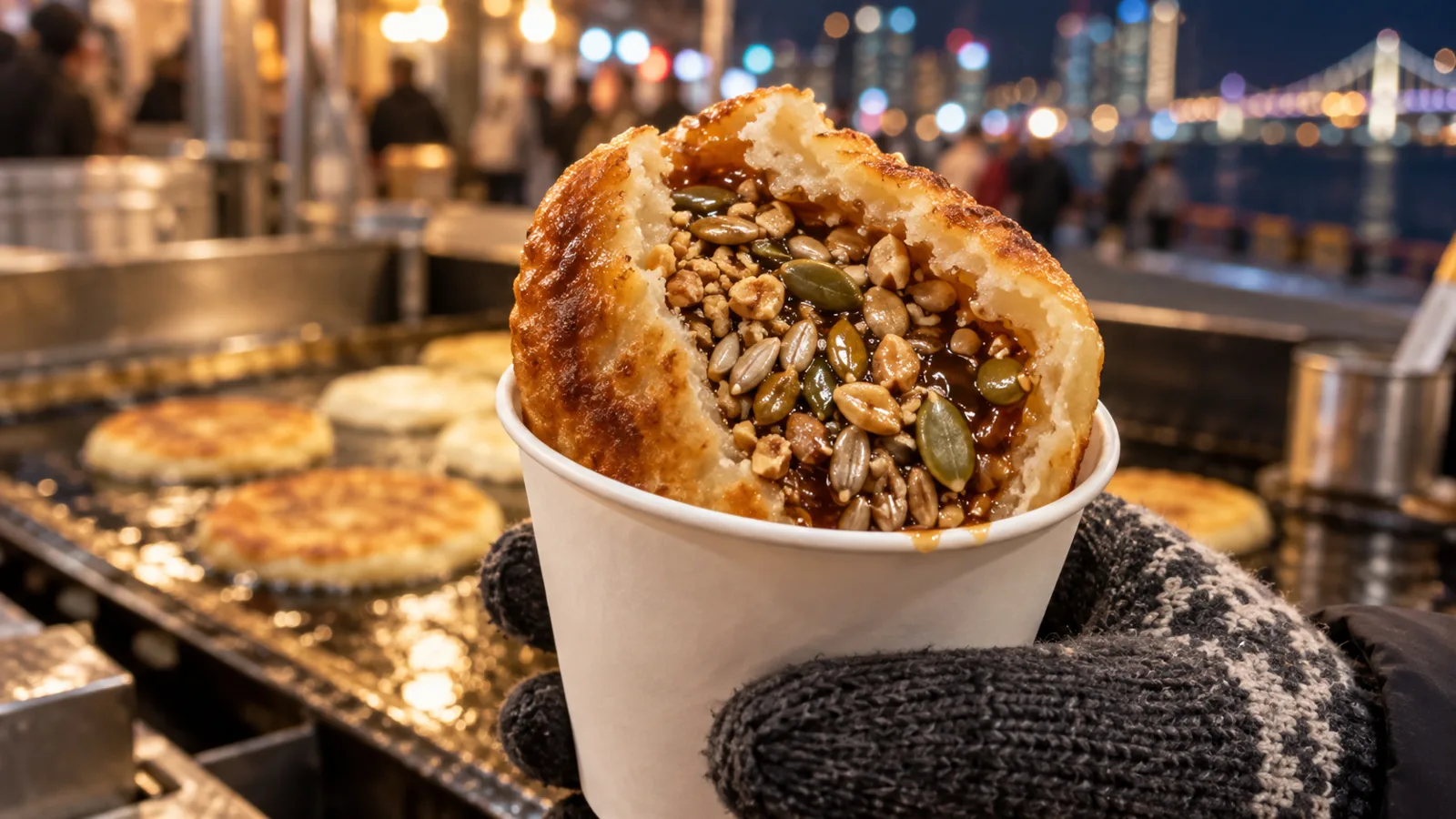
Ssiat Hotteok (Seed Hotteok)
A fried sweet pancake split open and stuffed with sunflower seeds, pumpkin seeds and peanuts — Nampo-dong's famous street snack
← All Busan food · What to eat in Busan · Busan festivals & events