Mulddeok — Busan's Rice Cake Skewers Soaked in Fish Cake Broth: What It Is, Mul-tteok vs Garae-tteok, How to Eat It
The soft white rice cake that always stands next to the fish cake skewers in a Busan street-stall pot
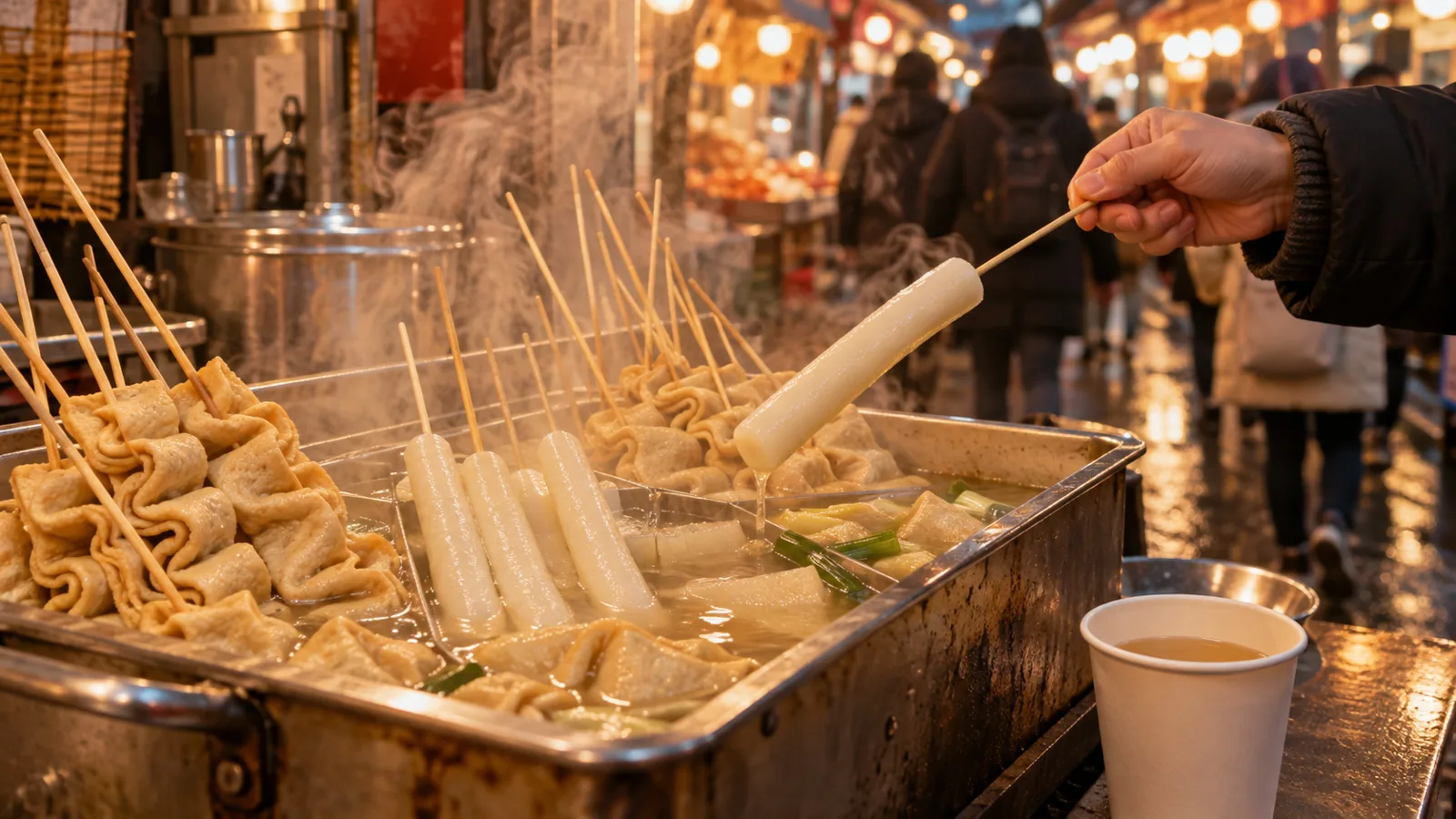
Mulddeok (물떡, also written mul-tteok, "water rice cake") is a long stick of plain rice cake (garae-tteok) put on a skewer and left to soak in the hot broth of a fish cake pot, then eaten straight from the stick. No record shows exactly who started it or when, but it became a fixture of Busan's 'odeng' pots as fish cakes turned into the city's everyday snack after the Korean War. You'll find it beside fish cake skewers at market stalls and snack bars all over Busan.
Mulddeok in one line
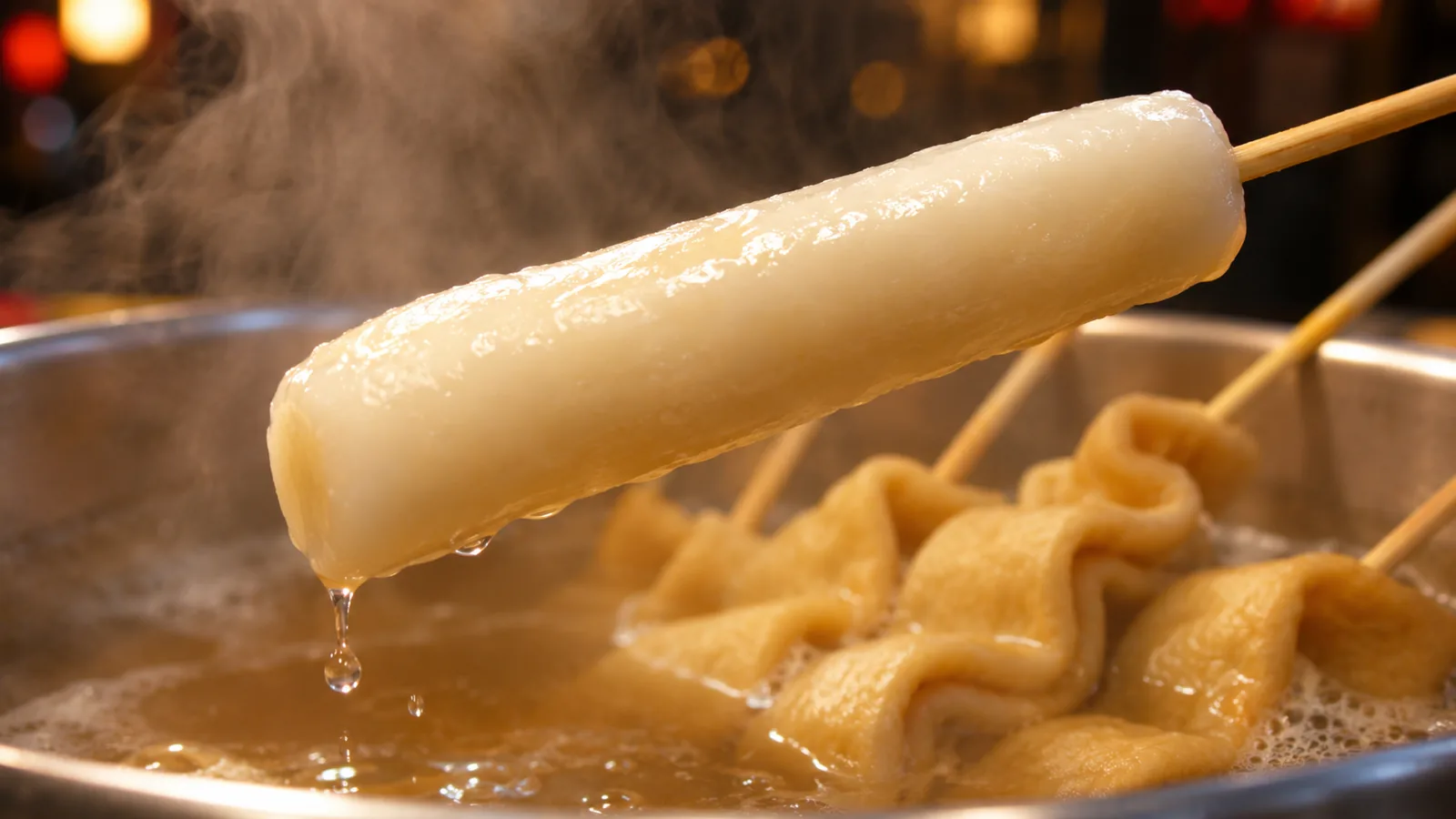
A plain rice cake on a stick, soaked in the same steaming broth as the fish cake skewers. Because it sits in the broth ('mul', water) all day, the outside turns silky and soft. In Busan, grabbing one or two with your fish cakes is simply what people do.
| Korean | 물떡 (mul-tteok) — "water rice cake" |
|---|---|
| Made of | Rice cake (garae-tteok: rice flour, water, a little salt), soaked in fish cake broth. The broth is made from fish, kelp and radish, so it is not vegetarian as served. |
| Taste | Mild, faintly sweet rice flavour. Not spicy. |
| Texture | Smooth and soft outside, dense and chewy inside. |
| Where | Any stall or snack bar with a fish cake pot — Bupyeong Kkangtong Market and Gukje Market are easy places to find it. |
Mulddeok vs garae-tteok — what's the difference?
Garae-tteok (가래떡) is the ingredient: a long, plain white rice cake pressed from rice dough, the same rice cake that is sliced for Korean New Year's rice cake soup (tteokguk). Mulddeok is what Busan does with it: the whole stick goes on a skewer and soaks in fish cake broth.
| Garae-tteok | Mulddeok | |
|---|---|---|
| What | Plain long rice cake | A whole garae-tteok on a skewer, kept in broth |
| Texture | Firm, hardens as it cools | Silky and soft outside, chewy inside |
| Eaten | Sliced in soup, grilled, in tteokbokki | Straight from the stick with a cup of broth |
Rice cake is dense, so the broth does not soak far inside. What changes is the surface — it becomes soft and smooth, quite unlike a cold, hard piece of garae-tteok.
Where it came from
- Origin unknown: No record clearly shows when or where mulddeok began; shops and locals each tell their own memories.
- Grew up in the fish cake pot: Busan fish cakes became an everyday snack after the Korean War. Mulddeok settled into the same 'odeng' pot — a broth full of skewers — as a filling, cheap extra.
- A taste for thick rice cake: Tteokbokki was originally made with thick garae-tteok too. Thin tteokbokki rice cakes are now standard in most of Korea, but in Busan and parts of Gyeongnam you can still see thick rice cakes, and mulddeok carries on that liking for big, whole sticks.
Garae-tteok's name is said to come from 'garae', a strand or branch. Its long shape is read as a wish for long life, and the round slices in New Year's soup as coins.
How to eat it
- Alternate with fish cakes: one salty fish cake skewer, one mild rice cake — the flavours balance each other.
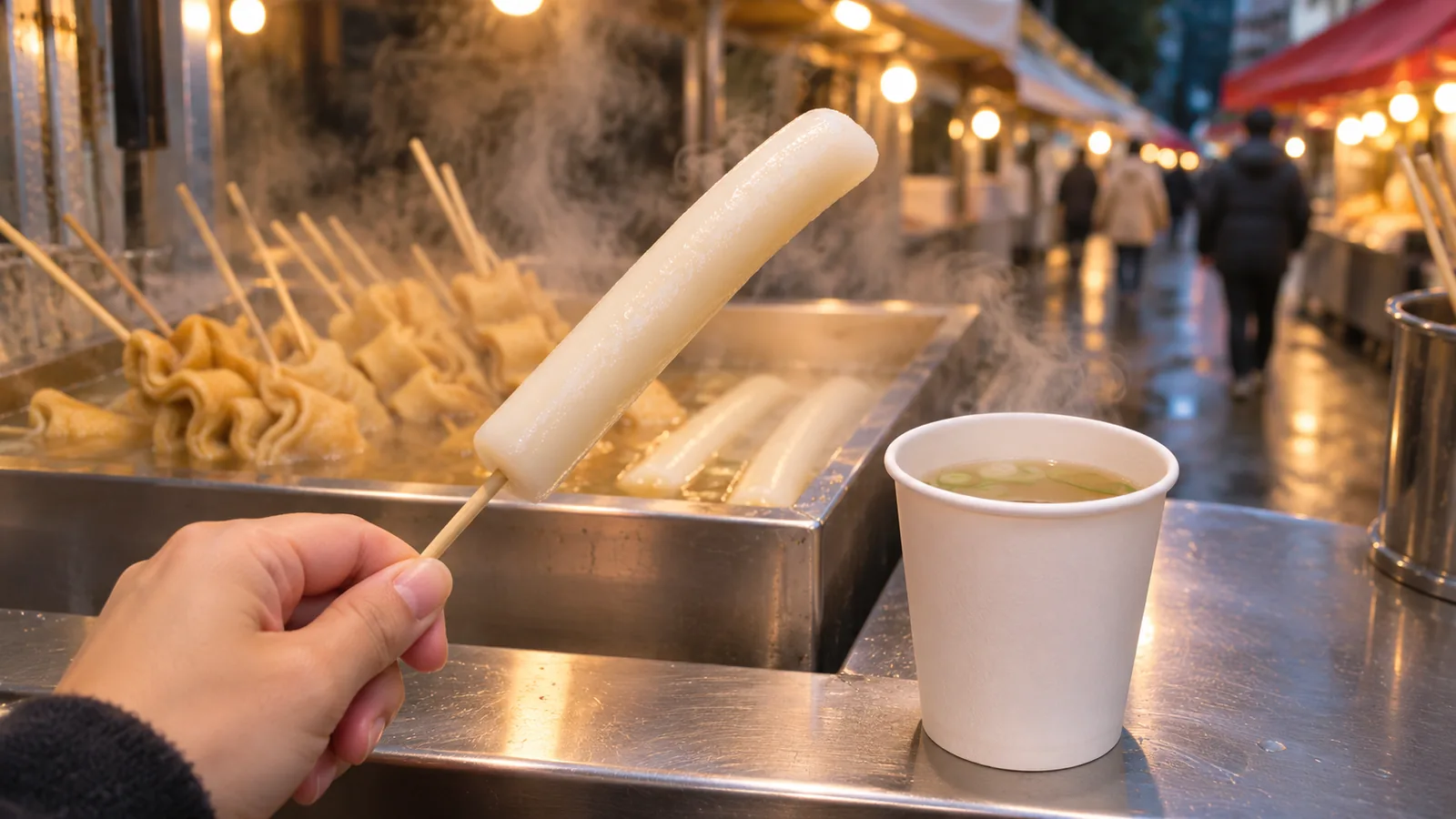
- Drink the broth: scoop hot broth into a paper cup; it is usually free with your skewers.
- Careful, it's hot: a rice cake that has sat in the broth is hot all the way through. Let it cool a moment.
- Dip it if you like: many stalls keep a soy-based sauce on the counter; some people dip mulddeok in tteokbokki sauce too.
- Make it a market crawl: pair it with Busan tteokbokki, bibim-dangmyeon and ssiat hotteok around Nampo-dong.
Useful Korean: "물떡 하나 주세요" (mul-tteok hana juseyo) — "One rice cake skewer, please." At many stalls you take skewers yourself and pay by counting the sticks at the end — ask if unsure.
Where to find it in Busan
Mulddeok isn't tied to one neighbourhood — look for any fish cake pot. Market snack stalls and neighbourhood snack bars (bunsik-jip) that sell fish cake skewers usually have rice cake sticks standing beside them. For travellers, the market streets of Bupyeong Kkangtong Market and Gukje Market in Nampo-dong are the easiest places, and the fish cake story behind it is in our Busan eomuk article.
FAQ
What is mulddeok?
Mulddeok (물떡) is a Busan street snack: a whole stick of plain rice cake (garae-tteok) on a skewer, soaked in fish cake broth until the outside is soft and silky.
How do you say mulddeok in English?
There is no fixed English name. It is usually described as a rice cake skewer in fish cake broth; 'mul' means water and 'tteok' means rice cake.
What is the difference between mulddeok and garae-tteok?
Garae-tteok is the plain long rice cake itself. Mulddeok is a whole garae-tteok put on a skewer and kept in fish cake broth, which makes its surface soft.
Is mulddeok vegetarian or gluten-free?
The rice cake itself is usually just rice, water and salt, but it is soaked in fish cake broth made with fish, so it is not vegetarian as served. Ask about ingredients if you have allergies.
Where can I eat mulddeok in Busan?
Anywhere with a fish cake pot — market stalls and snack bars. Bupyeong Kkangtong Market and Gukje Market in Nampo-dong are easy places for visitors.
Sources
- 구워봐도… 끓여봐도… 튀겨봐도… 가래떡이 딱이네![이우석의 푸드로지] — Munhwa Ilbo, Feb 12, 2026
- [문화식객 이춘호의 미각기행] <4>오뎅과 어묵 이야기 — Maeil Shinmun, Feb 16, 2024
- 부산의 원조 패스트푸드…피란민 허기 달래던 ‘비빔당면’ [FOOD+] — Segye Ilbo, Sep 10, 2026
Prices and recipes differ by stall. This article is a food explainer, not a restaurant ranking or advertisement.
More Busan food
Busan Eomuk (Fish Cakes)
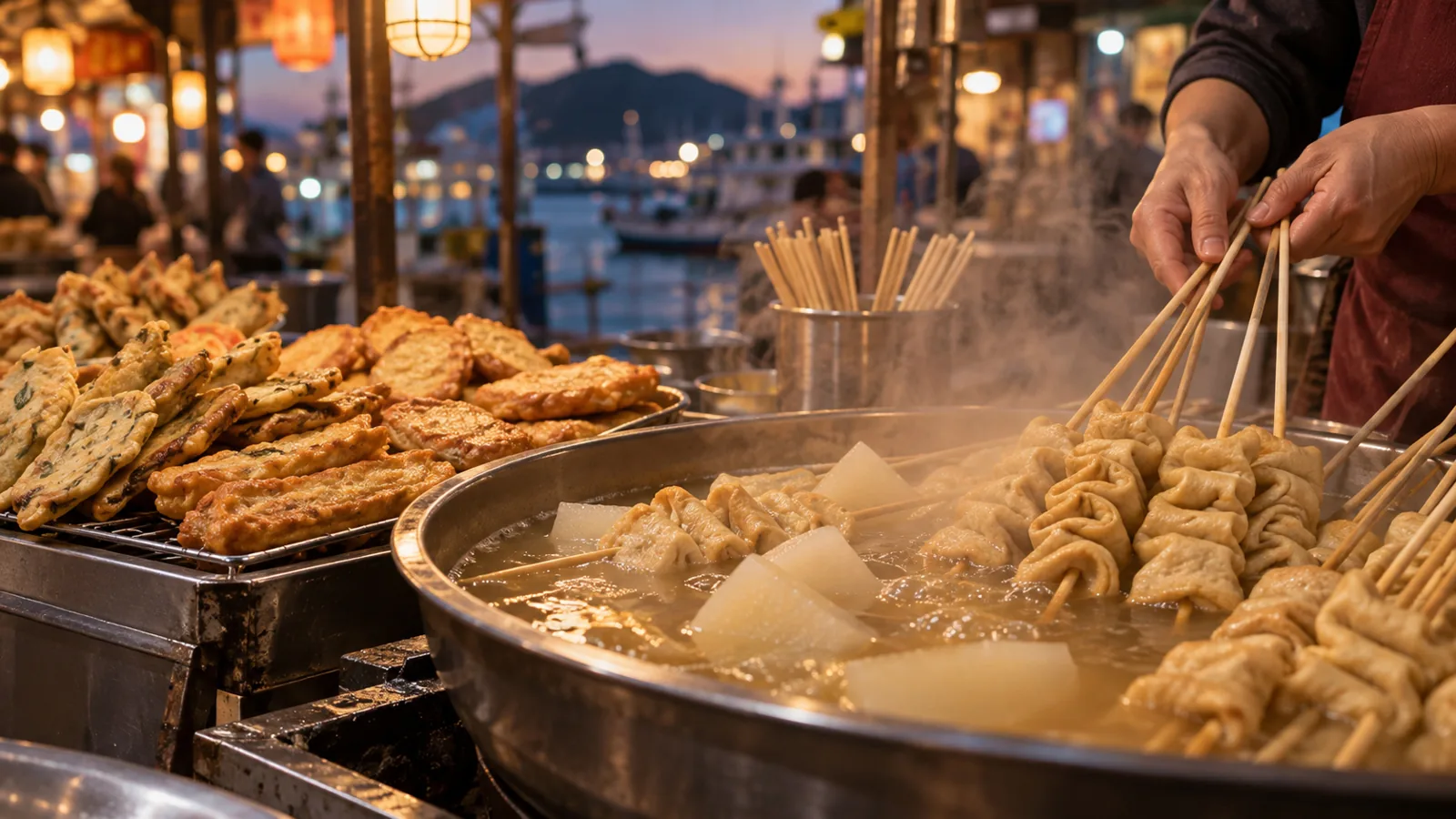
Ground fish, fried golden: a century-old Busan market food from Bupyeong Market to Yeongdo and Choryang
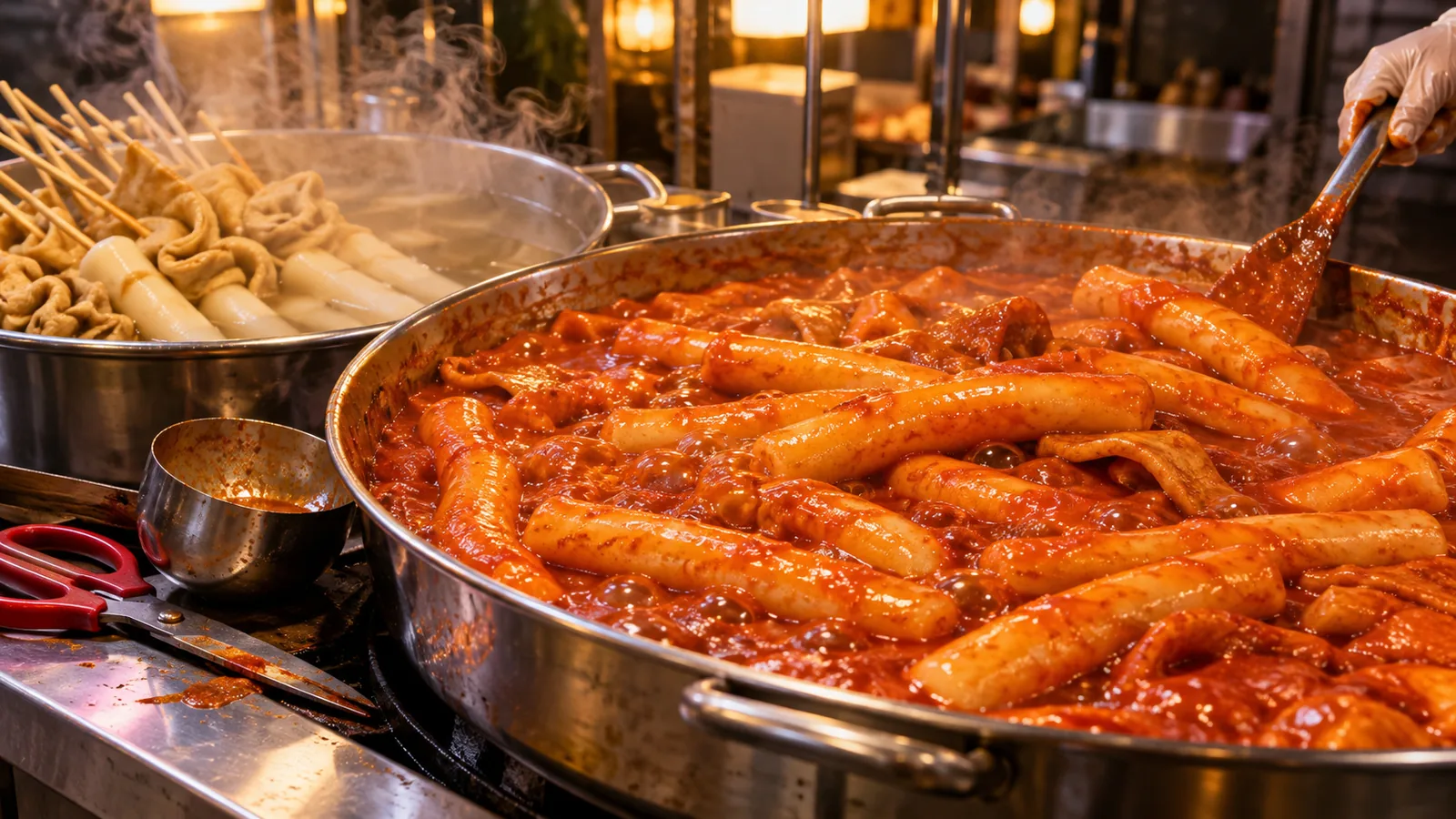
Busan Tteokbokki (Market Rice Cakes)
Long, finger-thick rice cakes simmered whole in red sauce, with fish-cake broth and mulddeok on the side
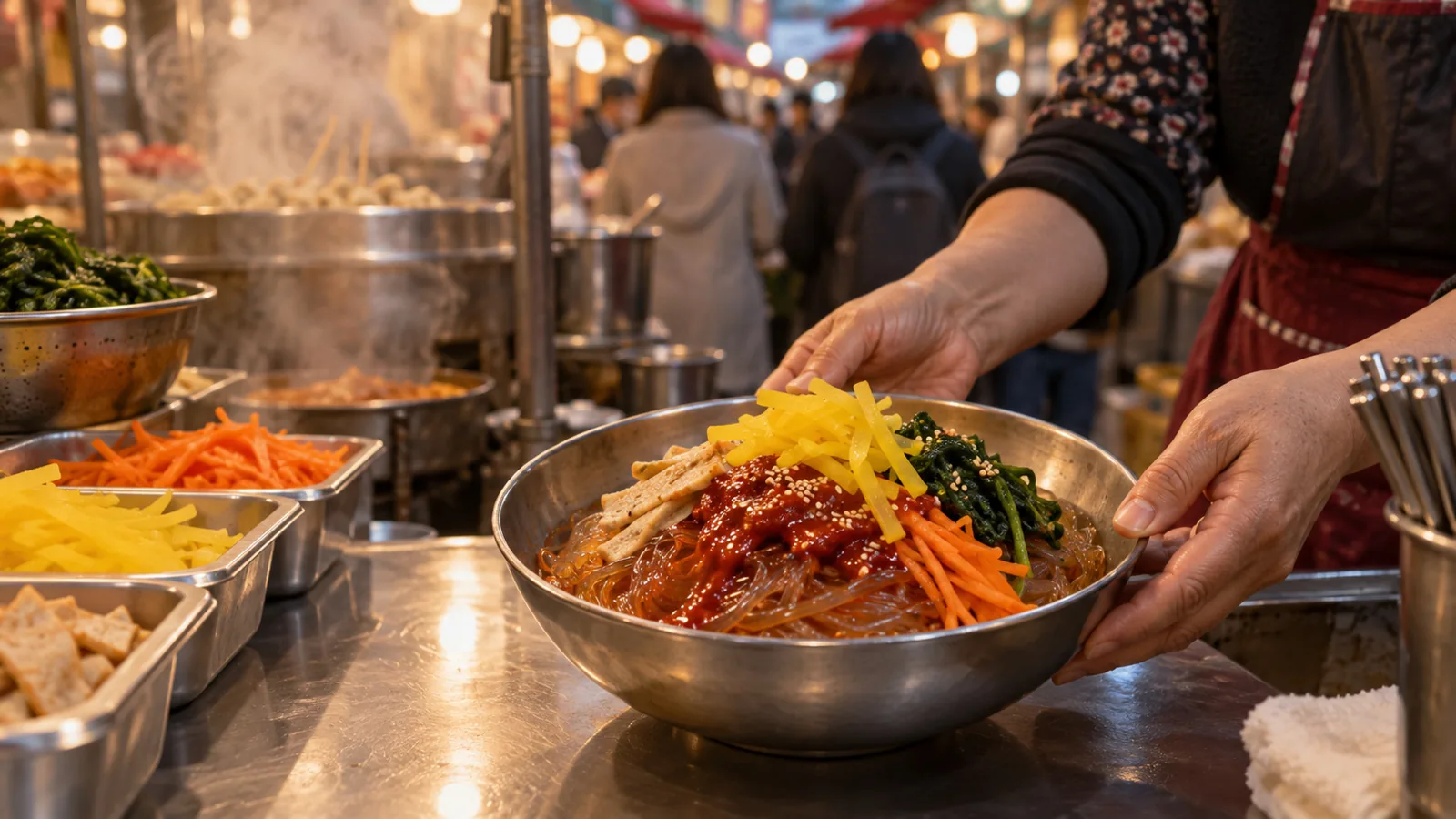
Bibim Dangmyeon (Spicy Glass Noodles)
Pre-boiled glass noodles, a sweet-spicy sauce and simple toppings — a market bowl that is ready the moment you sit down
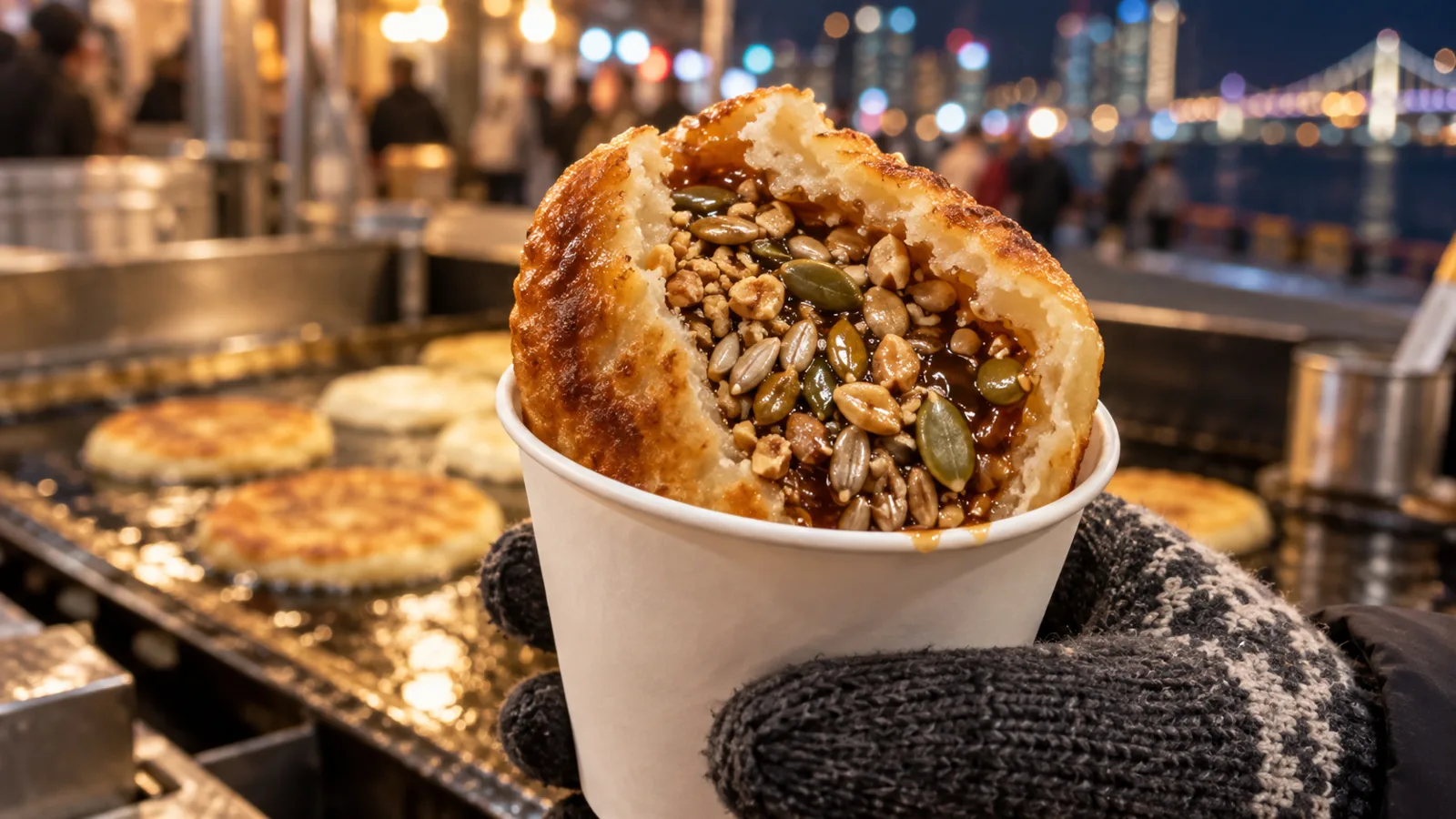
Ssiat Hotteok (Seed Hotteok)
A fried sweet pancake split open and stuffed with sunflower seeds, pumpkin seeds and peanuts — Nampo-dong's famous street snack
← All Busan food · What to eat in Busan · Busan festivals & events