Ssiat Hotteok — Busan's Seed-Filled Sweet Pancake: What It Is, How to Eat It, Where to Find It
A fried sweet pancake split open and stuffed with sunflower seeds, pumpkin seeds and peanuts — Nampo-dong's famous street snack
Ssiat hotteok (씨앗호떡, "seed hotteok") is a Busan street snack: a chewy wheat pancake fried in plenty of oil, then cut open and filled with melted brown sugar and a scoop of sunflower seeds, pumpkin seeds and peanuts. It is said to have started on the streets of Nampo-dong in the 1980s, and today you'll find stalls around BIFF Square and Bupyeong Kkangtong Market selling it in a paper cup for about ₩2,000–3,000.
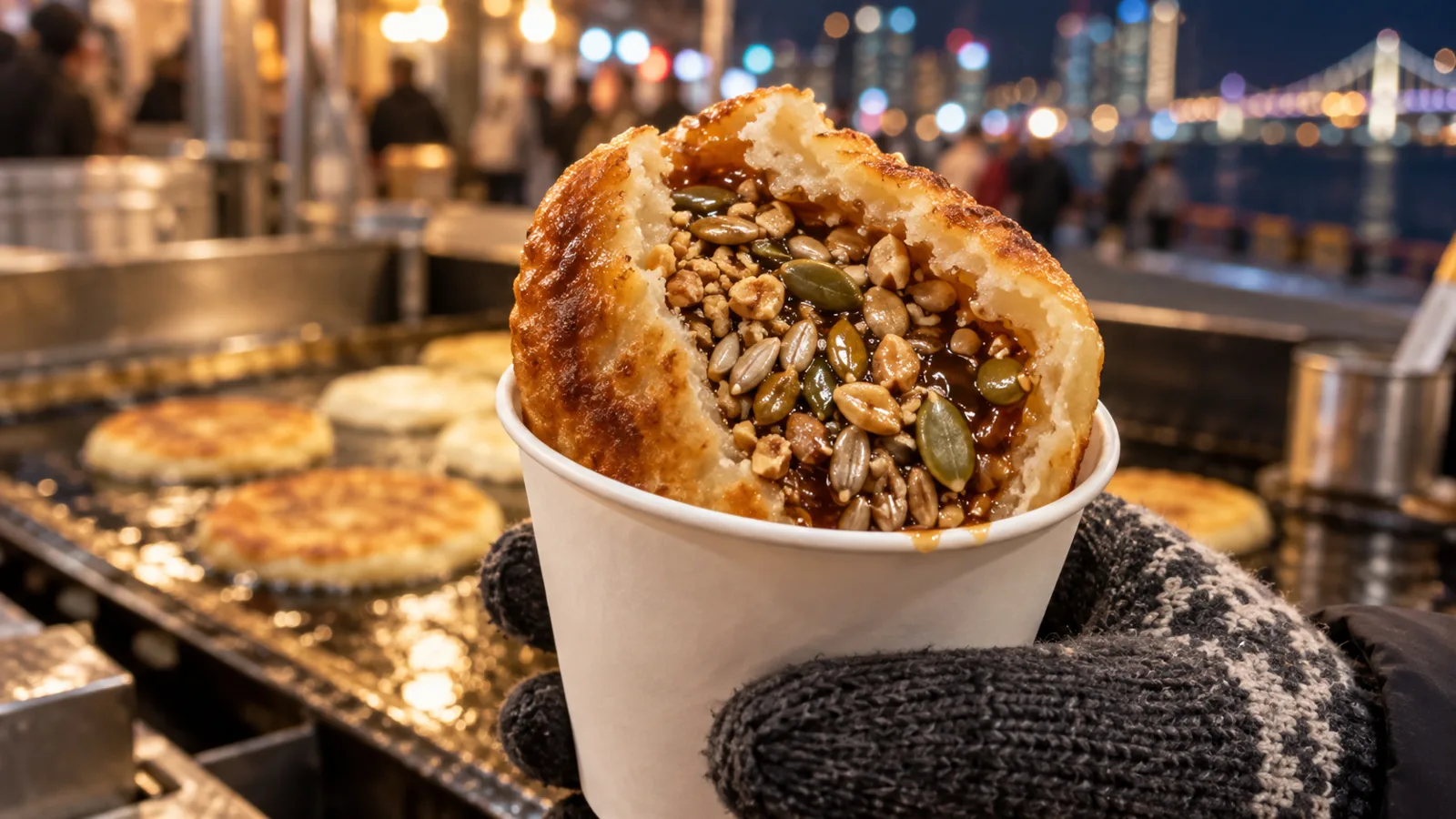
Ssiat hotteok in one line
Imagine a hot, chewy pancake oozing brown-sugar syrup, with a crunchy spoonful of sunflower seeds, pumpkin seeds and peanuts packed inside. It's sweet, nutty and cheap, and it's one of the snacks Koreans say you must try when you visit Busan.
| Korean | 씨앗호떡 (ssi-at ho-tteok) — "seed hotteok" |
|---|---|
| Taste | Sweet, nutty, chewy and crisp at the edges. Not spicy. |
| Contains | Wheat flour, sugar, seeds and peanuts/nuts (allergy warning). Usually no meat, but the oil and dough recipe vary by stall. |
| Price | About ₩2,000–3,000 each at Nampo-dong stalls (as of January 2026). |
| Where | BIFF Square and Bupyeong Kkangtong Market (Nampo-dong area), also tourist spots like Haeundae. |
Where it came from
- Hotteok's roots: Hotteok is thought to have come to Korea with Chinese merchants in the 1880s, and it became a popular cheap snack in the 20th century.
- War-time Busan: During the Korean War, refugees in Busan are said to have made hotteok with grain seeds, and US wheat-flour aid made flour pancakes common.
- Born in Nampo-dong: The seed-stuffed version you eat today is said to have started on the streets of Nampo-dong in the 1980s, then spread to other tourist areas.
Several stalls tell their own "original" story, so no single shop can be named as the inventor. TV travel shows made "BIFF Square ssiat hotteok" famous nationwide.
How is it different from regular hotteok?
| Regular hotteok | Ssiat hotteok | |
|---|---|---|
| Filling | Brown sugar and cinnamon | Brown sugar plus crushed sunflower seeds, pumpkin seeds, peanuts |
| When filled | Sealed inside the dough before cooking | Cut open after frying, then stuffed |
| Cooking | Pan-fried in a little oil | Fried in plenty of oil, crisp outside |
The vendor presses the dough flat on an oiled griddle, fries it, snips it open with scissors while soft and spoons in the seed mix. The crushed seeds also soak up the syrup so it doesn't run out. Some stalls add glutinous rice flour for extra chewiness or raisins to the filling.
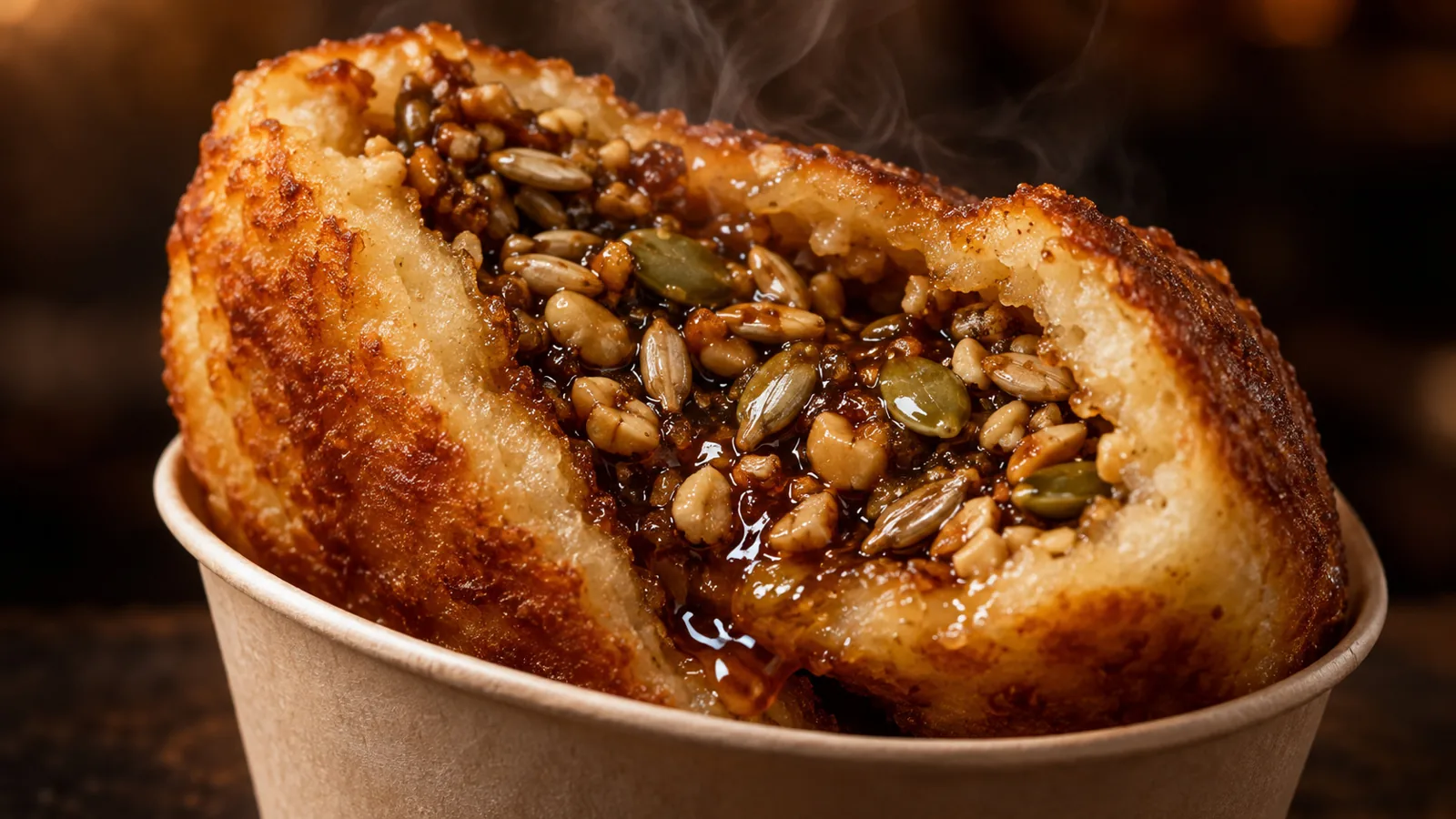
How to eat it (and not burn your mouth)
- Hold the paper cup: It's served standing up in a paper cup. Eat from the top down so the oil stays off your hands.
- Wait a moment: The sugar syrup inside is very hot. Let the steam out before the first bite.
- Finish the bottom: The seeds and sugar that fall into the cup are the best part.
- Best in cold weather: A hot hotteok while walking by the sea on a chilly evening is a classic Busan winter moment.
Useful Korean: "씨앗호떡 하나 주세요" (ssiat-hotteok hana juseyo) — "One seed hotteok, please." Many street stalls prefer cash or Korean transfer apps, so carry some small notes.
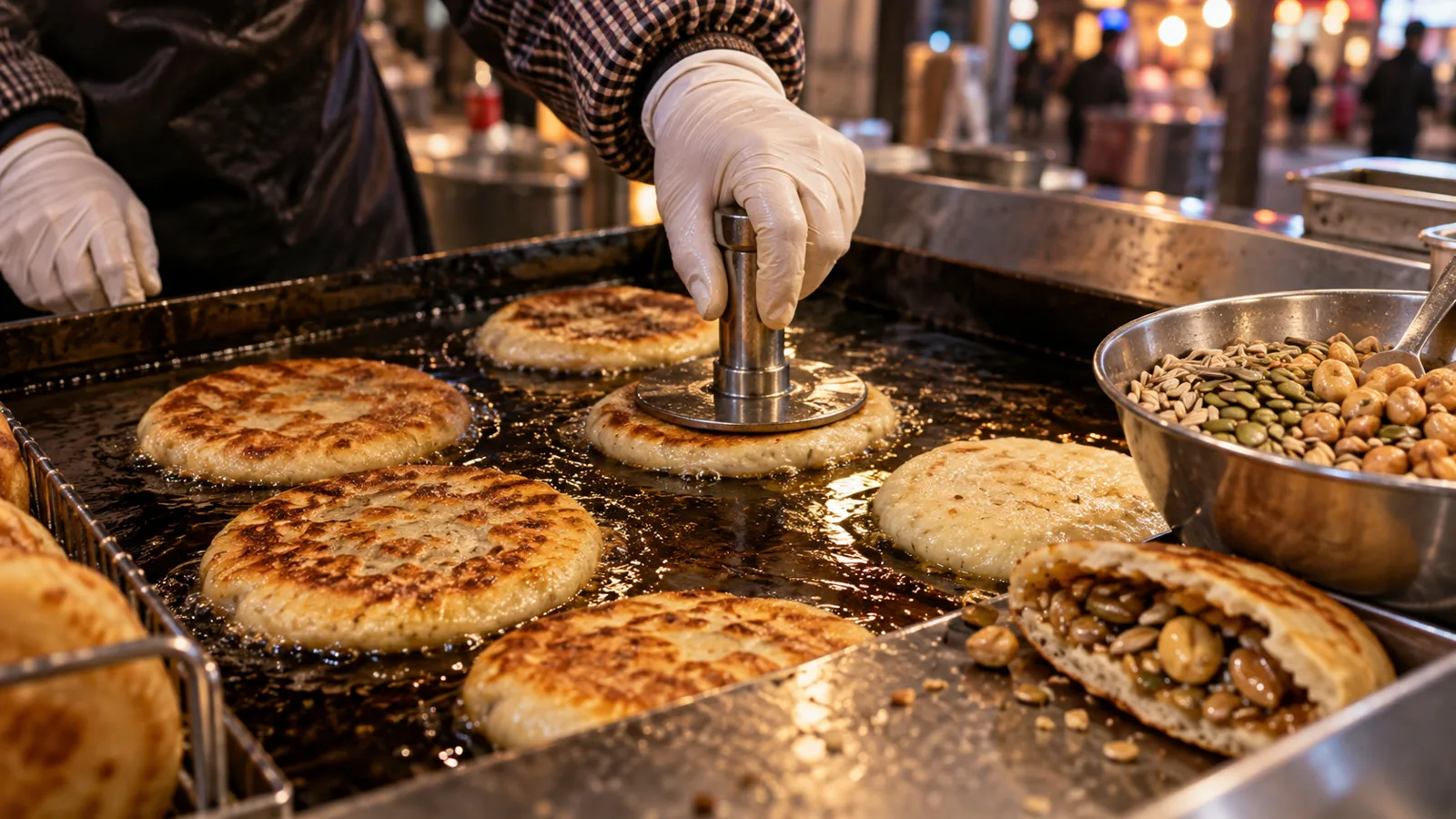
Where to find it — Nampo-dong and Bupyeong
- BIFF Square (Nampo-dong): The street was redesigned when the Busan International Film Festival began in 1996, with film stars' handprints and posters. Hotteok stalls here often have a queue.
- Bupyeong Kkangtong Market: A short walk from BIFF Square; seed hotteok is one of its best-known snacks, and the market has a night market too.
- Haeundae and other tourist areas: The snack spread from Nampo-dong, so you'll see it around the city.
Getting there: Metro Line 1 to Nampo Station or Jagalchi Station; BIFF Square is a few minutes on foot. Combine it with Jagalchi Fish Market and Gukje Market. Arriving by KTX? See Getting to Busan — Nampo is about 10 minutes from Busan Station on Line 1.
FAQ
What is ssiat hotteok?
A Busan street snack: a fried sweet pancake cut open and filled with brown sugar and seeds such as sunflower seeds, pumpkin seeds and peanuts. It is said to have started in Nampo-dong in the 1980s.
Does ssiat hotteok contain peanuts or nuts?
Yes, usually. The filling normally includes peanuts and seeds, so it is not suitable for people with nut or peanut allergies.
Is ssiat hotteok vegetarian?
The basic recipe (flour dough, sugar, seeds, oil) usually has no meat, but recipes and frying oil vary by stall, so ask if you need to be sure.
How much does ssiat hotteok cost in Busan?
About ₩2,000–3,000 each at Nampo-dong stalls as of January 2026. Prices can change.
Where is the best place to eat ssiat hotteok in Busan?
The stalls around BIFF Square in Nampo-dong are the most famous, and Bupyeong Kkangtong Market nearby also sells it. We don't rank shops — pick the stall with fresh hotteok coming off the griddle.
Sources
- 부산 남포동 씨앗호떡 (Busan Nampo-dong ssiat hotteok) — Encyclopedia of Korean Culture (AKS), Aug 6, 2023
- 부산 남포동 먹자골목 가이드 — 호떡·떡볶이 가격 — TravelMapJourney, Jan 21, 2026
- [新국토기행] 부산 중구 — Seoul Shinmun, Feb 14, 2015
Prices and stall hours change. This article is a food explainer, not a restaurant ranking or advertisement.
More Busan food
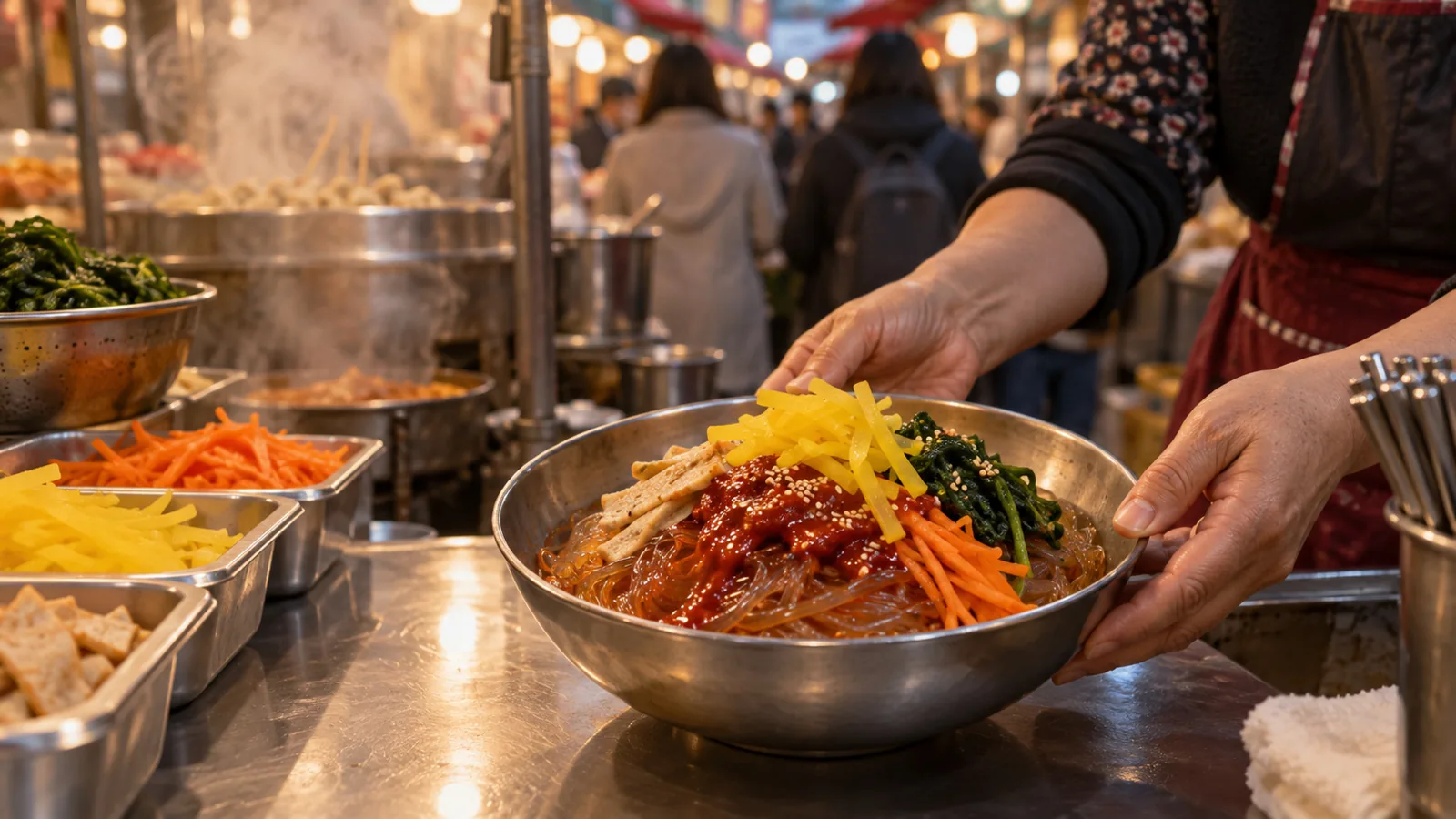
Bibim Dangmyeon (Spicy Glass Noodles)
Pre-boiled glass noodles, a sweet-spicy sauce and simple toppings — a market bowl that is ready the moment you sit down
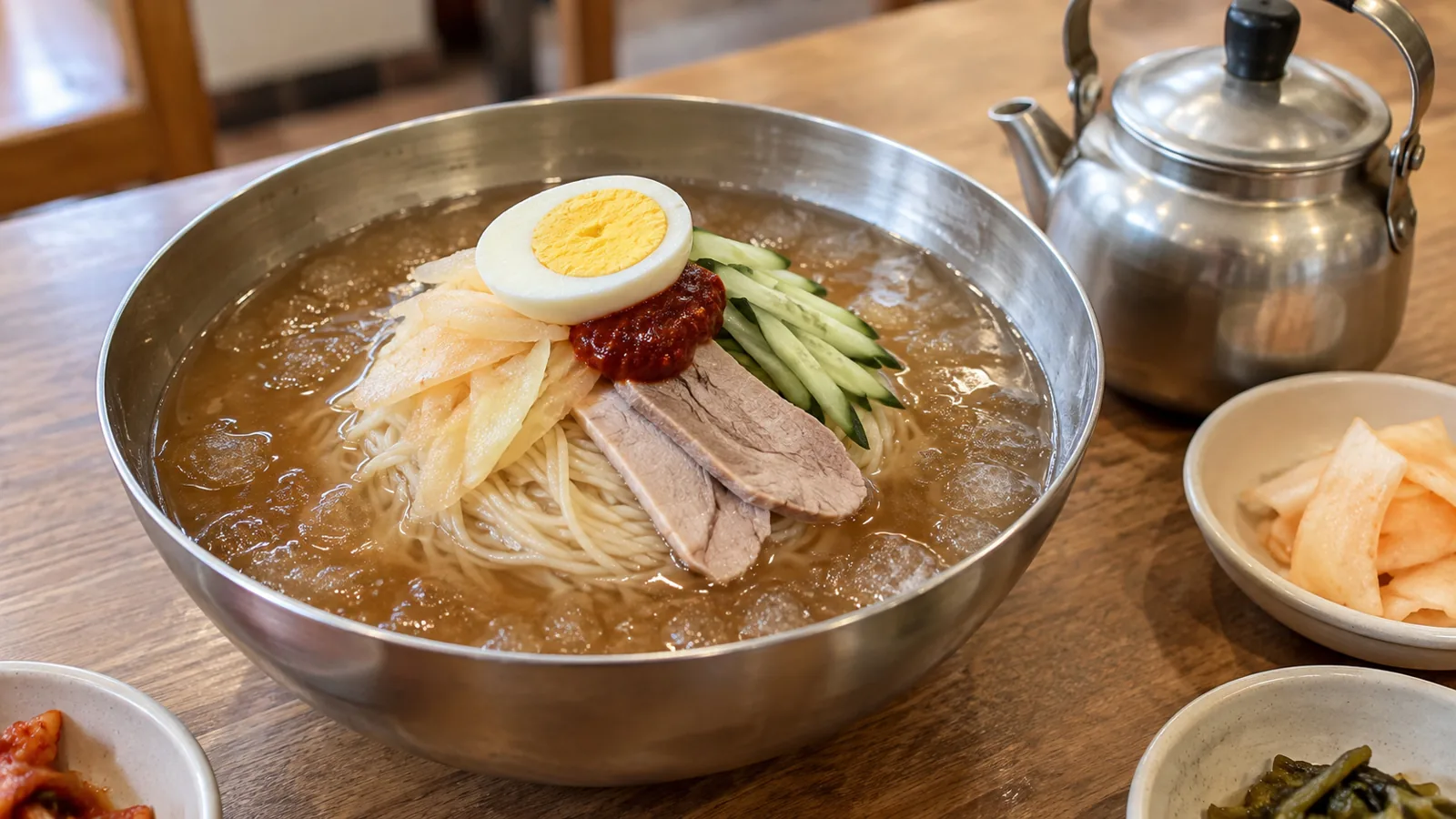
Milmyeon (Busan Wheat Noodles)
Born in the Korean War when refugees swapped buckwheat for aid flour — Busan's favourite summer noodle, eaten year-round
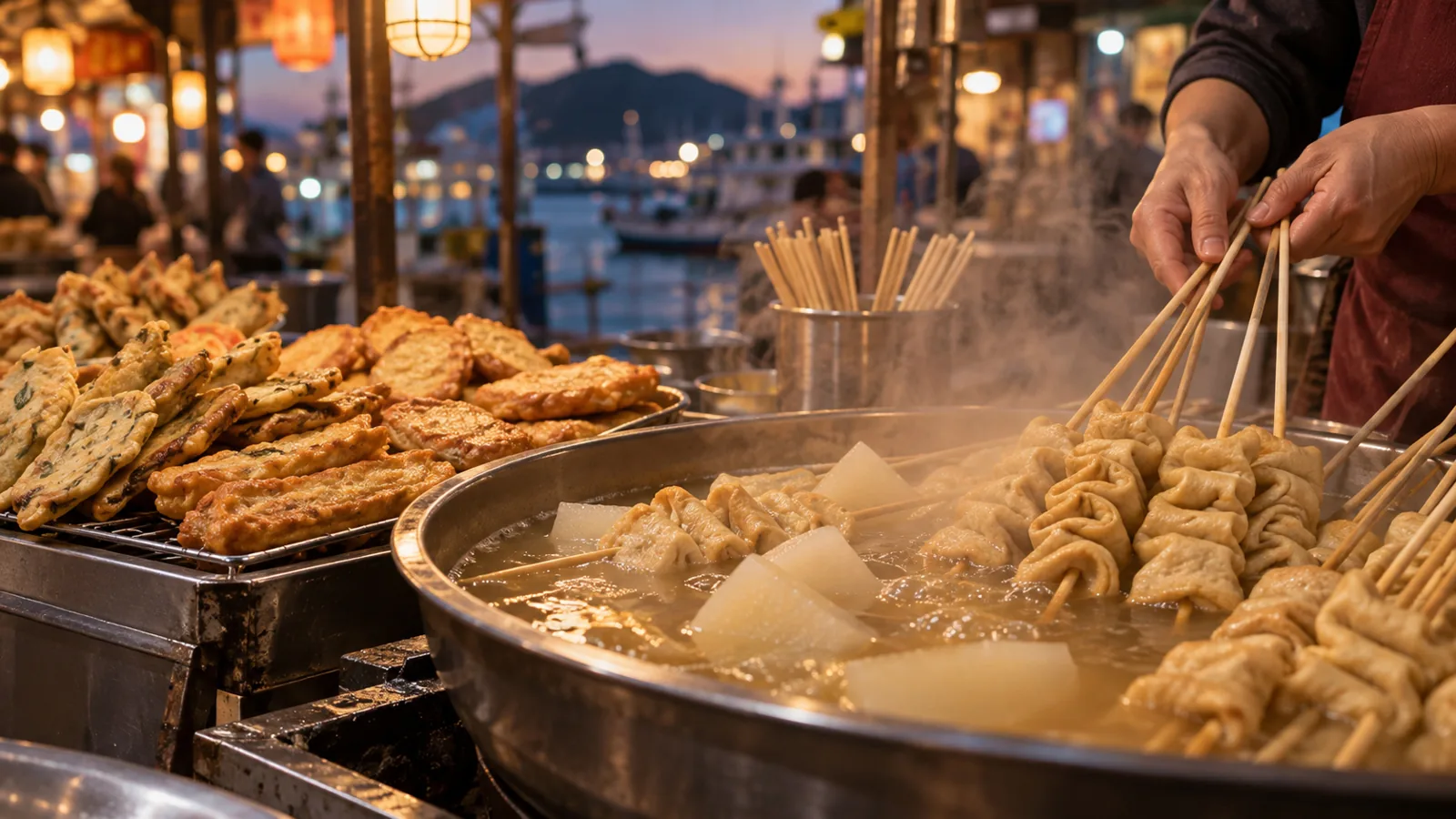
Busan Eomuk (Fish Cakes)
Ground fish, fried golden: a century-old Busan market food from Bupyeong Market to Yeongdo and Choryang
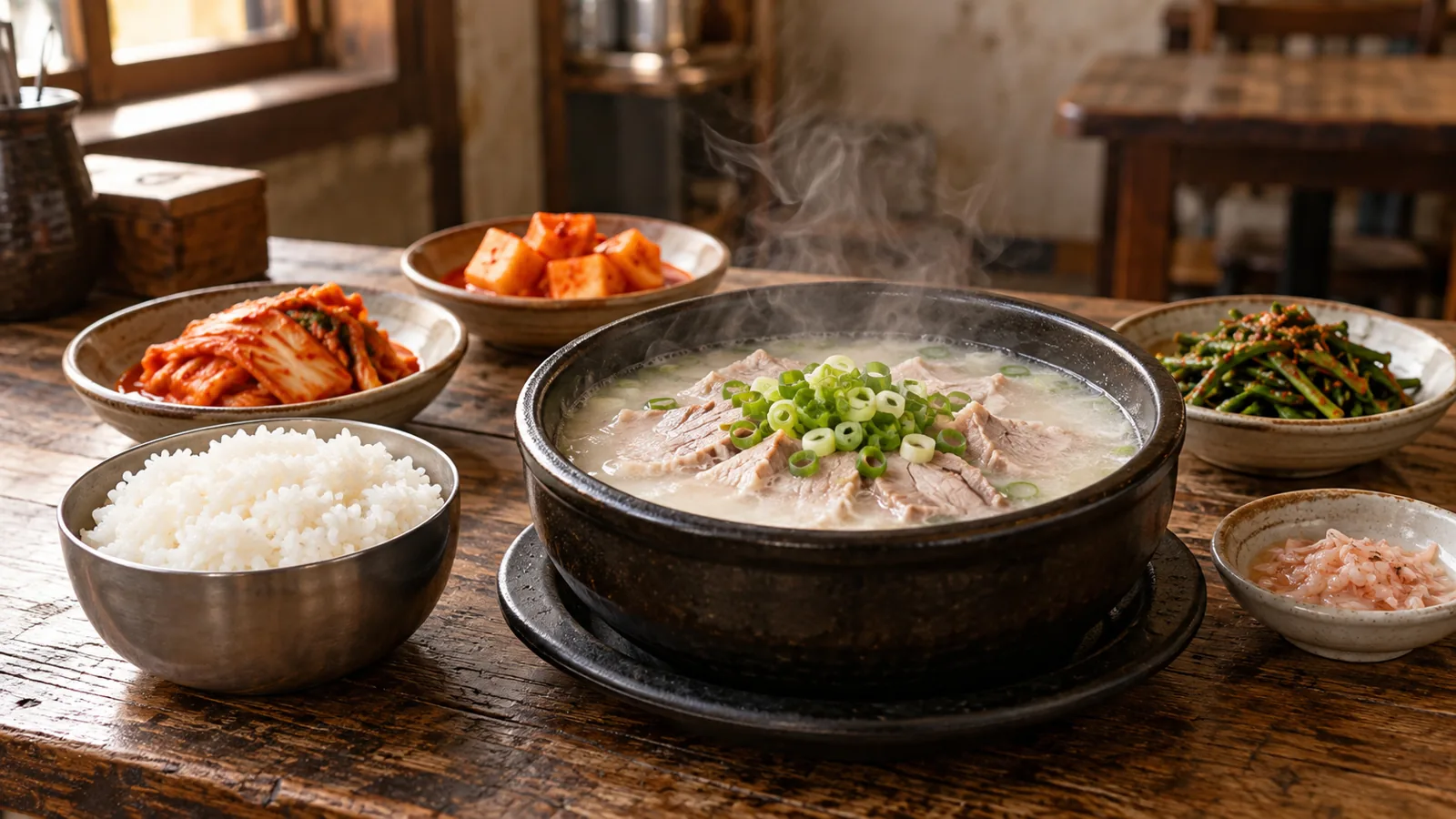
Dwaeji-gukbap (Busan Pork Rice Soup)
A fast, cheap, filling bowl that fed refugees and dock workers — and still Busan's go-to meal at any hour
← All Busan food · What to eat in Busan · Busan festivals & events