Busan Eomuk — What Korean Fish Cakes Are, Eomuk vs Odeng, and Where to Eat Them in Busan
Ground fish, fried golden: a century-old Busan market food from Bupyeong Market to Yeongdo and Choryang
Busan eomuk (부산어묵) are fish cakes made by grinding fish meat into a paste, shaping it and frying, steaming or grilling it. The name refers to fish cakes produced in the Busan area since Korea's liberation in 1945. The trade started with Japanese-run fish cake shops at Bupyeong Market in the colonial era, grew fast when refugees poured into Busan during the Korean War, and today ranges from skewers in a steaming broth at market stalls to bakery-style fish cake shops.
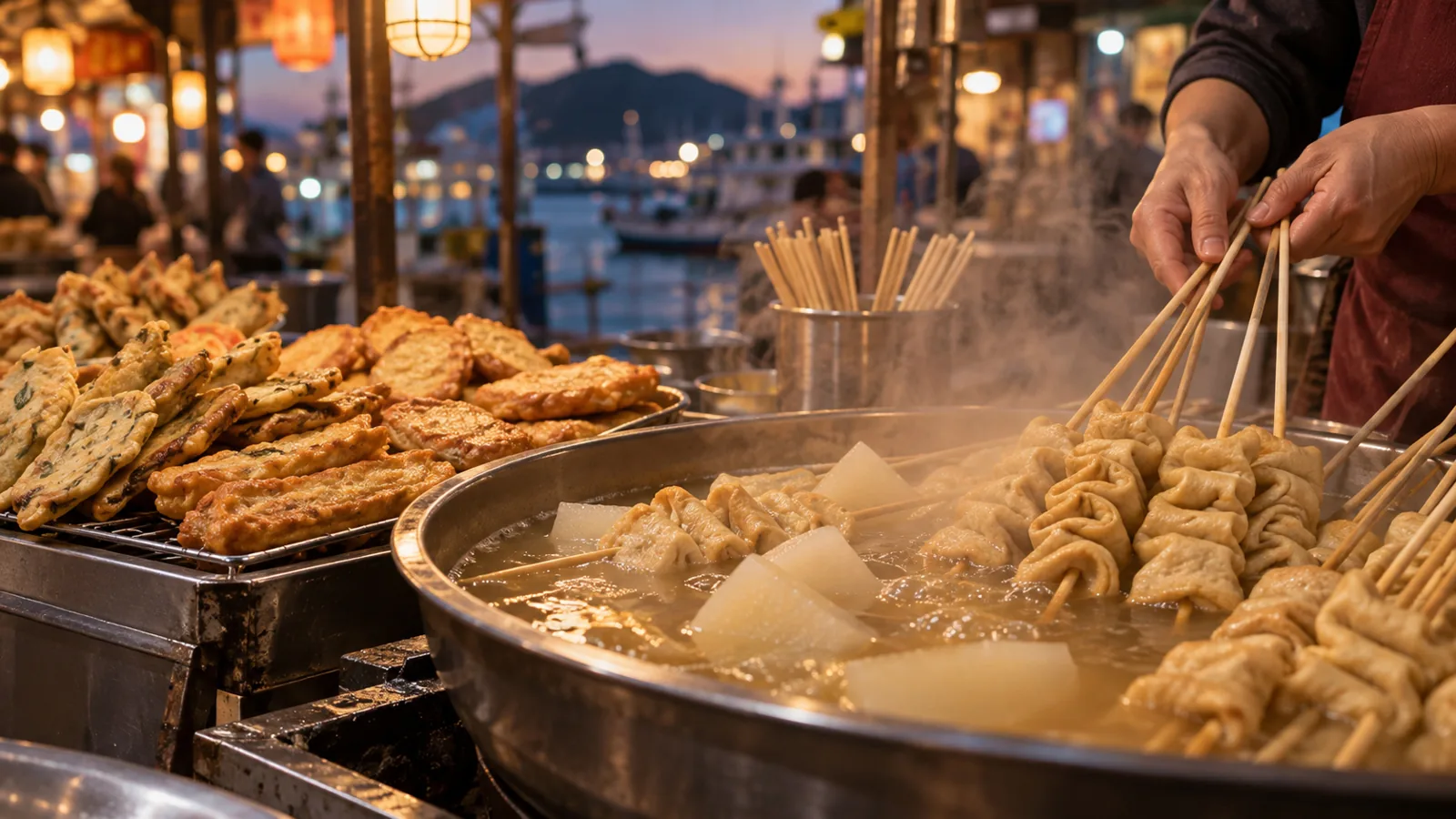
Busan eomuk in one line
Fish meat is ground into a paste, shaped and usually deep-fried — chewy inside, golden outside. Locals often still call it odeng. A port city with plenty of fish and many people who needed cheap, filling food, Busan was a natural home for fish cake factories.
| Korean | 부산어묵 (Busan eomuk, "Busan fish cake") · 오뎅 (odeng, everyday word) |
|---|---|
| Made of | Fish meat plus starch or wheat flour, salt and vegetables; fried in oil. Some types add shrimp, squid, egg or cheese. Not vegetarian. Check the label or ask if you have allergies. |
| Spice | Not spicy on its own. Skewers in broth are mild; stir-fried fish cake side dishes can be sweet-salty or a little spicy. |
| How it's served | Skewers in hot broth at market stalls, side dishes, fish cake soup, or bakery-style snacks you buy by the piece. |
| Price | One of the cheapest snacks in Busan. Prices are posted at each stall or shop. |
Where it came from — Bupyeong Market to refugee-era factories
Fish paste foods have a long history across East Asia, and Joseon-era records mention similar dishes. But the direct ancestor of today's Busan fish cake is usually said to be Japanese kamaboko.
- Colonial-era Bupyeong Market: The public market in Bupyeong-dong, Jung-gu, opened in 1910 and had fish cake shops run by Japanese merchants.
- The first Korean-owned factory: After liberation, a Korean-owned fish cake factory opened near Bupyeong Market. People who learned the trade there opened their own shops, and factories spread across the city.
- War and refugees: During the Korean War, refugees crowded into Busan and cheap fish cakes boomed. In the 1950s factories near Bongnae Market in Yeongdo and in Yeongju-dong led production; from the 1960s, factories around Choryang Market took over.
- From cheap to premium: Early factories were small and often unhygienic. In 2007 Busan added fish cakes to its premium seafood brands, and in the 2010s bakery-style fish cake shops turned eomuk into a gift-worthy snack.
In the early days, leftover market fish was ground whole in a stone mortar and fried in sardine or whale oil, according to the Encyclopedia of Korean Culture.
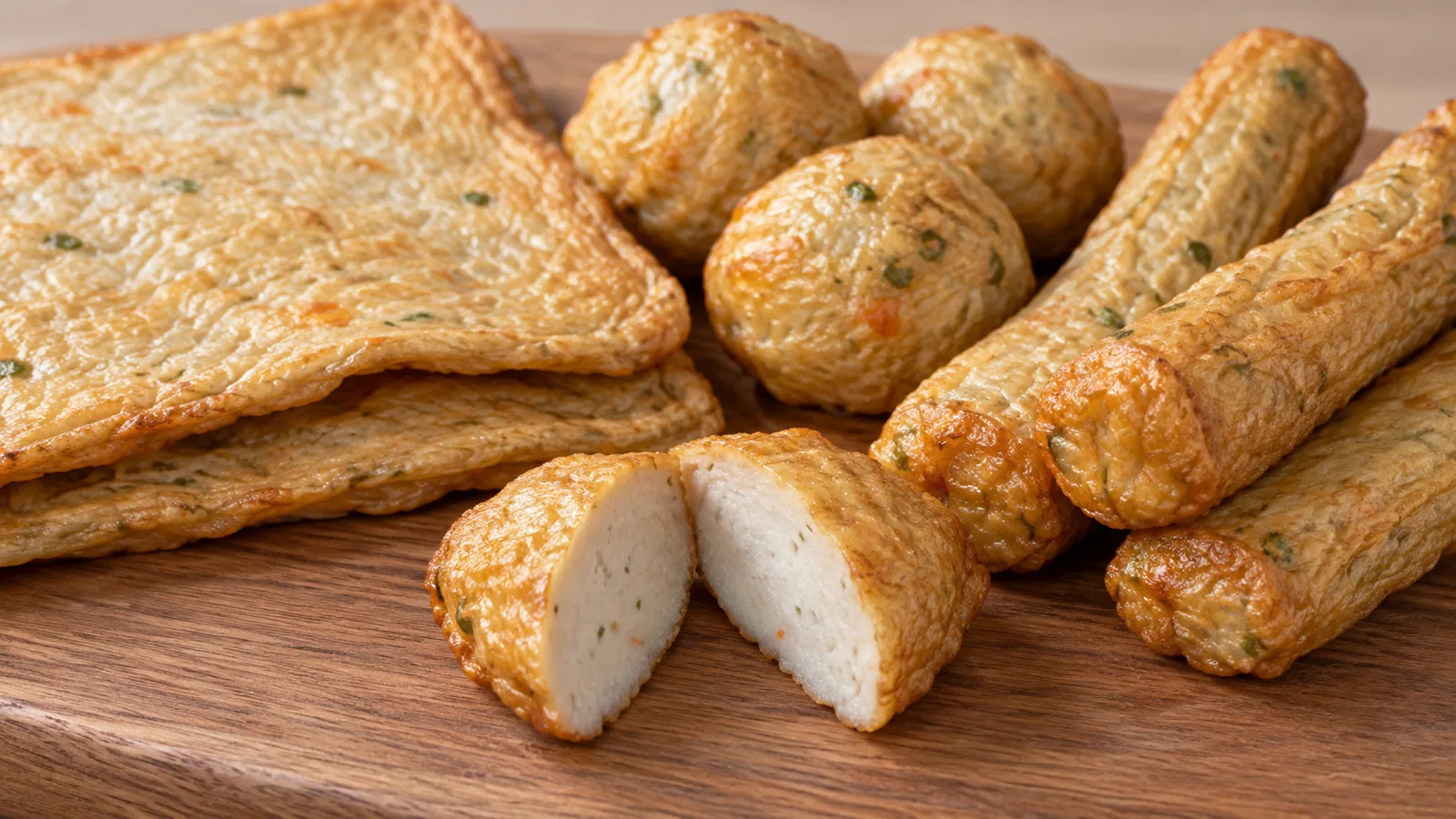
Eomuk or odeng? The words explained
Strictly speaking, eomuk (어묵) is the fish cake itself, and odeng (오뎅, from Japanese oden) is a hot-pot dish of fish cakes, radish, egg and tofu pouches simmered in broth. In 1949 a Korean language society proposed Korean replacements for both Japanese words; 'eomuk' stuck for the fish cake, but 'odeng' stayed in daily use, so today Koreans use both words for fish cakes. If you mean the soup, eomuk-tang (어묵탕) is the precise term.
What makes it 'Busan' style
Old Busan fish cakes used a lot of small yellow croaker and young hairtail; makers say croaker and sea bream add springiness and hairtail adds savoury depth. Many Busan makers aim for 70% fish meat or more — the more fish, the bouncier the bite and the less 'fishy' smell.
Types you'll see and how to eat them
| Type | What it is |
|---|---|
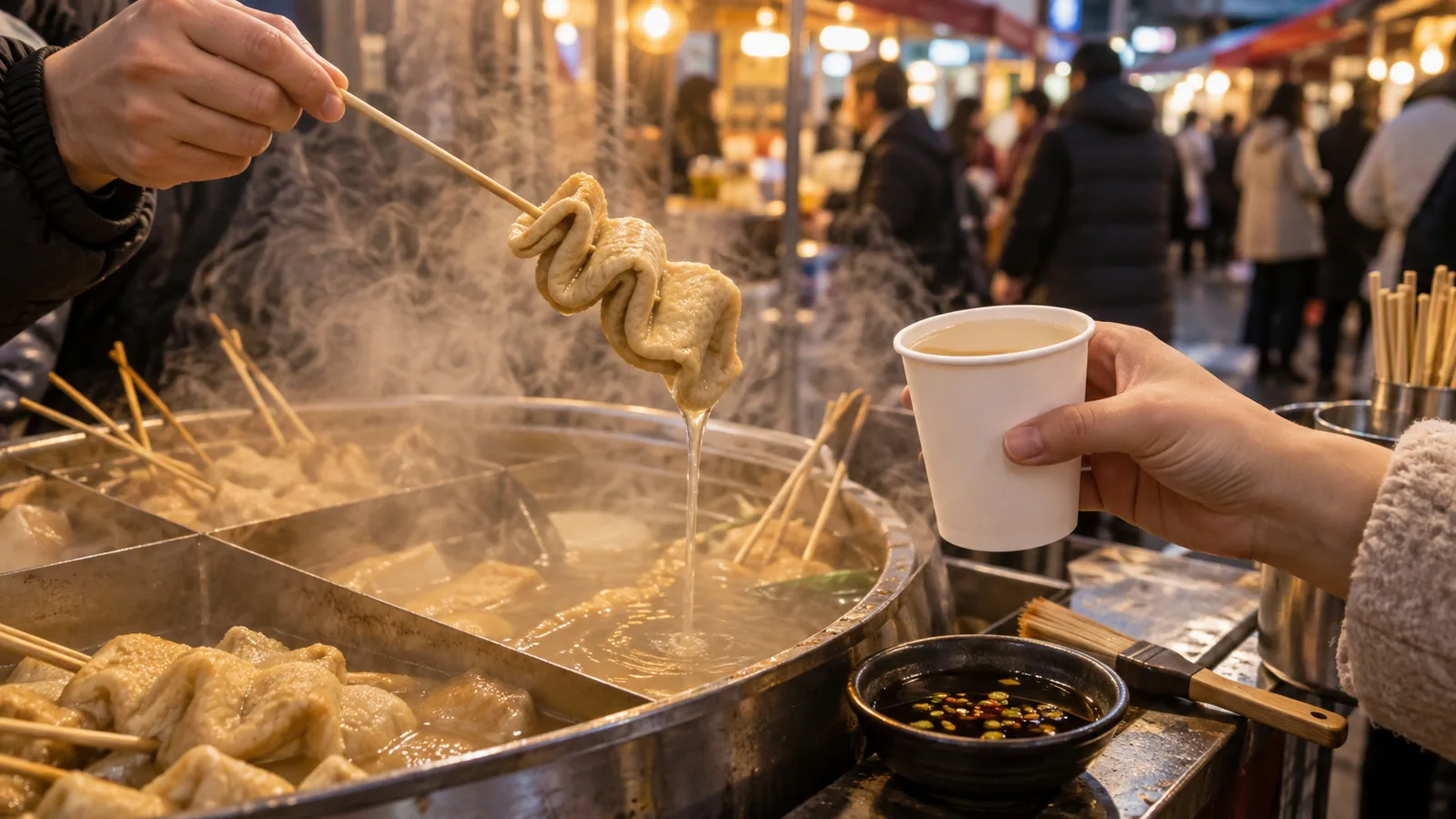
| Skewers in broth (오뎅 꼬치) | Long folded fish cakes on sticks, kept in a pot of hot broth at street stalls. Pick a skewer, eat standing up, and scoop broth into a paper cup. |
| Eomuk-tang (어묵탕) | Fish cake soup with radish and other ingredients — a classic shared dish with drinks. |
| Eomuk-bokkeum (어묵볶음) | Flat fish cakes stir-fried or braised as a rice side dish. |
| Bakery-style eomuk | Fish cake 'croquettes' and rolls filled with vegetables, cheese and more, sold by the piece like pastries. |
| Eomuk udon | Noodle soup topped with plenty of fish cake, often on the menu at fish cake shops. |
- Sip the broth first: The broth soaks up the fish cakes' savoury flavour.
- Eat fried ones hot: Freshly fried fish cakes lose their crispness as they cool.
- Blanch before cooking at home: A quick dip in boiling water removes excess oil.
- Check the fish content on packaged fish cakes to judge texture.
Useful Korean: "오뎅 하나 주세요" (odeng hana juseyo) — "One fish cake skewer, please." "국물 좀 주세요" (gungmul jom juseyo) — "Some broth, please." At many stalls you just take a skewer and pay for the sticks at the end — ask if unsure.
Where to eat it in Busan
- Bupyeong Kkangtong Market (Jung-gu): Seen as the starting point of Busan fish cakes, with several fish cake shops and a night market in the evening. Combine it with ssiat hotteok at nearby BIFF Square in Nampo-dong.
- Bongnae Market (Yeongdo): Home of fish cake factories in the 1950s and still part of the story.
- Choryang and Busan Station: Choryang's factories led production from the 1960s; today fish cake shops at transport hubs like Busan Station make it an easy last-minute gift.
Taking fish cakes home? They are perishable — ask about storage, keep them cool, and check your destination country's rules on bringing fish products before you fly.
FAQ
What is Busan eomuk?
Busan eomuk is fish cake made from ground fish meat that is shaped and usually deep-fried. It refers to fish cakes produced in Busan since 1945, a trade that began at Bupyeong Market and grew during the Korean War.
What is the difference between eomuk and odeng?
Eomuk is the fish cake itself; odeng originally meant a Japanese-style hot pot of fish cakes, radish and egg in broth. Koreans now use both words for fish cakes, but the soup is properly called eomuk-tang.
Is Korean fish cake vegetarian or gluten-free?
No. It is made of fish, and most fish cakes also contain wheat flour or starch; some add shrimp, squid or egg. Check labels or ask the shop if you have allergies.
Where can I eat fish cakes in Busan?
Bupyeong Kkangtong Market and Nampo-dong market stalls are the classic spots, Bongnae Market in Yeongdo has a long fish cake history, and Busan Station has fish cake shops that are handy for gifts.
How do I order a fish cake skewer?
Say "odeng hana juseyo" (one fish cake, please), or just pick a skewer from the pot. Broth is usually free; at many stalls you pay by counting your sticks at the end.
Sources
- 부산어묵(釜山魚묵) — Encyclopedia of Korean Culture (AKS), Oct 8, 2023
- (10)어묵에 대한 '생각의 틀'을 바꾼 차별화 — Weekly Kyunghyang, May 29, 2020
- [테이스티워드]오뎅과 어묵의 차이를 아시나요? — Asia Economy, Nov 12, 2016
Ingredients, fish content and prices differ by maker and shop. This article is a food explainer, not a restaurant ranking or advertisement.
More Busan food
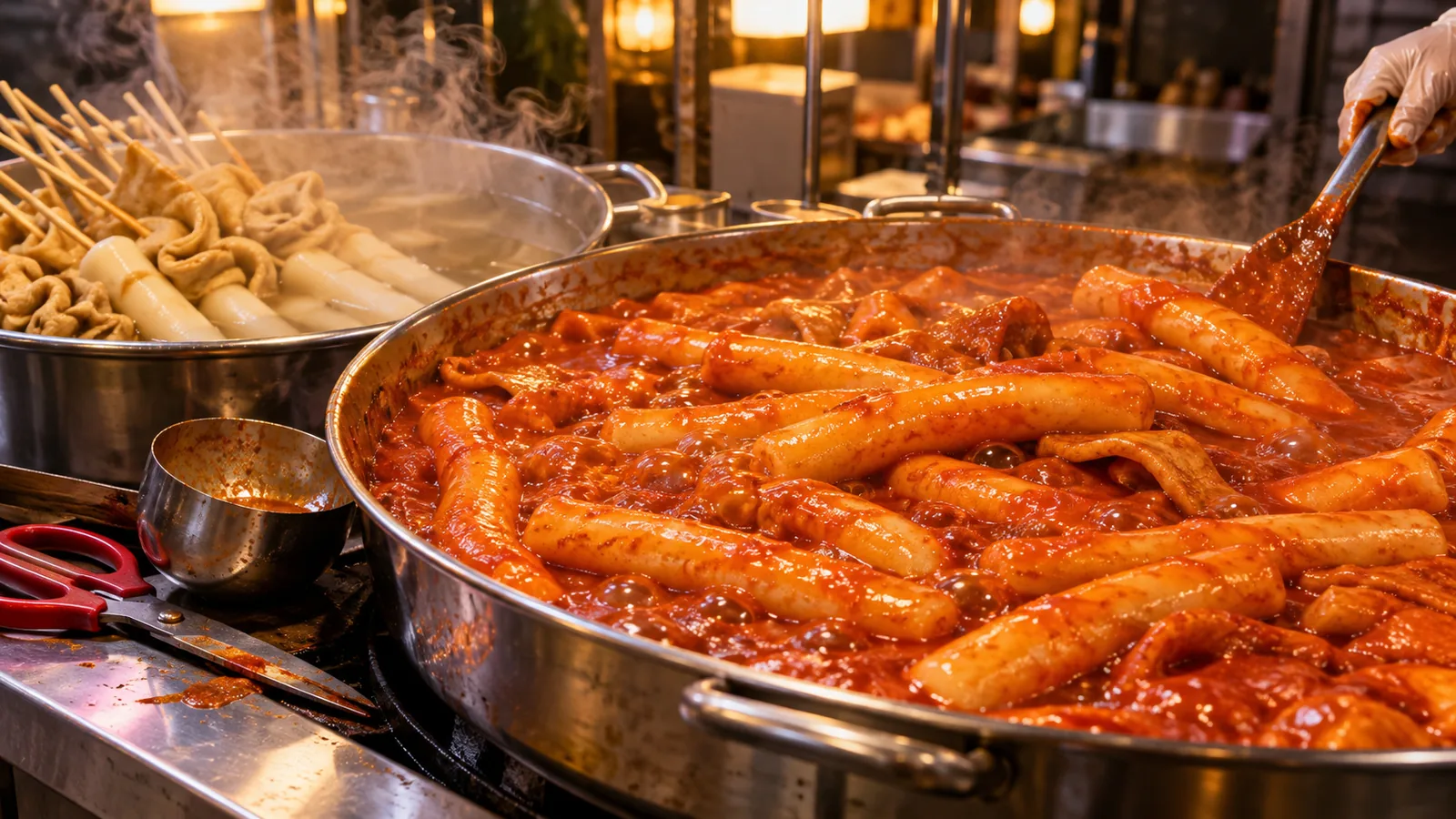
Busan Tteokbokki (Market Rice Cakes)
Long, finger-thick rice cakes simmered whole in red sauce, with fish-cake broth and mulddeok on the side
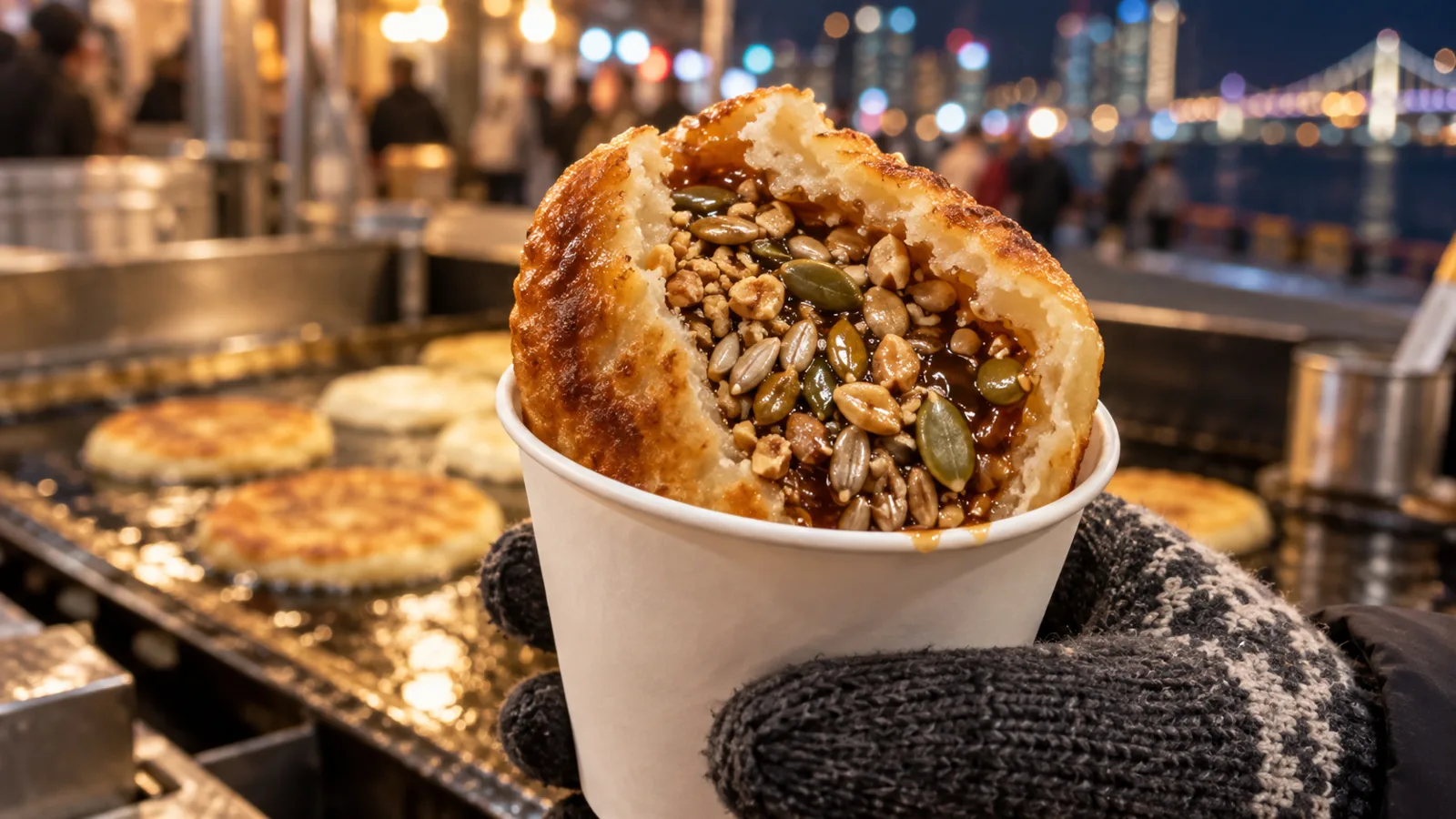
Ssiat Hotteok (Seed Hotteok)
A fried sweet pancake split open and stuffed with sunflower seeds, pumpkin seeds and peanuts — Nampo-dong's famous street snack
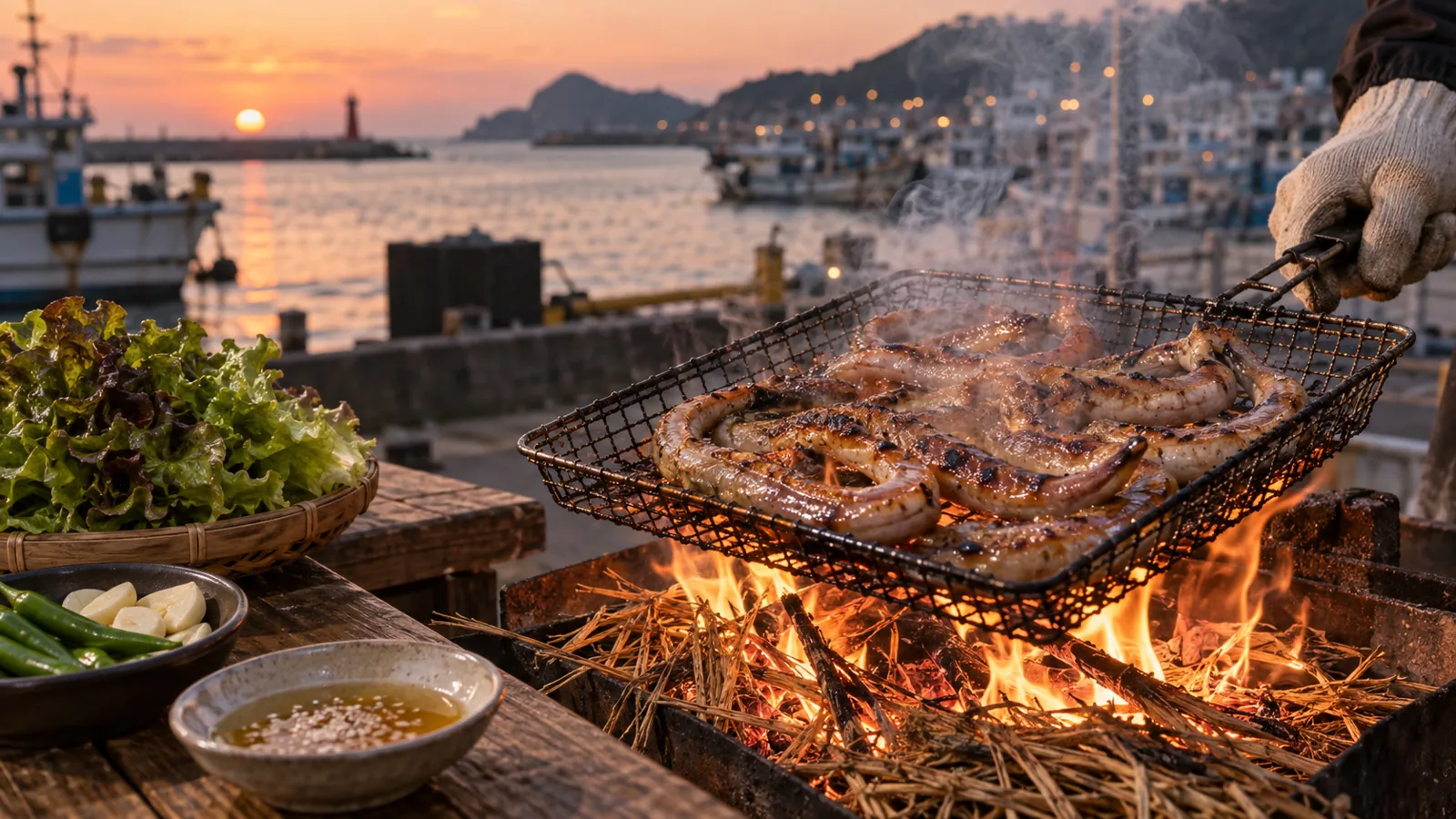
Gomjangeo (Grilled Hagfish)
Not an eel at all: a Busan drinking snack born next to leather factories, grilled over coal at Jagalchi and over straw in Gijang
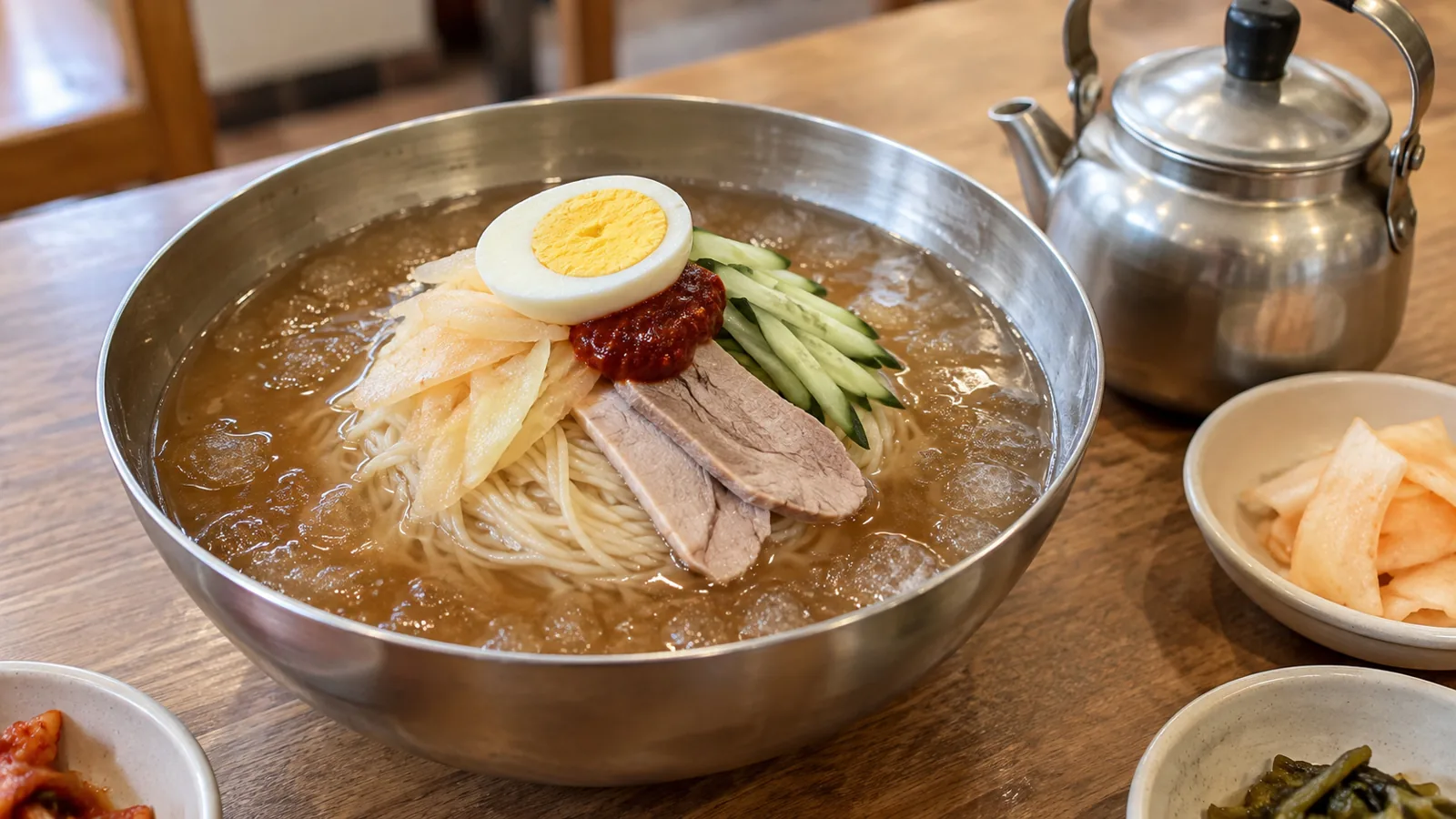
Milmyeon (Busan Wheat Noodles)
Born in the Korean War when refugees swapped buckwheat for aid flour — Busan's favourite summer noodle, eaten year-round
← All Busan food · What to eat in Busan · Busan festivals & events