Bibim Dangmyeon — Busan's Spicy Glass Noodles from Kkangtong Market: Origin, How It Differs from Japchae, and How to Eat It
Pre-boiled glass noodles, a sweet-spicy sauce and simple toppings — a market bowl that is ready the moment you sit down
Bibim dangmyeon (비빔당면) is a market dish from Jung-gu, Busan: boiled sweet-potato glass noodles topped with a sweet and spicy sauce and toppings such as pickled radish, fish cake and spinach, mixed and eaten right away. It is said to have started around the Korean War, when food was scarce and Bupyeong Market traders and wartime refugees filled up on glass noodles, which swell when boiled. Today it is a favorite snack in the food alleys of Bupyeong Kkangtong Market and Gukje Market.
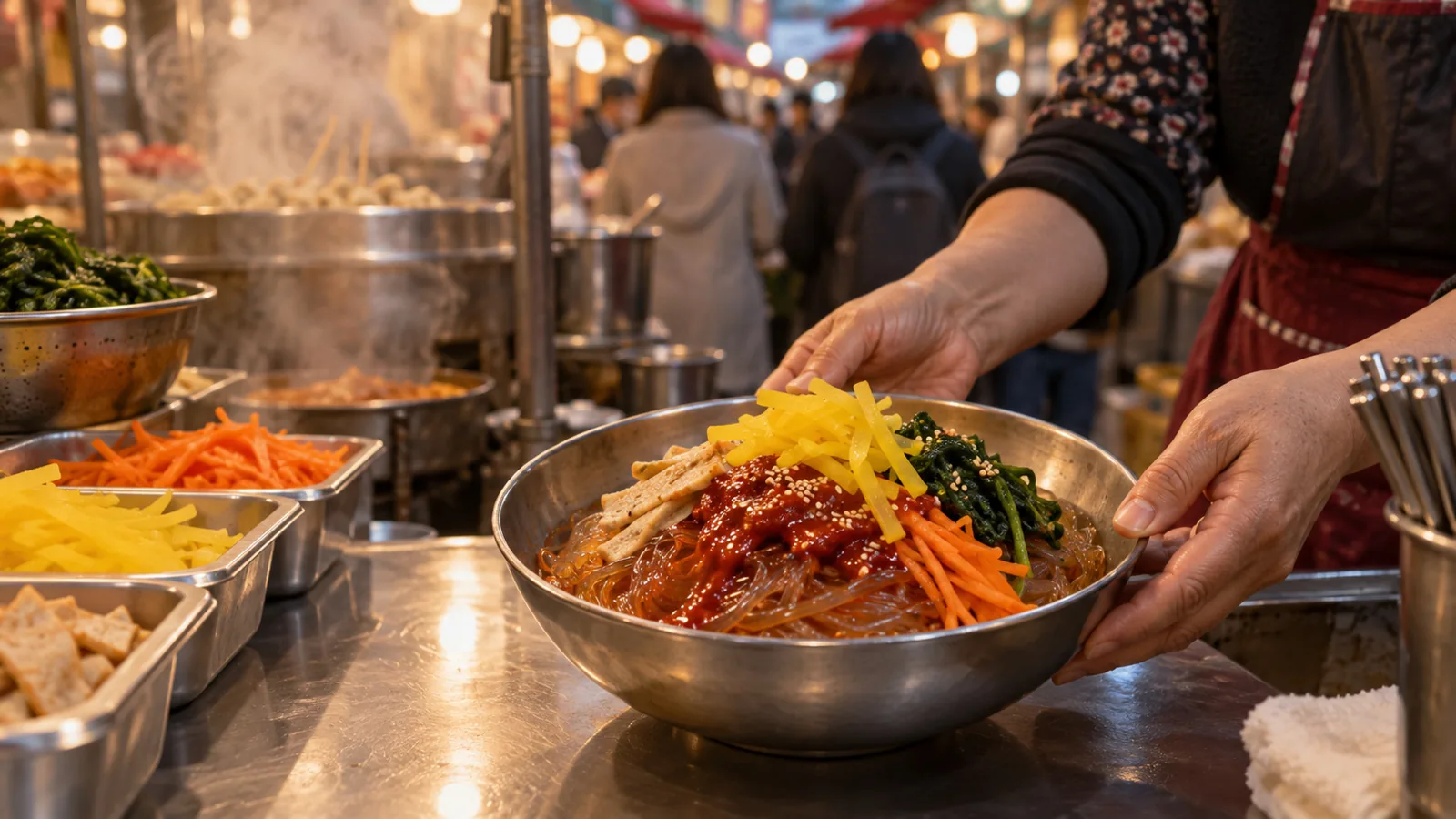
Bibim dangmyeon in one line
It looks a little like japchae, but the noodles are not stir-fried. Glass noodles are boiled in advance, then a bowl gets a spoon of sauce and a few toppings and goes straight to you. Because it comes out almost instantly, Korean media often call it “Busan's original fast food.”
| Korean | 비빔당면 (bibim dangmyeon) — bibim 비빔 (mixed) + dangmyeon 당면 (glass noodles made from sweet-potato starch) |
|---|---|
| Made of | Glass noodles, a gochujang-based sweet-spicy sauce, sesame oil, and toppings such as yellow pickled radish, fish cake (contains fish and usually wheat), spinach or garlic chives, carrot and laver. Some stalls add kimchi. |
| Spice | Mildly to medium spicy, with a sweet edge. |
| Diet notes | The noodles themselves are starch-based, but the fish cake and sauce can contain wheat, fish and soy. Not reliably vegetarian. Ask if you have allergies. |
| Price | One of the cheapest bowls in the market. Prices are posted at each stall. |
Where it came from — market traders and wartime refugees
Bibim dangmyeon is usually described as a dish born from the Korean War years and Bupyeong Market.
- Why glass noodles: Dangmyeon swells a lot when boiled, so a small amount fills you up, and it doesn't turn mushy as quickly as wheat noodles. That made it a practical meal for people with little money.
- Very simple at first: Early versions are said to have been just boiled noodles mixed with a gochujang sauce and sesame oil.
- Toppings came later: Pickled radish, laver, carrot, spinach or chives and fish cake were added over time, giving the bowl its present look.
- Into the food alleys: After the war, food alleys grew up around the markets, more stalls began selling it, and it became a signature snack in neighboring Gukje Market too.
Bupyeong Market opened in 1910 and became Busan's first public market in 1915. After the Korean War, canned goods from U.S. army bases were traded there, which gave it the nickname Kkangtong (“tin can”) Market.
What it tastes like — and how it differs from japchae
The noodles
Because the noodles are boiled ahead of time, there is far less oil than in stir-fried japchae. They are chewy and slippery and go down lightly.
Sauce and toppings
The heart of the dish is the sweet and spicy sauce. On top go pickled radish (for sourness and crunch), fish cake (for saltiness) and greens. Each stall mixes its own sauce and toppings a little differently, but the basic formula — boiled noodles + sauce + toppings — stays the same.
| Bibim dangmyeon | Japchae | |
|---|---|---|
| Cooking | Boiled noodles topped with sauce and mixed at the table | Noodles stir-fried or tossed with vegetables and meat in oil |
| Flavor | Spicy-sweet, driven by the chili sauce | Soy-based, savory and slightly sweet |
| Where you eat it | Market stalls and snack shops, on the spot | Festive tables and holidays |
Same noodle, very different idea: bibim dangmyeon is about being served fast and eaten fast.
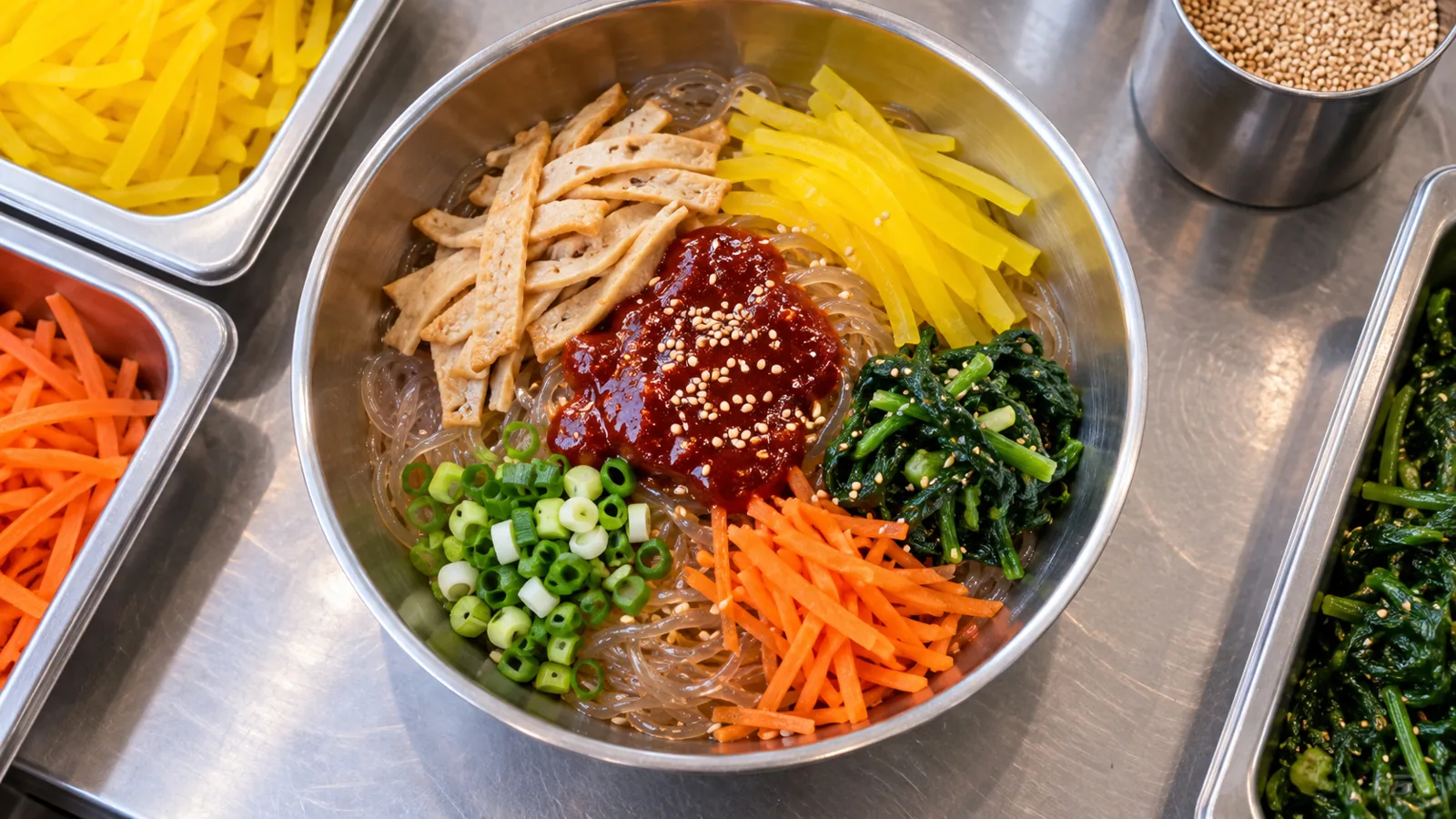
Why people call it market fast food
- No waiting: With the noodles ready in advance, a bowl comes out the moment you sit down. Busy traders could eat standing up or on a short stool between customers.
- Filling for very little: Cheap ingredients that fill you up suited the post-war market economy of Busan.
- Part of Busan's post-war food story: Along with dwaeji gukbap and milmyeon, it is often given as an example of the everyday food culture that grew in Busan after the war.
The Gukje Market food alley began with street stalls. Its bibim dangmyeon alley became better known to travelers after appearing on a popular Korean TV travel show.
How to eat it
- Mix right away: The sauce sits on top, so stir from the bottom with your chopsticks until every strand is coated.
- Take toppings in each bite: The sour radish and salty fish cake are there to balance the sweet sauce.
- Make it a snack crawl: The same alleys sell eomuk (fish cake), tteokbokki and other snacks, and ssiat hotteok is a short walk away — order small and try several things.
Useful Korean: “비빔당면 하나 주세요” (bibim dangmyeon hana juseyo) — “One bibim dangmyeon, please.” “안 맵게 해 주세요” (an maepge hae juseyo) — “Not spicy, please” (not every stall can change the sauce).
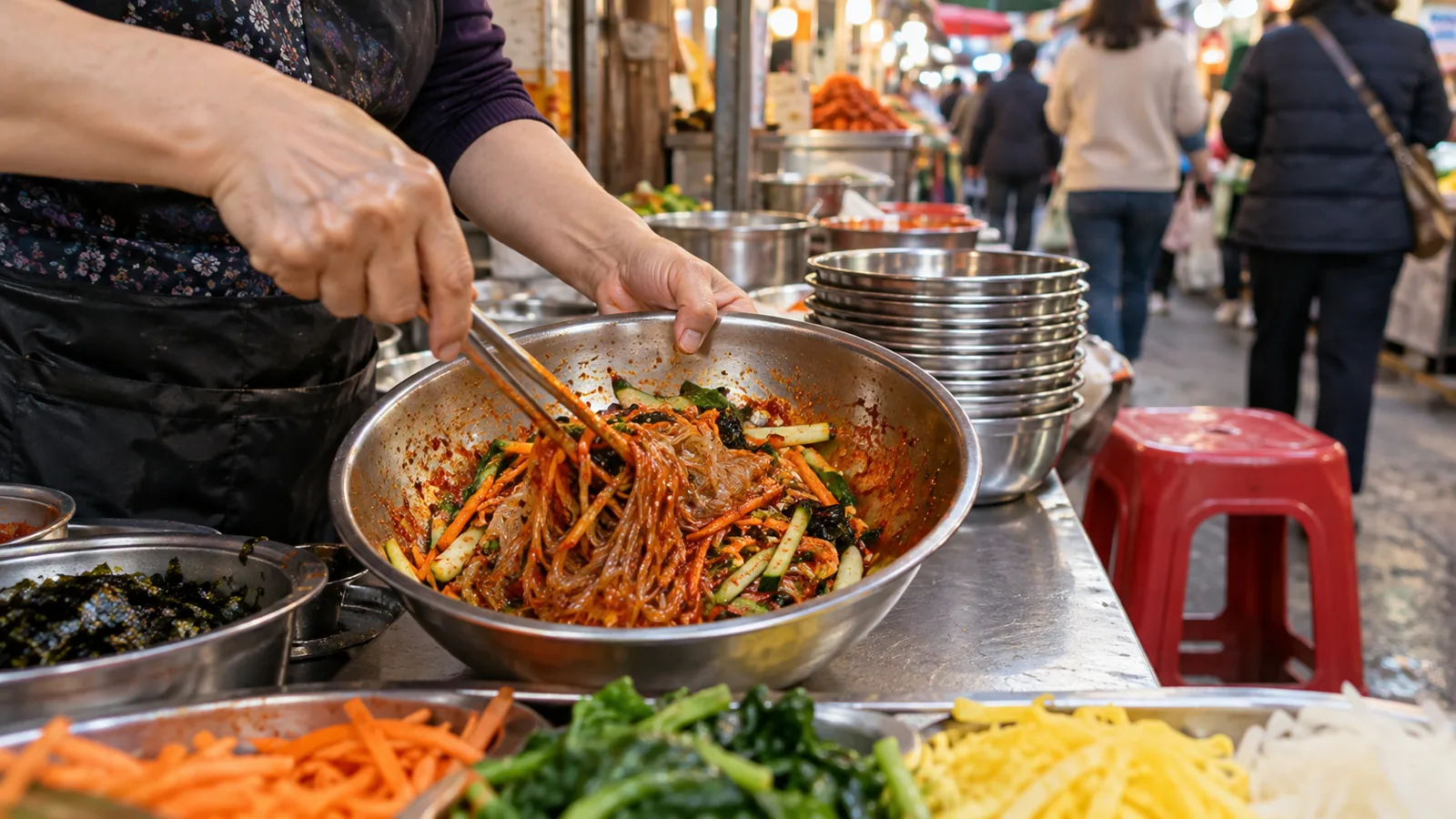
Where to eat it in Busan
Head to Jung-gu, the old downtown: Bupyeong Kkangtong Market and the Gukje Market food alley, a short walk from Jagalchi Station or Nampo Station on Busan Metro Line 1. In Gukje Market there is a lane where stalls sell bibim dangmyeon alongside chungmu gimbap, next to other snack lanes. There is no agreed “original” stall, so sitting down at whichever counter catches your eye is part of the fun.
We list areas, not restaurant rankings. Market stall hours vary, and some close on certain days.
FAQ
What is bibim dangmyeon?
Bibim dangmyeon is a Busan market dish of boiled glass noodles topped with a sweet and spicy gochujang-based sauce and toppings such as pickled radish, fish cake and spinach, mixed and eaten right away.
How is bibim dangmyeon different from japchae?
Japchae is stir-fried or tossed with oil, vegetables and meat and seasoned with soy sauce. Bibim dangmyeon uses noodles boiled in advance, topped with a spicy-sweet sauce and simple toppings, and is served instantly at market stalls.
Where can I eat bibim dangmyeon in Busan?
The best-known places are Bupyeong Kkangtong Market and the Gukje Market food alley in Jung-gu, near Jagalchi and Nampo stations on Metro Line 1.
Is bibim dangmyeon spicy?
It is mildly to medium spicy with a sweet taste. If you are sensitive to heat, ask for less sauce.
Is bibim dangmyeon vegetarian or gluten-free?
Not reliably. The glass noodles are made from starch, but toppings like fish cake and the sauce can contain fish, wheat and soy.
Sources
- 부산의 원조 패스트푸드…피란민 허기 달래던 ‘비빔당면’ [FOOD+] — Segye Ilbo, Sep 10, 2026
- 국제시장 먹자골목, 부산의 별미가 다 모였다 — Saturday Economy, Nov 2, 2012
Toppings, prices and opening hours differ by stall. This article is a food explainer, not a restaurant ranking or advertisement.
More Busan food
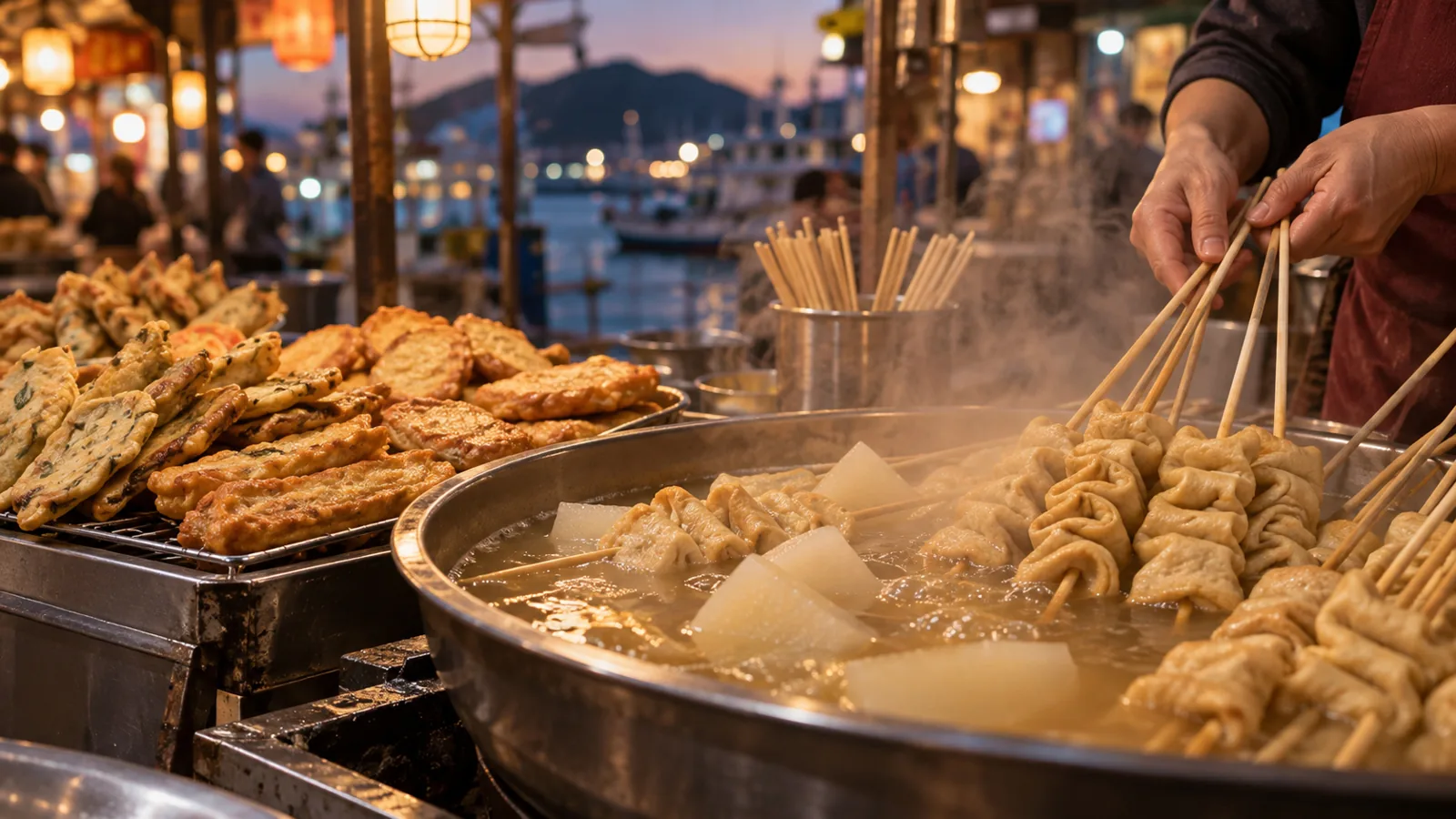
Busan Eomuk (Fish Cakes)
Ground fish, fried golden: a century-old Busan market food from Bupyeong Market to Yeongdo and Choryang
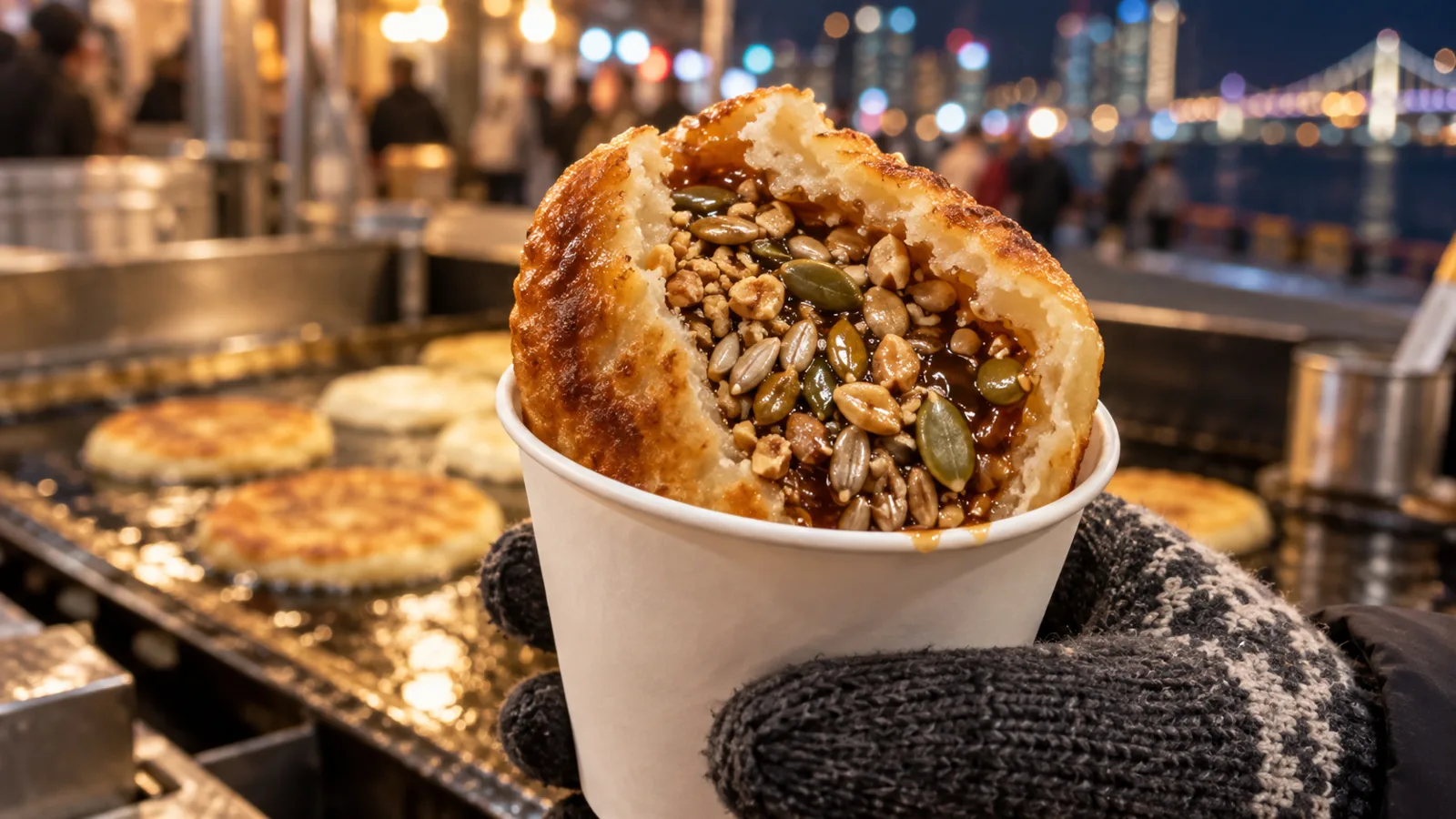
Ssiat Hotteok (Seed Hotteok)
A fried sweet pancake split open and stuffed with sunflower seeds, pumpkin seeds and peanuts — Nampo-dong's famous street snack
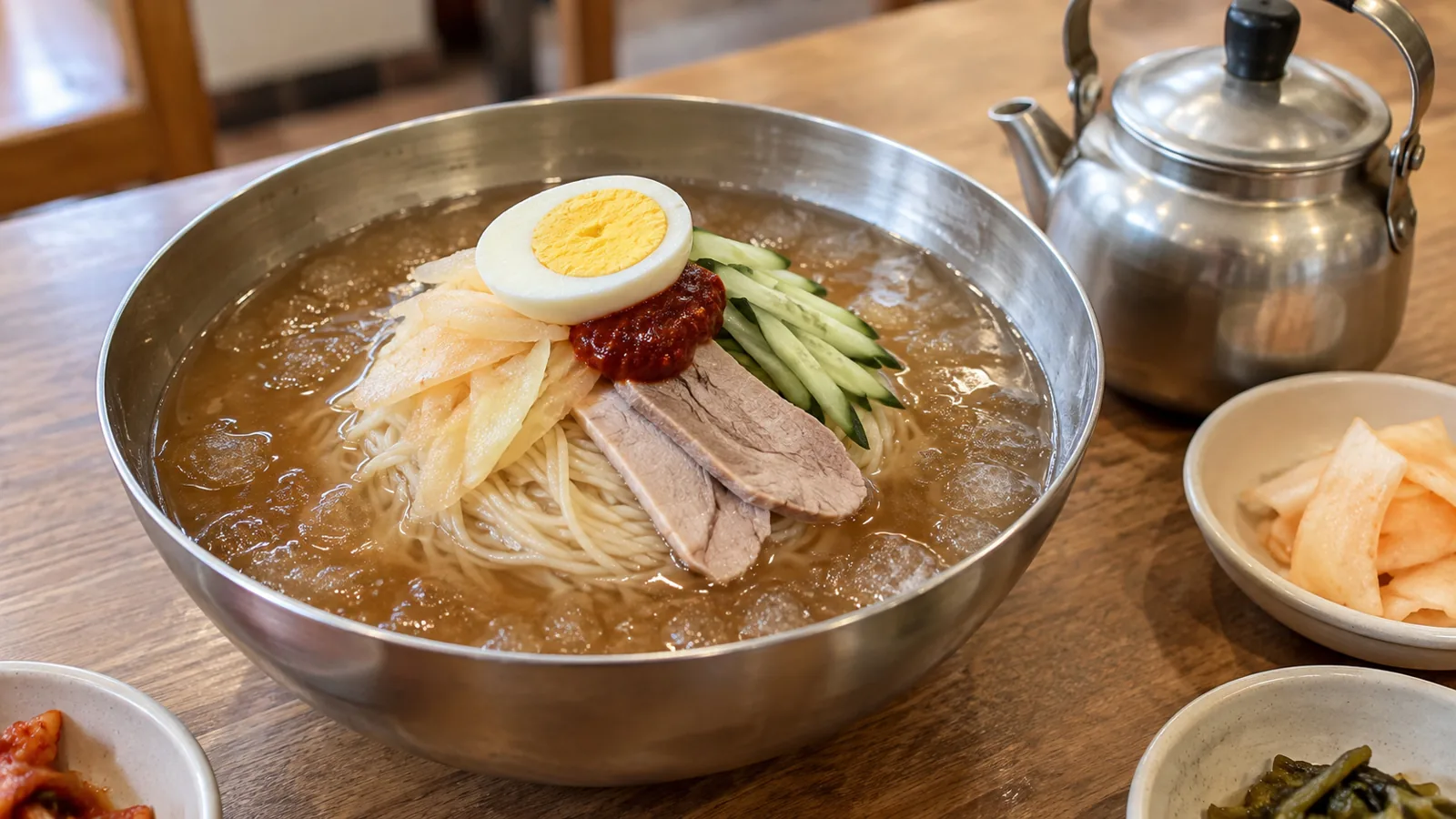
Milmyeon (Busan Wheat Noodles)
Born in the Korean War when refugees swapped buckwheat for aid flour — Busan's favourite summer noodle, eaten year-round
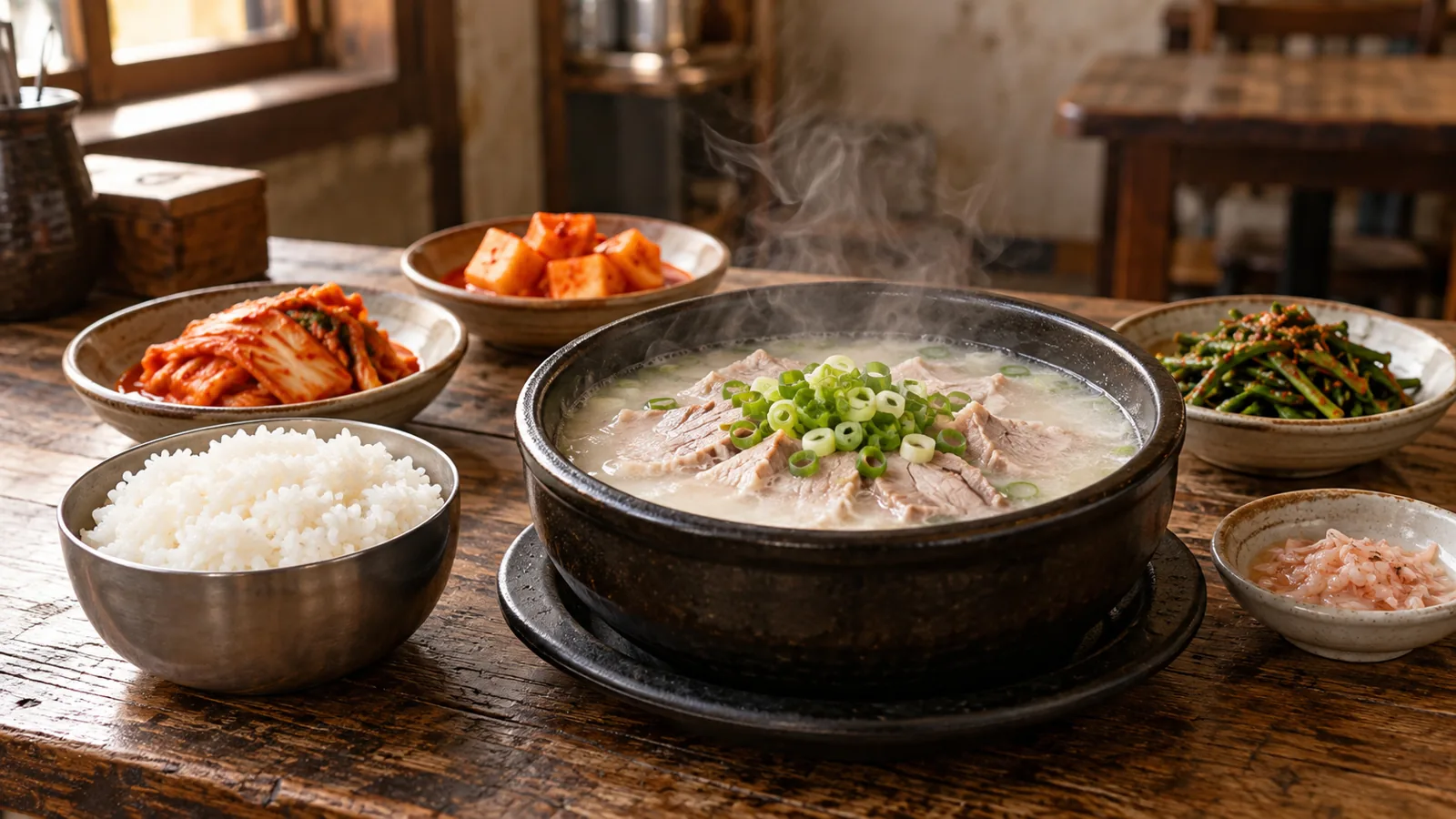
Dwaeji-gukbap (Busan Pork Rice Soup)
A fast, cheap, filling bowl that fed refugees and dock workers — and still Busan's go-to meal at any hour
← All Busan food · What to eat in Busan · Busan festivals & events