Oysters in Busan (Gul) — Winter Oyster Soup, Oyster Bossam and Raw Oysters: When to Eat Them and How to Eat Them Safely
The 'milk of the sea' that fattens up from November — the oyster dishes Busan people look for every winter
Gul (굴) is the Korean word for oyster, a winter seafood in season from around November to early spring. Most of the large oysters eaten in Busan come from farms off Tongyeong and Geoje on the nearby South Gyeongsang coast, and in winter Busan restaurants and markets fill up with oyster rice soup (gulgukbap), oyster bossam, oyster pancakes and raw oysters. This article is not a restaurant ranking; it explains the dishes, the season, how to order, and Korea's food-safety rule for oysters labeled 'for cooking'.
Oysters in Busan in one line
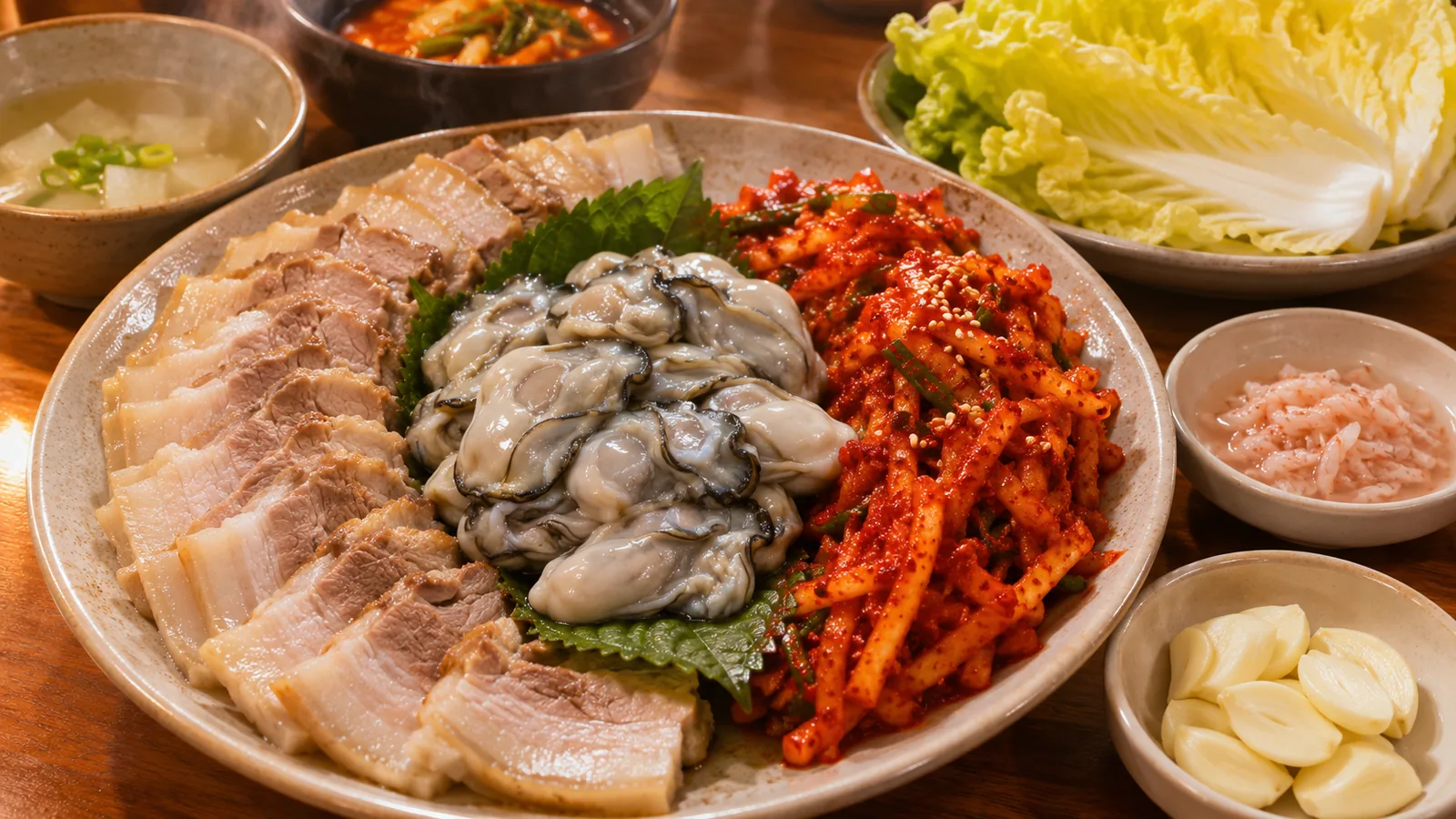
From November until around the Lunar New Year, oysters grow plump and sweet, and Busan people warm up with a bubbling bowl of gulgukbap (oyster rice soup) or open a winter get-together with gul-bossam — raw oysters wrapped with boiled pork and spicy kimchi.
| Korean | 굴 (gul) = oyster · 굴국밥 (gul-gukbap) = oyster rice soup · 굴보쌈 (gul-bossam) = oysters with boiled pork and kimchi · 굴전 (gul-jeon) = oyster pancake · 석화 (seokhwa) = oysters in the shell · 생굴 (saeng-gul) = raw oysters |
|---|---|
| Season | About November to early spring (many say they are plumpest around the Lunar New Year). Avoid them in the spawning months, May to August. |
| Where they come from | Mostly oyster farms off Tongyeong and Geoje, close to Busan — reported to supply over 70% of Korea's large shucked oysters. |
| Must know | Oysters labeled 가열조리용 ('for cooking') must be cooked — at least 85°C at the center for 1 minute (Korea's Ministry of Food and Drug Safety). |
Why oysters are a winter thing
- They taste best in the cold: oysters fill out as the water cools from November and are said to be at their best around the Lunar New Year. In summer (May–August) they spawn, taste weaker, and the risk of norovirus and vibrio is higher, so Koreans traditionally skip them.
- The farms are next door: the big oysters used in soups and rice bowls come mostly from the southern coast around Tongyeong and Geoje, an hour or two from Busan, so Busan markets and restaurants get plenty every winter.
- 'Milk of the sea': oysters are low in calories and rich in protein, glycogen and minerals, which is why Koreans call them 바다의 우유, the milk of the sea.
The farmed oyster Koreans usually eat is the Pacific oyster (참굴, cham-gul). There are other kinds with different seasons, such as the large 'cherry blossom oyster' (벚굴) from the Seomjin River mouth.
Which oyster dish to order
| Dish | What it is | Good for |
|---|---|---|
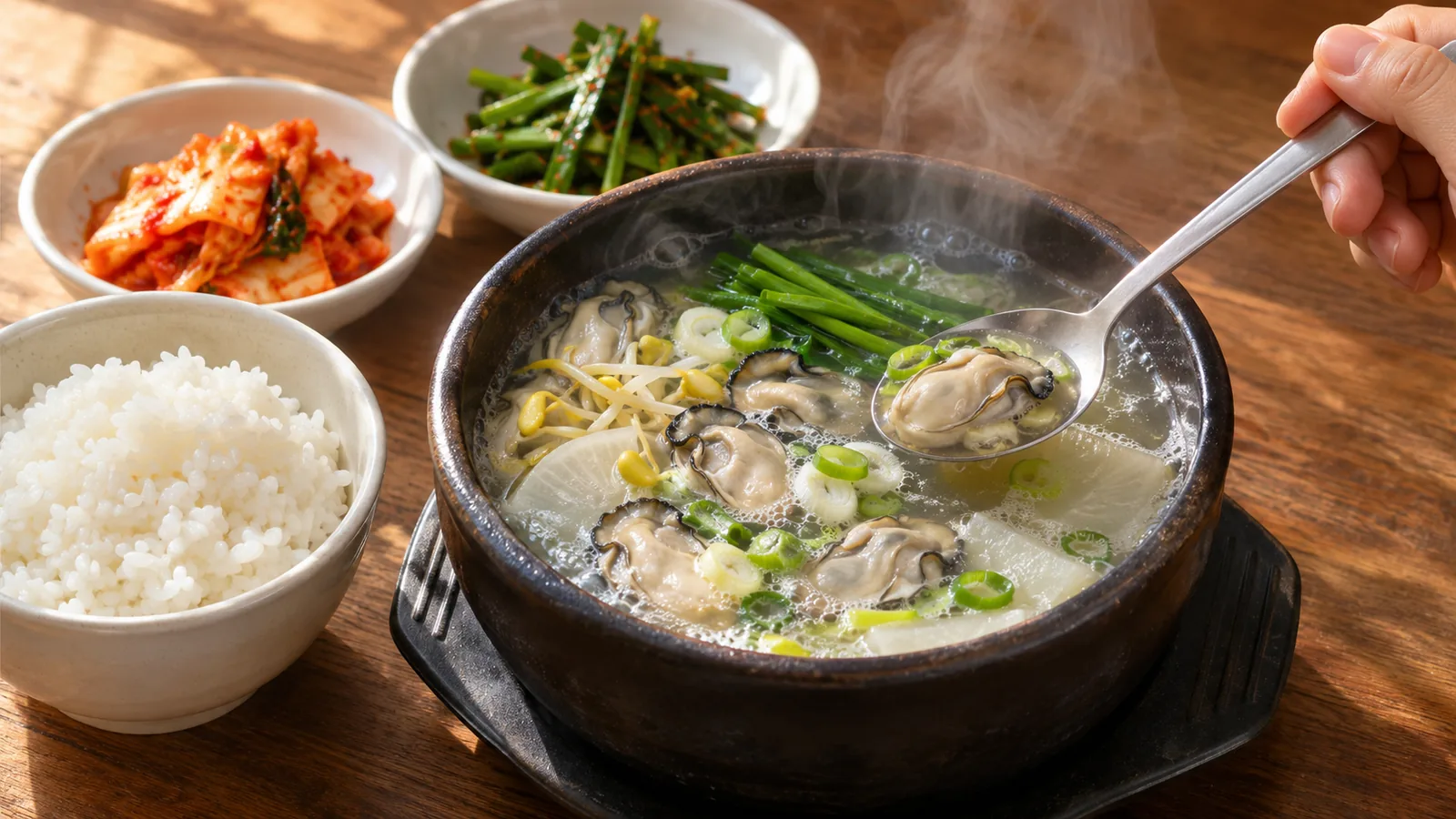
| Gul-gukbap 굴국밥 | A clear soup of oysters with bean sprouts, radish and chives, with rice, often served boiling in a stone pot | Anyone unsure about raw oysters; breakfast or a hangover |
| Gul-bossam 굴보쌈 | Sliced boiled pork, spicy bossam kimchi and raw oysters — wrap them together in one bite | Dinner with friends (usually ordered for 2–3+) |
| Gul-jeon 굴전 | Oysters coated in flour and egg and pan-fried | Kids, seniors, with makgeolli |
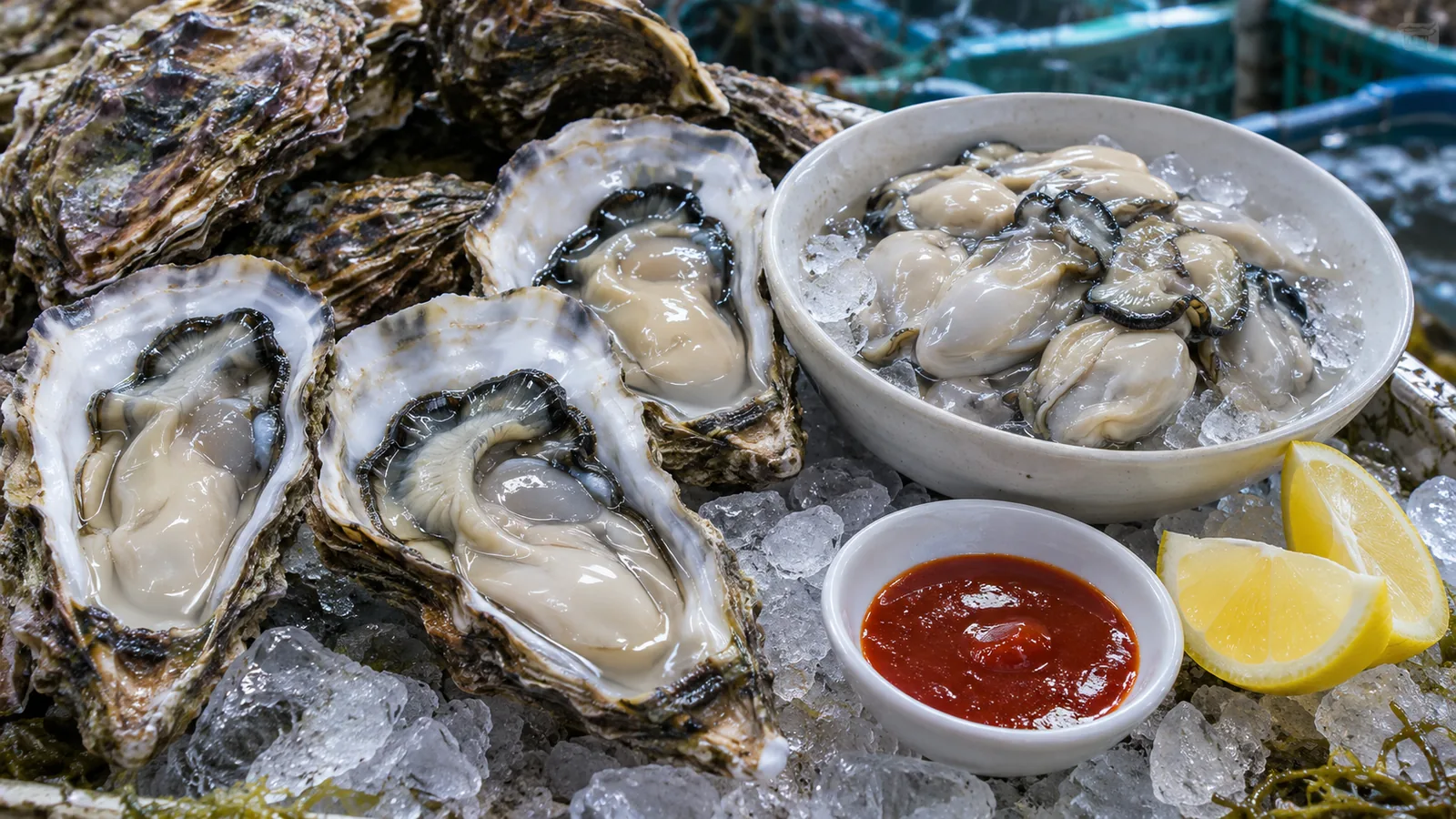
| Saeng-gul 생굴 | Fresh shucked oysters with chili-vinegar sauce (chogochujang) | Oyster lovers — only oysters sold for raw eating |
| Seokhwa / gul-gui 석화·굴구이 | Oysters grilled or steamed in the shell until they open | Fans of Busan's grilled shellfish |
| Gul-kalguksu / gul-bap | Knife-cut noodles with oysters; rice cooked with oysters and mixed with soy-sesame sauce | A filling one-dish meal |
Many Busan grilled-clam restaurants add oysters in the shell in winter — see our jogae-gui (grilled shellfish) article.
How to eat oysters safely
- Check the label: oysters from waters where norovirus was found are labeled 가열조리용 ('for cooking') or 익혀 먹는 ('eat cooked'). Never eat these raw.
- Cook them through: Korea's Ministry of Food and Drug Safety recommends 85°C at the center for at least 1 minute. Soups, steamed oysters and pancakes are the safe choices.
- Seniors, children and pregnant women: choose cooked oyster dishes.
- Buy from a trusted place: do not eat raw oysters if you do not know where they came from.
- Rinse raw oysters lightly under running water and pick out shell fragments; wash your hands with soap for 30 seconds afterwards.
Norovirus food poisoning in Korea occurs mostly from November to April, with diarrhea, vomiting, chills or fever 12–48 hours after eating. If symptoms are severe, see a doctor.
Ordering in Korean — a few words
| You want | Say / look for |
|---|---|
| Oyster rice soup, one please | 굴국밥 하나 주세요 (gul-gukbap hana juseyo) |
| Is this oyster OK to eat raw? | 생으로 먹어도 돼요? (saeng-euro meogeodo dwaeyo?) |
| Cooked, please | 익혀 주세요 (ik-hyeo juseyo) |
| Market price (ask before ordering) | 시가 (siga) — 얼마예요? (eolmayeyo? = how much?) |
Menus that say 시가 (market price) change with the season's harvest, so ask the price first.
Where to eat oysters in Busan
Oysters are not a single neighborhood's dish in Busan — they are a winter menu you find all over the city. We do not rank restaurants; here is how to choose.
- Gukbap and bossam restaurants: in winter many soup and bossam places add oyster dishes to the menu.
- Fish markets: at markets such as Jagalchi in Nampo-dong you can buy shucked oysters or oysters in the shell in winter. If you want to eat them raw, ask whether they are sold for raw eating (생식용, saengsik-yong).
- Pojangmacha (street and indoor tent bars): grilled and steamed oysters in the shell are a winter favorite — cooked, so good for the cautious.
A winter food day in Busan could be oyster soup for breakfast, market snacks such as fish cakes and seed hotteok in the afternoon, and grilled shellfish or oyster bossam for dinner. For another winter soup, try daegutang (cod soup).
FAQ
When are oysters in season in Busan?
From about November to early spring, and many say they are plumpest around the Lunar New Year. Koreans avoid them in the spawning months of May to August.
Where do Busan's oysters come from?
Most large oysters come from farms off Tongyeong and Geoje on the South Gyeongsang coast near Busan, which are reported to supply over 70% of Korea's large oysters.
Can I eat oysters labeled 가열조리용 raw?
No. 가열조리용 means 'for cooking'. These must be cooked — Korea's food safety ministry recommends 85°C at the center for at least 1 minute.
What is gul-bossam?
A winter dish of sliced boiled pork, spicy bossam kimchi and raw oysters, wrapped and eaten together. It is usually ordered for two to three people or more.
What should I order if I'm nervous about raw oysters?
Fully cooked dishes: oyster rice soup (gul-gukbap), oyster pancake (gul-jeon), or steamed or grilled oysters in the shell.
What is 'oyster' in Korean?
Gul (굴). Oysters in the shell are called seokhwa (석화), and raw oysters saeng-gul (생굴).
Sources
- [Kim Jun's sea food journey] Oysters, the all-rounder of the winter sea (Korean) — Seoul Shinmun, Feb 6, 2014
- Raw, bossam, steamed, grilled, soup… oysters in many dishes (Korean) — Segye Ilbo, Nov 21, 2020
- Cook oysters labeled 'for cooking' to prevent norovirus (Korean) — Ministry of Food and Drug Safety (Korea.kr), Feb 2, 2024
- Why winter is best time to enjoy seafood in Korea — The Korea Times, Dec 6, 2025
Menus, prices and opening hours differ by restaurant and by the season's harvest. This article is a food explainer, not a restaurant ranking or advertisement.
More Busan food
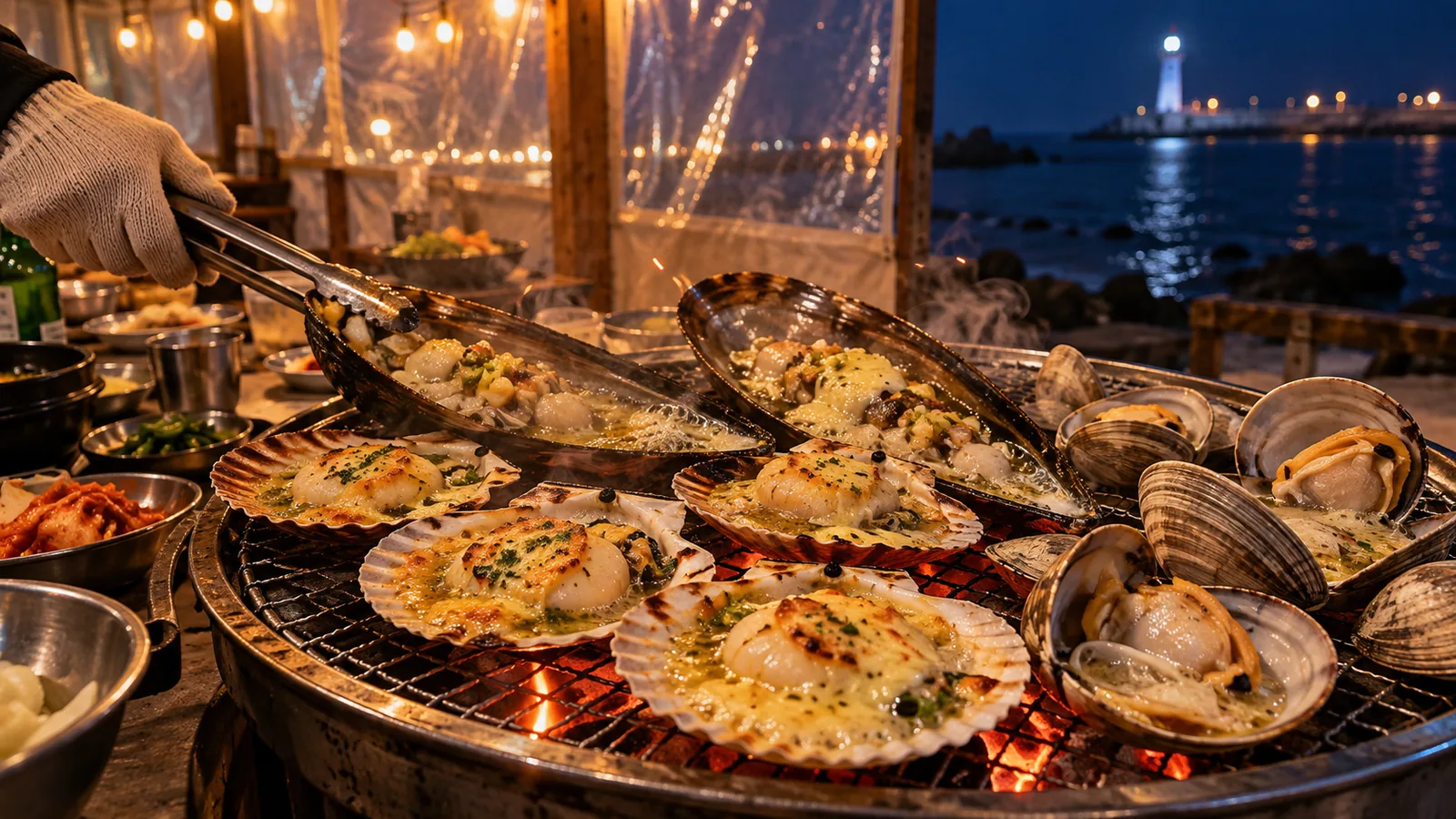
Jogae-gui (Grilled Shellfish)
Scallops, pen shells and clams grilled at seaside restaurants — when to eat them, what to watch for
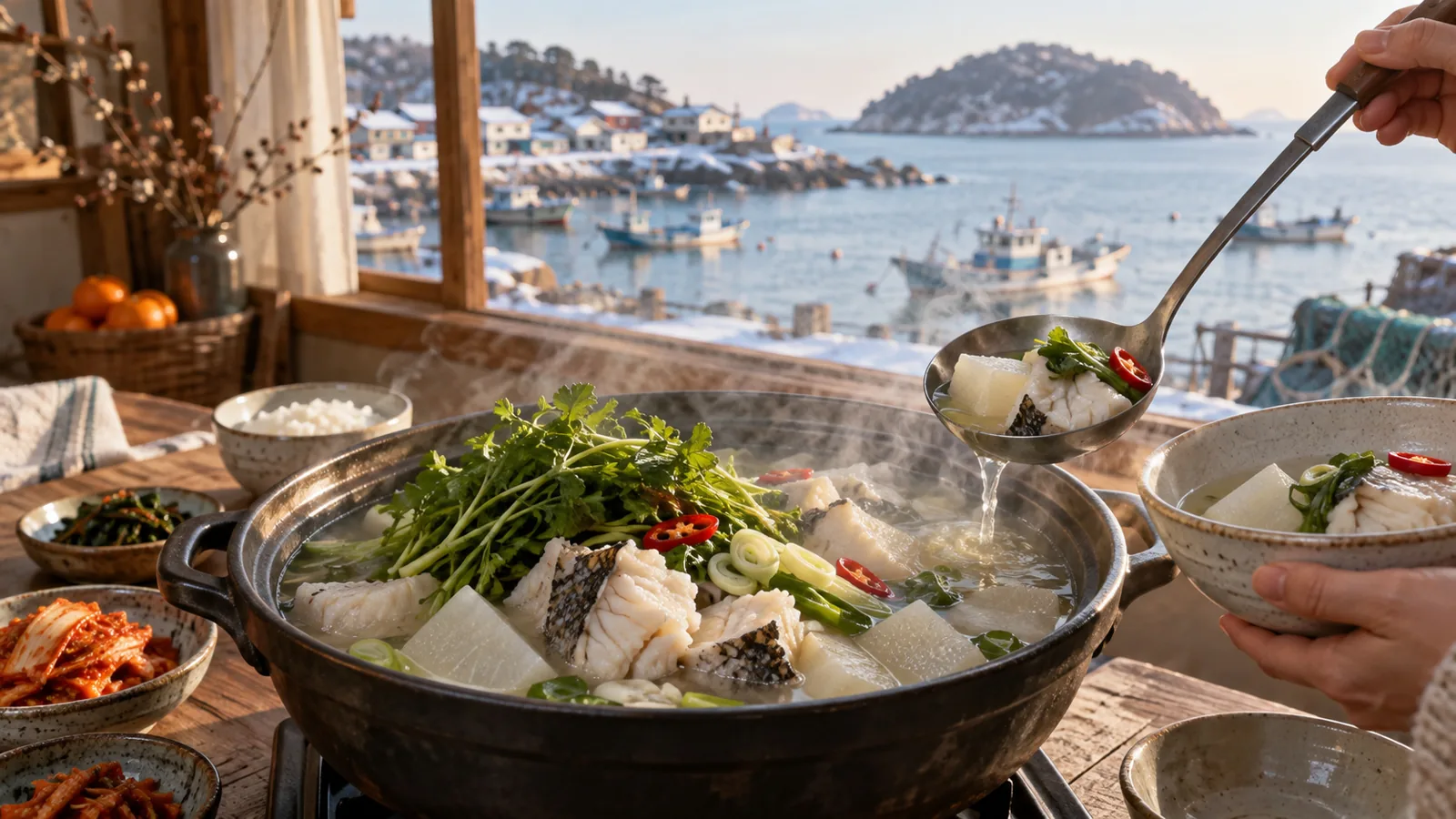
Daegutang (Busan Cod Soup)
A big-mouthed fish that swims home to the bay off Gadeokdo every winter, simmered with radish and water parsley
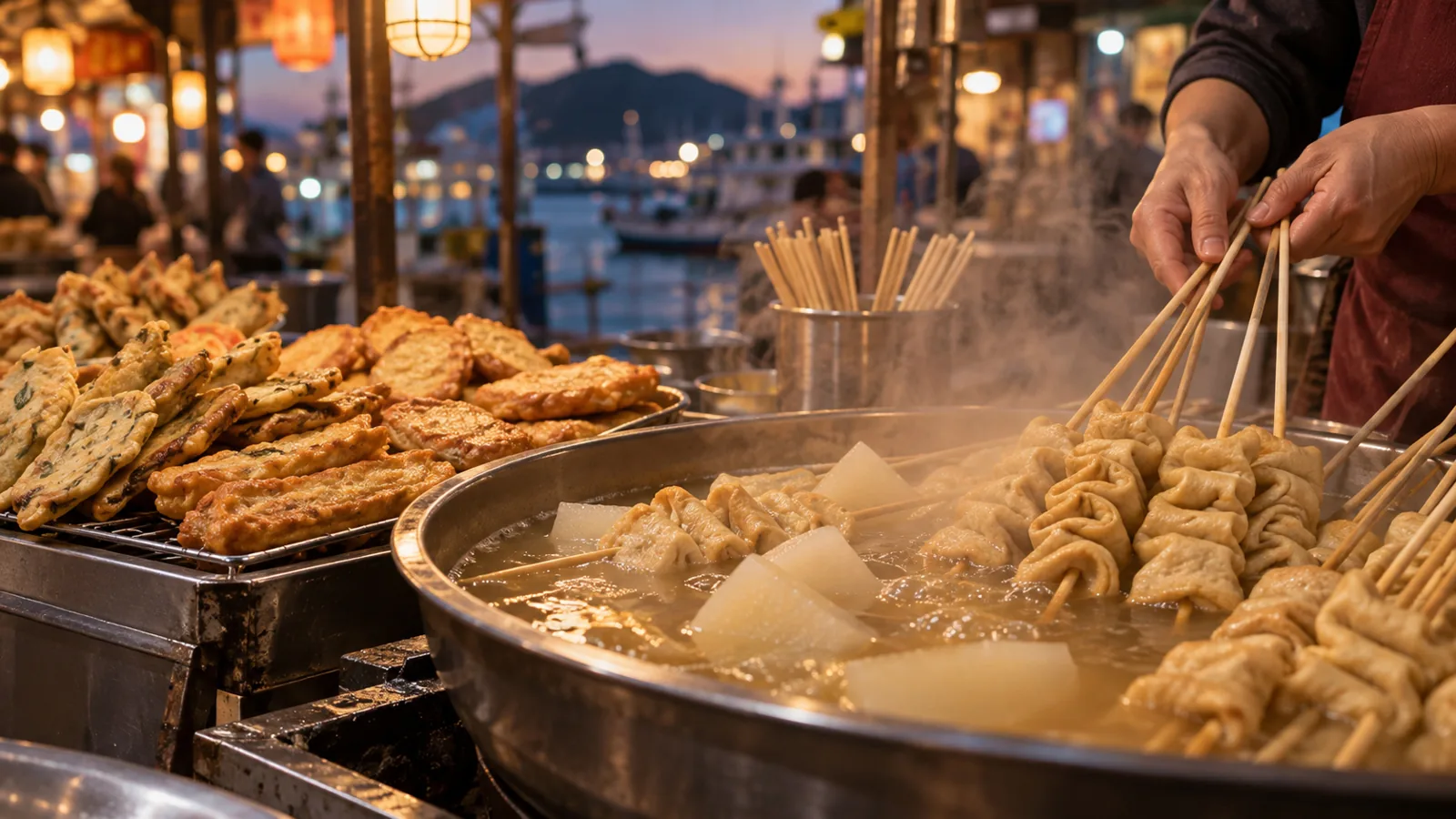
Busan Eomuk (Fish Cakes)
Ground fish, fried golden: a century-old Busan market food from Bupyeong Market to Yeongdo and Choryang
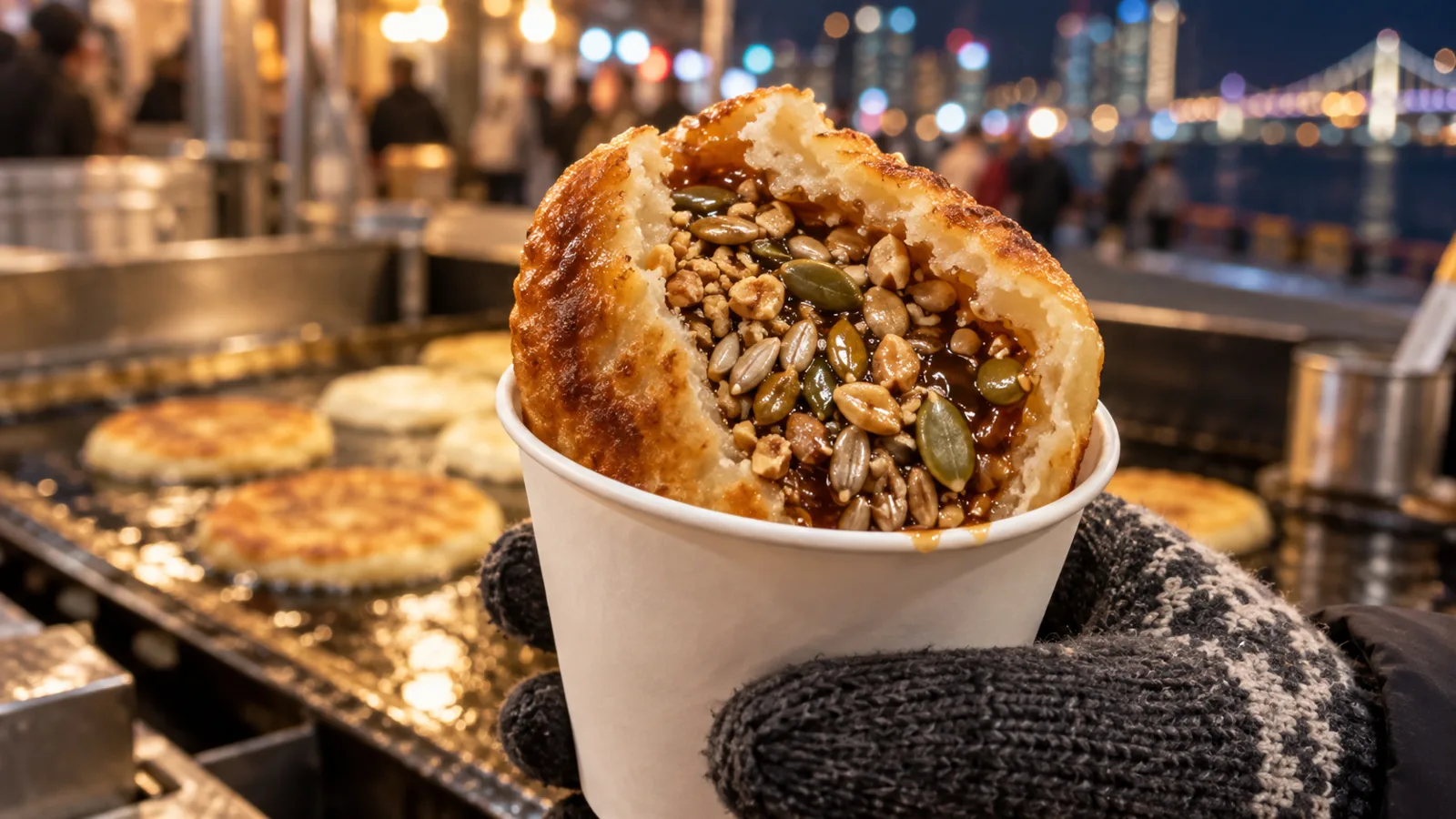
Ssiat Hotteok (Seed Hotteok)
A fried sweet pancake split open and stuffed with sunflower seeds, pumpkin seeds and peanuts — Nampo-dong's famous street snack
← All Busan food · What to eat in Busan · Busan festivals & events