Daegutang — Busan's Clear Winter Cod Soup: Gadeokdo Cod, Best Season, What's in It and How to Eat It
A big-mouthed fish that swims home to the bay off Gadeokdo every winter, simmered with radish and water parsley
Daegutang (대구탕) is a clear soup of Pacific cod simmered with radish, green onion, chili and water parsley (minari), seasoned simply with salt. In Busan it is a winter comfort food and a favorite hangover breakfast. Every winter cod return to spawn in Jinhae Bay, the waters enclosed by Busan's Gadeokdo island and Geoje — Korea's largest cod fishing ground — and Gadeokdo cod is said to have been sent to the royal court in the Joseon era. The fish is at its plumpest from late December to January.
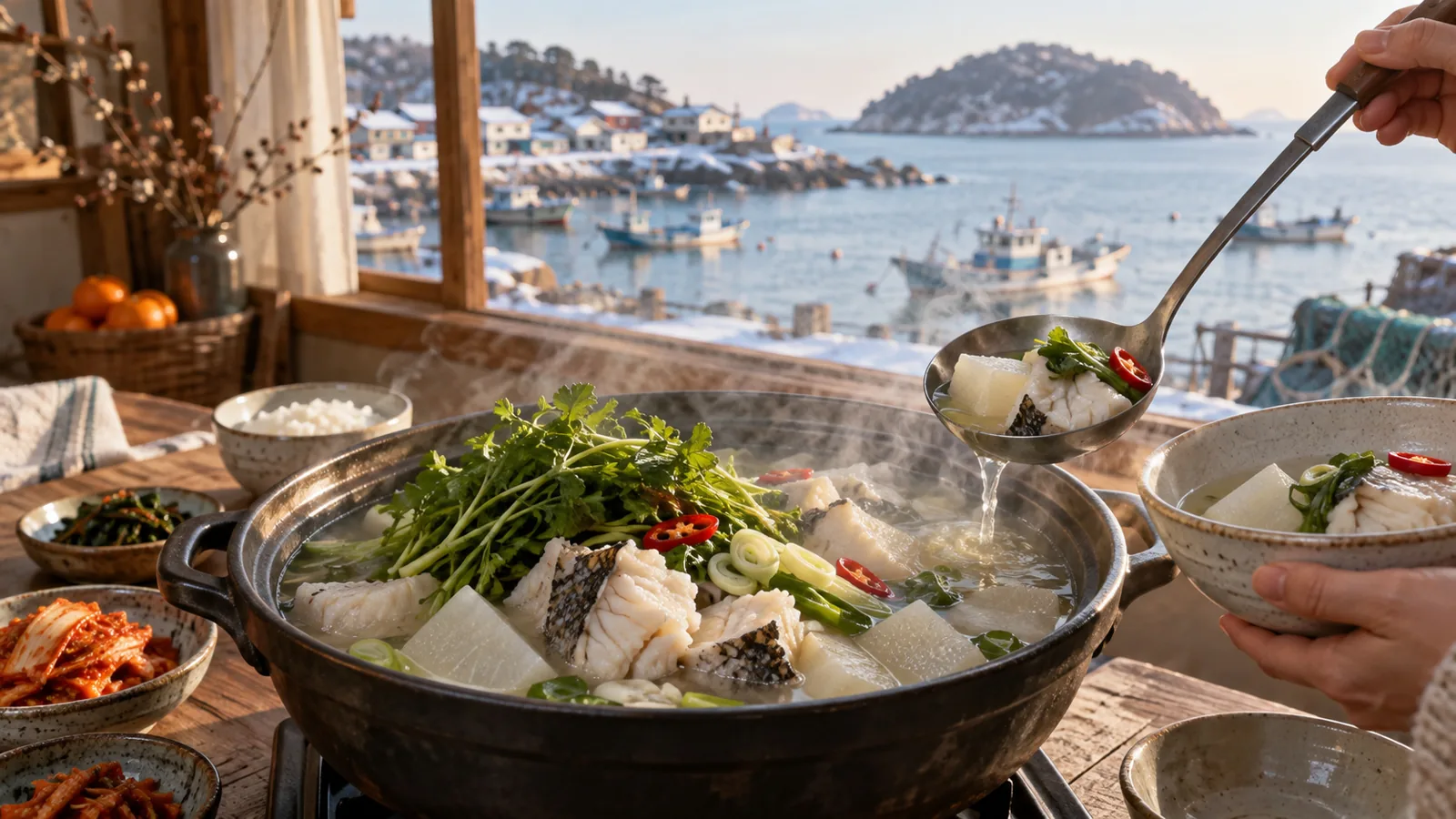
Daegutang in one line
Thick pieces of winter cod, big chunks of radish and a handful of water parsley in a clear, clean, light broth. Cod is a white fish with very little fat, so the soup tastes mild and refreshing rather than fishy — which is why Busan people eat it both as a winter treat and as a morning-after haejang-guk (hangover soup).
| Korean | 대구탕 (daegu-tang) · 대구 (daegu) = cod · 탕 (tang) = soup · 대구지리 (daegu-jiri) = the clear version · 대구매운탕 (daegu-maeuntang) = spicy version |
|---|---|
| Made of | Cod (often with the milt, called iri or gon-i, and roe), radish, green onion, chili, garlic, water parsley. Not vegetarian. Some places add a seafood or anchovy stock. |
| Spice | Clear version: mild (a few chili slices). Spicy version: medium. |
| Best season | Winter — the fish is plumpest from late December to January. |
| Not the city | Daegu (대구) is also the name of a Korean city, written the same way in Korean. Daegutang is the fish soup, not a dish from Daegu city. |
Where it comes from — the 'big mouth' fish that swims home to Gadeokdo
- The name: Dae-gu (大口) means "big mouth" — the fish has a large head and mouth.
- A fish that comes home: Pacific cod live in cold northern water 200–500 m deep and return in winter to the sea where they hatched to spawn.
- Gadeokdo and Jinhae Bay: Jinhae Bay, enclosed by Gadeokdo (Gangseo-gu, Busan) and Geoje island, suits spawning cod, and Korea's largest cod fishing ground forms there each winter.
- A royal tribute fish: Gadeokdo cod has long been famous — it is said to have been sent as a tribute to the king — and is still described as a prized catch. Some worry that the building of Busan New Port reduced the stock.
Since 1981, fishermen and researchers have collected eggs from mother cod, fertilized them and released them back into the sea to protect the stock. Small cod caught in the nets are also put back.
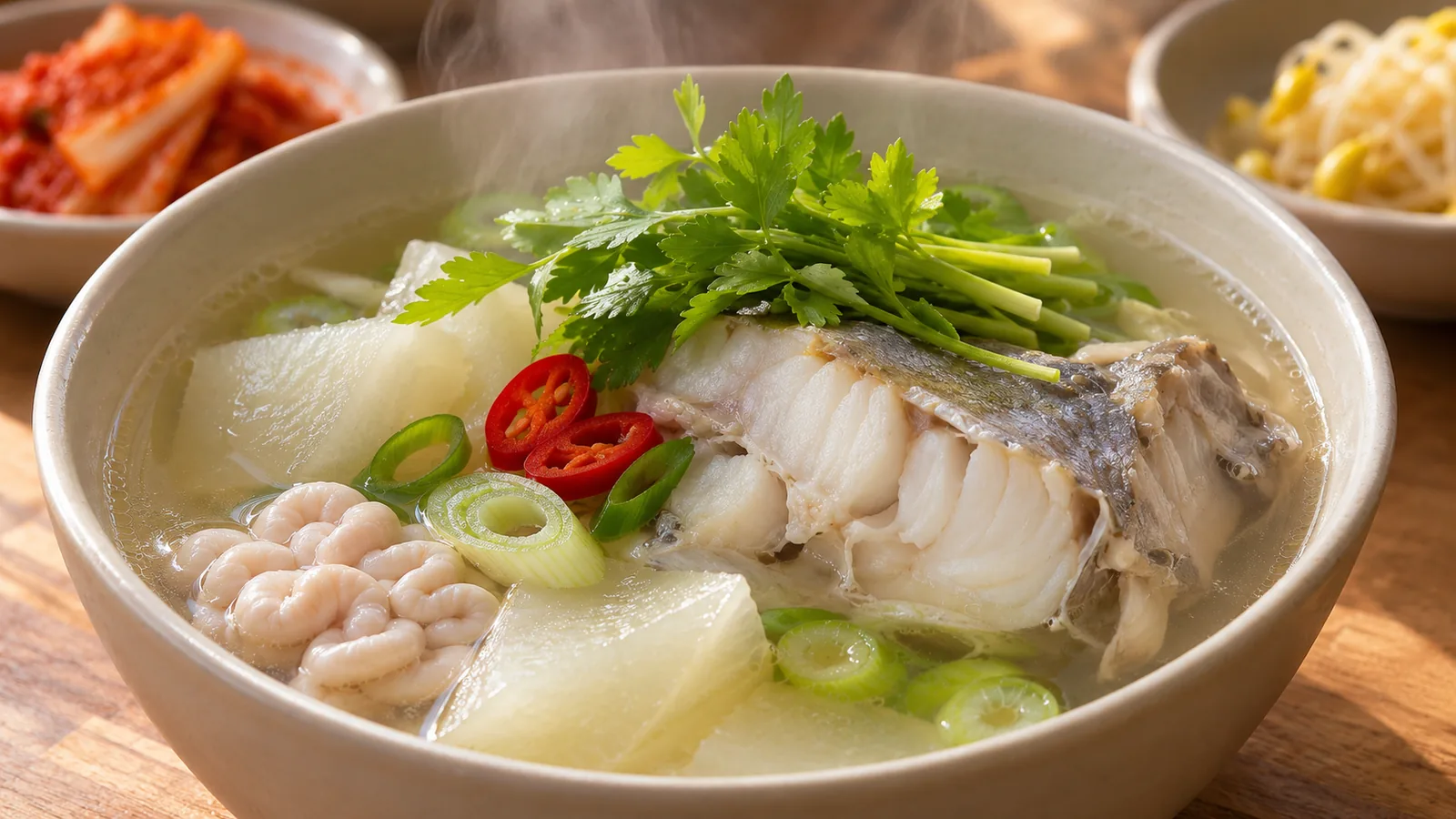
What it tastes like — and why nothing is wasted
The flesh
Cod has only about 1% fat, so the flesh is mild, flaky and slightly sweet. People who usually avoid "fishy" fish often like it.
The broth
Many cooks add the cod's milt (iri), which makes the broth richer and creamier. Large pieces of radish add sweetness, and water parsley added at the very end gives a fresh, green scent.
Head to tail
The roe goes into soup or salted jeotgal, the head into soup or a braise, and the gills and guts into jeotgal. Daegu-ppol-jjim (braised cod cheeks and head) is a delicacy of its own — the cheek meat is famously chewy. One big cod can feed a whole table: soup, braise and side dishes.
How it's made (the simple version)
| Step | What happens |
|---|---|
| 1 | Clean the cod and cut it into 4–5 big pieces |
| 2 | Bring the stock (with radish) to a boil, then add the cod and milt |
| 3 | When the fish is nearly cooked, season with salt |
| 4 | Add green onion and chili |
| 5 | Finish with water parsley and boil once more |
The classic Busan way is to keep it clear and season with salt only, so the taste of the fish comes through.
How to eat it
- Eat it in season: Late December to January is when cod is said to taste best.
- Broth first: Taste a few spoonfuls of the clear broth before anything else.
- Radish with the fish: Take a piece of soft radish together with the flaky cod.
- Try the milt and roe: They are what make the soup rich — don't just pick out the flesh. If you'd rather skip them, ask: "이리 빼 주세요" (iri ppae juseyo, "No milt, please").
- Watch the bones: Pieces are cut on the bone; use a spoon and chopsticks to lift the flesh away.
- Finish with rice: Daegutang comes with rice and side dishes; many people put rice into the last of the broth.
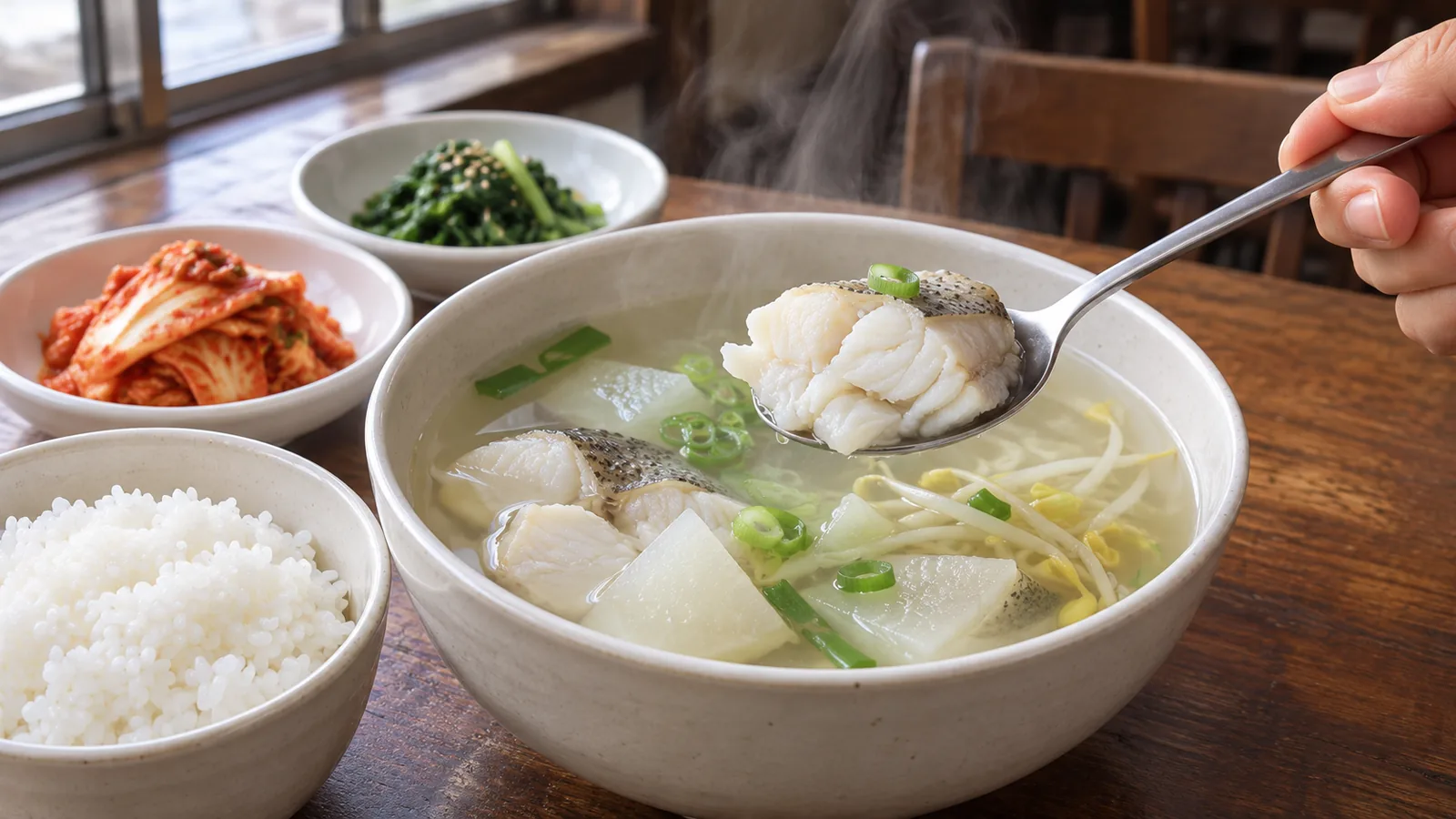
Useful Korean: "대구탕 하나 주세요" (daegutang hana juseyo) — "One cod soup, please." "맑은 걸로 주세요" (malgeun geollo juseyo) — "The clear (non-spicy) one, please."
Where to eat it in Busan
- Haeundae: Some places open early and serve nothing but cod soup — a handy breakfast before a beach walk. Combine with a morning bokguk crawl in Mipo another day.
- Gadeokdo (Gangseo-gu): The cod's home waters, in Busan's far west near Gimhae Airport. Seafood restaurants on the island serve cod dishes in winter.
- Nampo-dong & Jagalchi: Seafood restaurants around the market often have cod soup or spicy cod stew in winter, alongside fish cakes and mulddeok at the stalls.
Menus and opening hours change with the catch and the season — check before you go. We list areas, not restaurant rankings.
FAQ
What is daegutang?
Daegutang is Korean cod soup: pieces of Pacific cod simmered with radish, green onion, chili and water parsley, usually seasoned with salt to keep the broth clear. In Busan it is a winter dish and a popular hangover breakfast.
Is daegutang from Daegu city?
No. 대구 (daegu) means cod as well as being the name of the city. Daegutang is cod soup; in Busan it is linked to the cod caught around Gadeokdo island.
When is the best season for cod soup in Busan?
Winter. Cod return to Jinhae Bay off Gadeokdo to spawn, and the fish is said to be plumpest from late December to January.
What is iri (milt) in daegutang?
Iri, also called gon-i, is the cod's milt. It is added to the soup to make the broth richer. You can ask for it to be left out.
Is daegutang spicy?
The clear version (daegu-jiri) is mild, with only a few chili slices. A red, spicy version (daegu-maeuntang) is also common — ask for the clear one if you prefer mild food.
Where can I eat daegutang in Busan?
Haeundae has early-opening cod soup places popular for breakfast, Gadeokdo island is the cod's home waters, and seafood restaurants around Jagalchi Market often serve it in winter.
Sources
- ‘大口’ 너의 큰머리는 쫄깃하고 탄탄한 살결은 담백하고 끓여도 쪄내도 시원하니 임금님 수라상에 올랐지 — Seoul Shinmun, Dec 20, 2019
- 가덕도(加德島) — Encyclopedia of Korean Culture, Oct 21, 2024
- 하루 종일 먹기만 하는 부산 여행 코스 #해운대 — Marie Claire Korea, Apr 25, 2024
Menus, prices and opening hours differ by restaurant and by the season's catch. This article is a food explainer, not a restaurant ranking or advertisement.
More Busan food
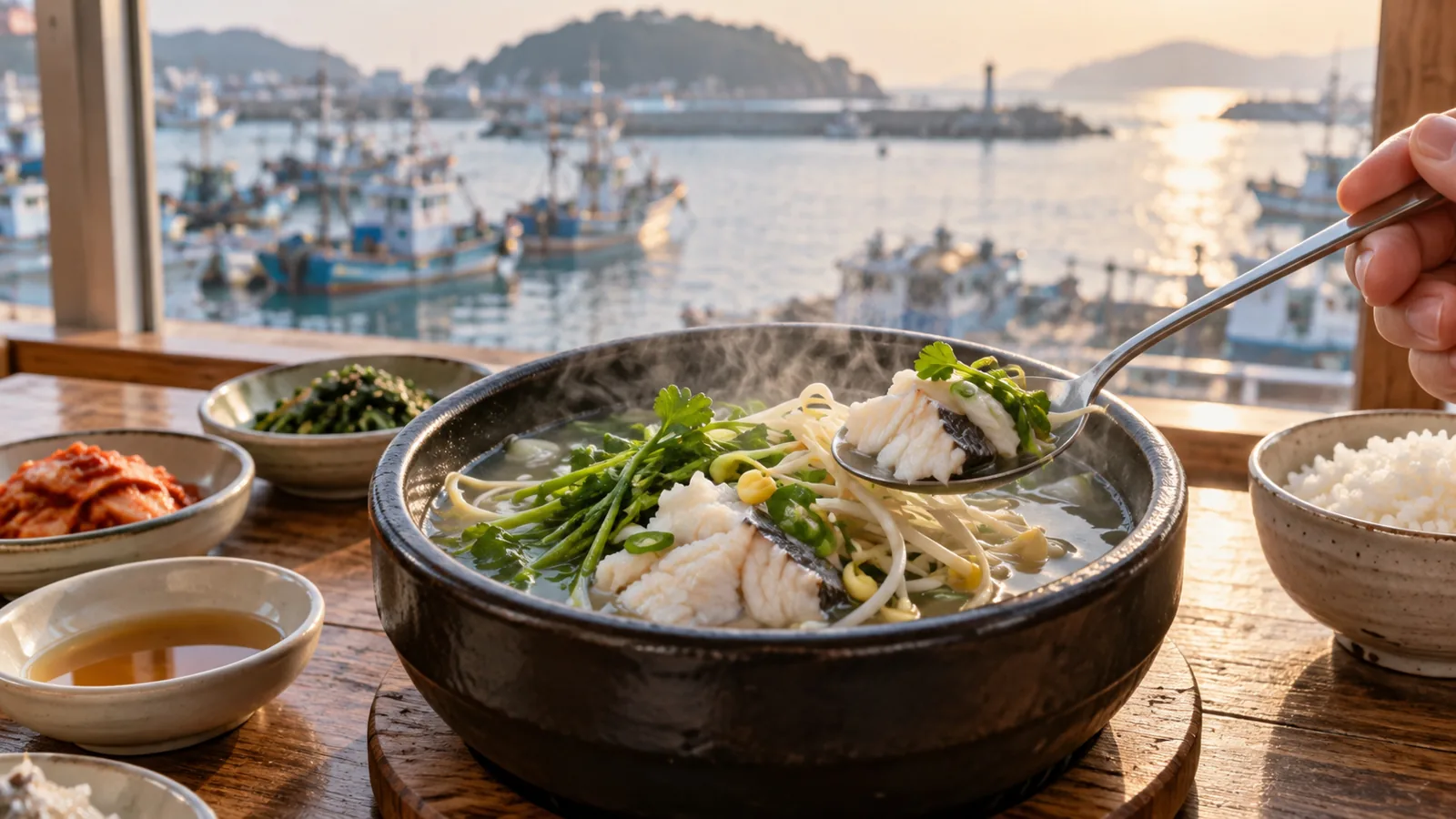
Bokguk (Pufferfish Soup)
A clear, refreshing bowl made from a fish that has to be handled by licensed cooks — Busan's classic morning-after soup
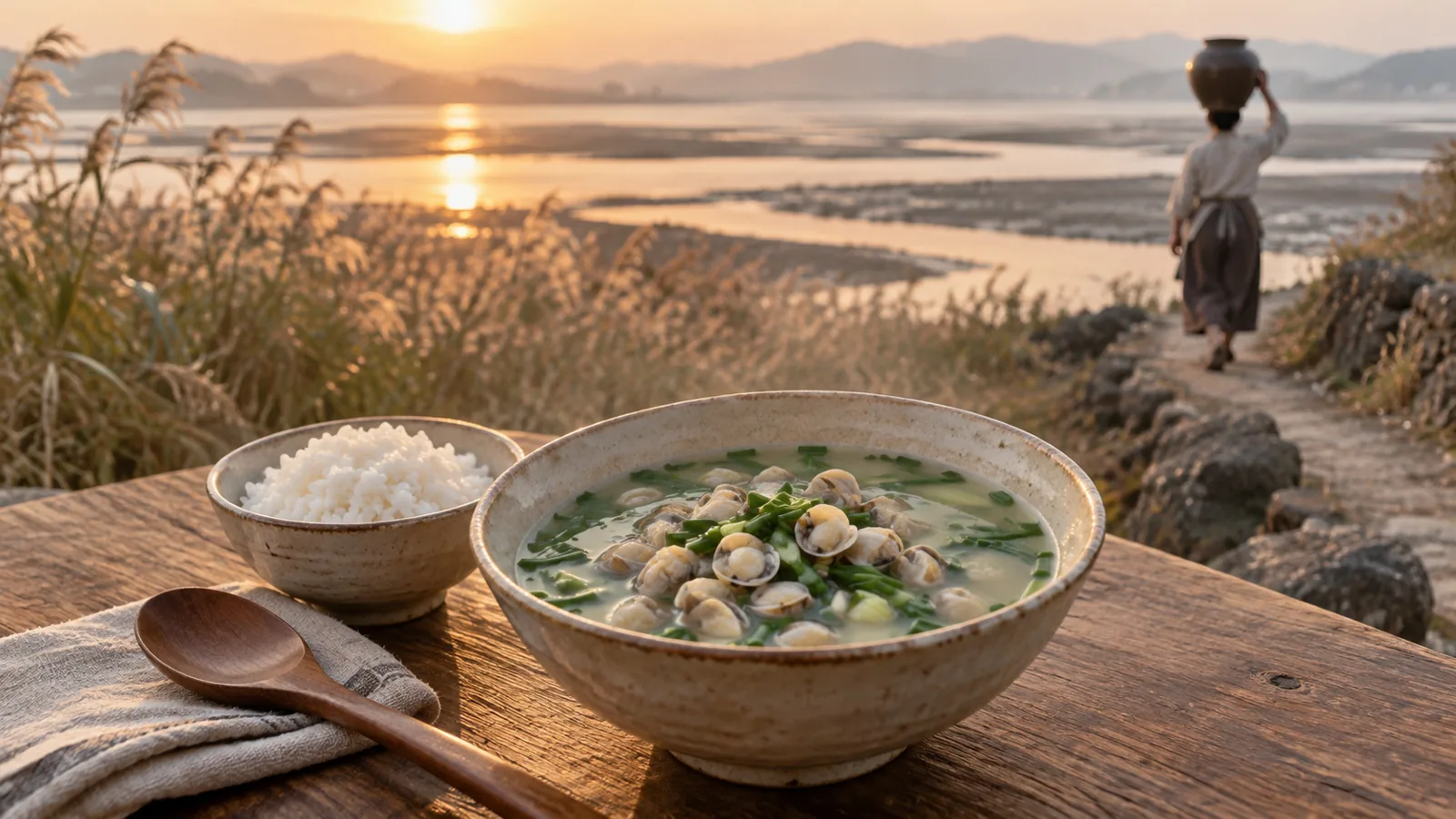
Jaecheop-guk (Marsh Clam Soup)
Tiny estuary clams, salt and garlic chives — the breakfast and hangover soup once sold door to door at dawn
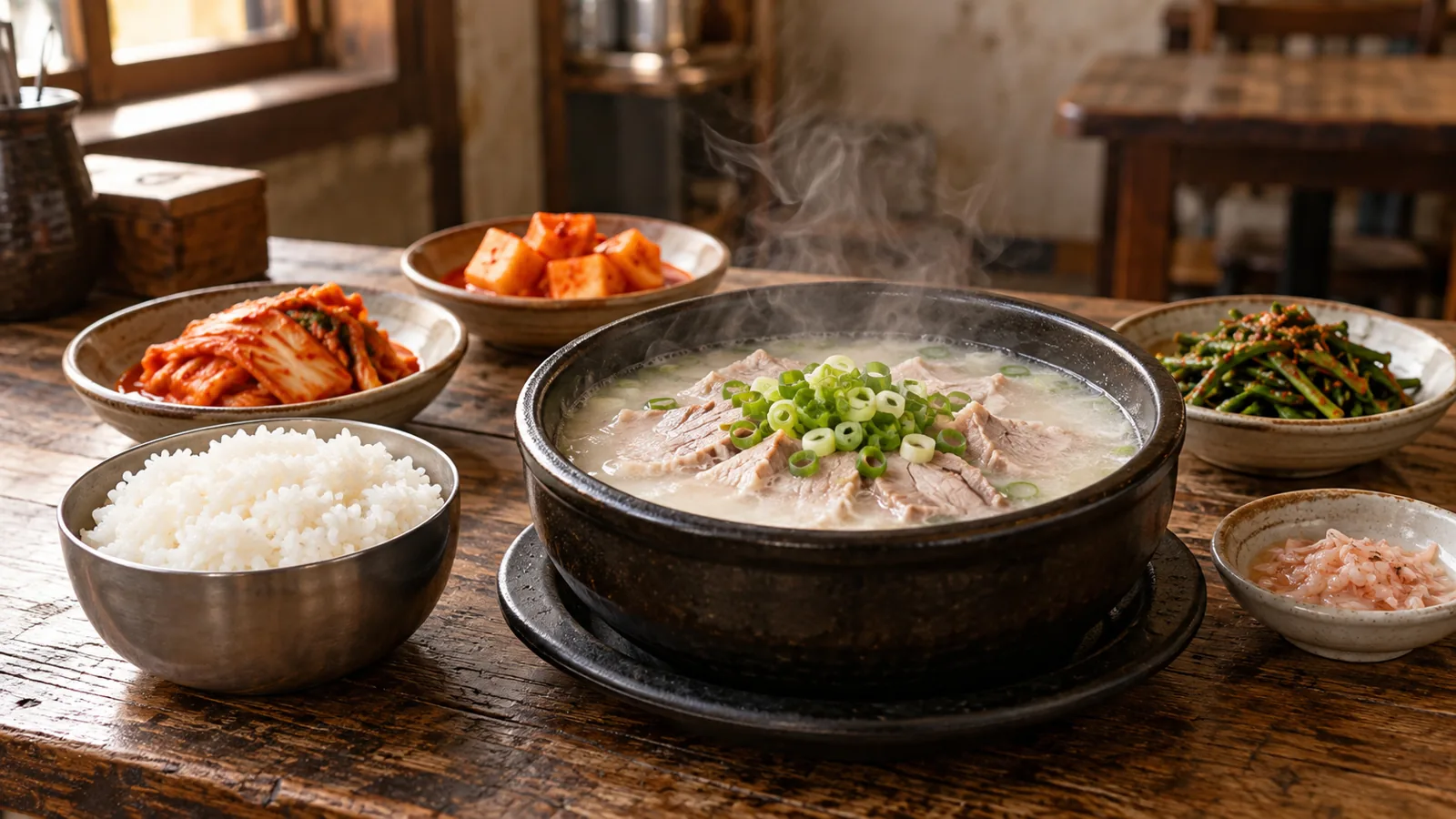
Dwaeji-gukbap (Busan Pork Rice Soup)
A fast, cheap, filling bowl that fed refugees and dock workers — and still Busan's go-to meal at any hour
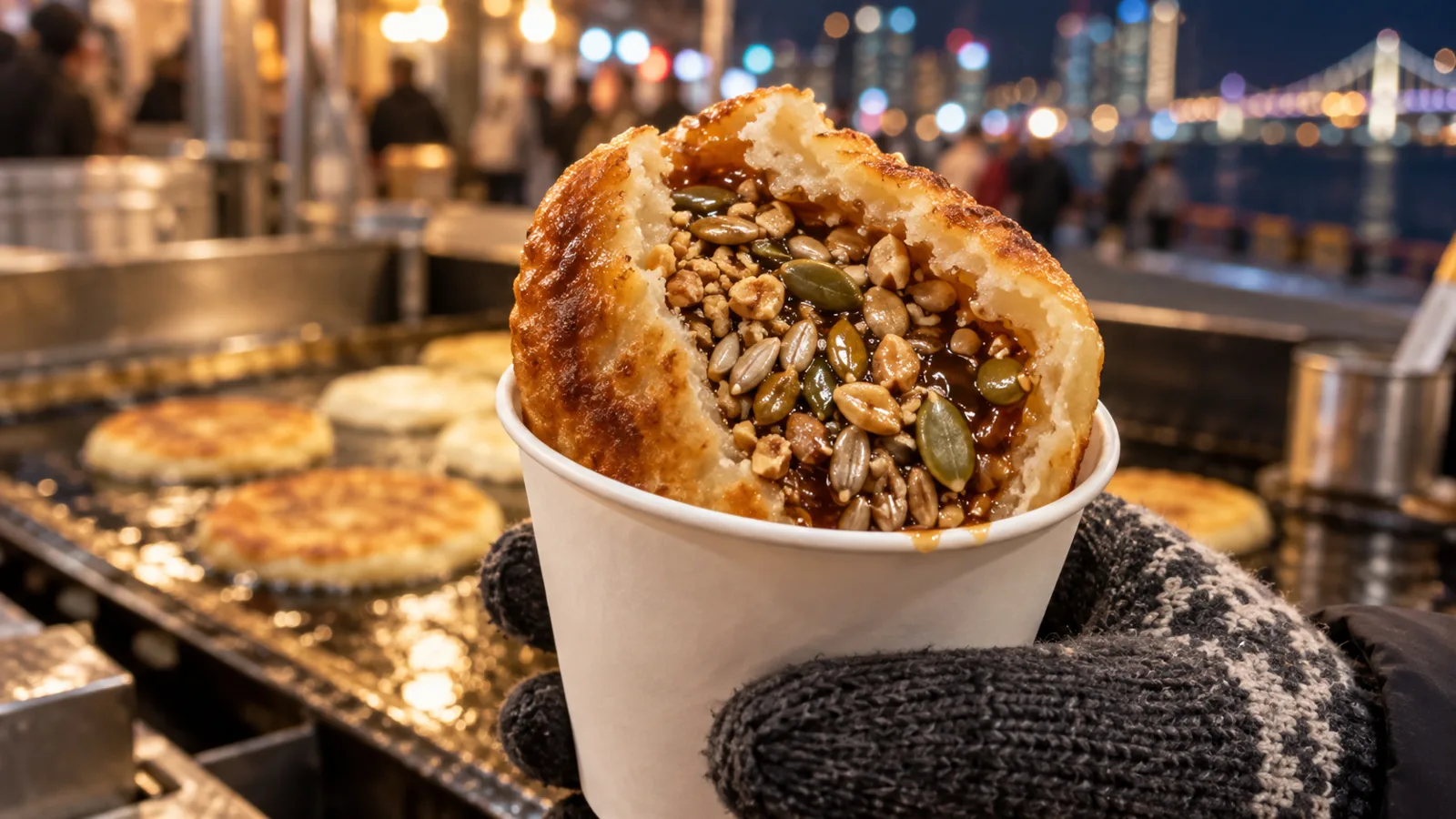
Ssiat Hotteok (Seed Hotteok)
A fried sweet pancake split open and stuffed with sunflower seeds, pumpkin seeds and peanuts — Nampo-dong's famous street snack
← All Busan food · What to eat in Busan · Busan festivals & events