Jaecheop-guk — Busan's Clear Marsh Clam Soup from the Nakdong River: History, “Jaecheopguk Saiso!” and Where to Eat It
Tiny estuary clams, salt and garlic chives — the breakfast and hangover soup once sold door to door at dawn
Jaecheop-guk (재첩국) is a clear soup made by simmering jaecheop, tiny marsh clams from the Nakdong River estuary where fresh and salt water meet, seasoned only with salt and topped with garlic chives. It has long been a Busan breakfast and hangover soup. From the 1950s, women carrying jars of soup on their heads walked the dawn alleys calling “Jaecheopguk saiso!” (“Buy clam soup!”). Nakdong River clams declined sharply after the estuary barrage was completed in 1987, but you can still eat the soup today, for example on the clam soup street in Samnak-dong, Sasang-gu.
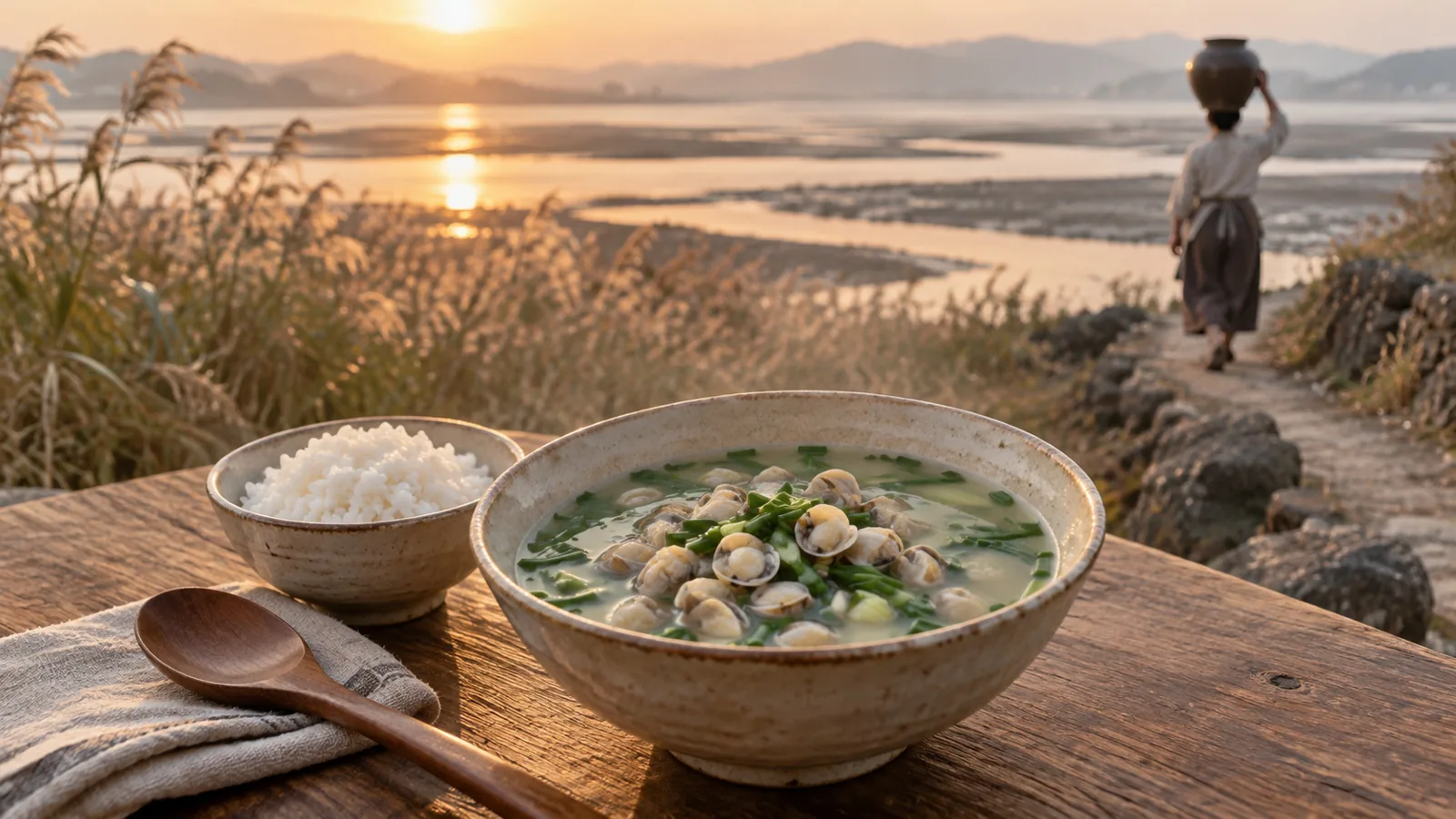
Jaecheop-guk in one line
A light, milky-clear soup made from jaecheop, small clams that live where a river meets the sea. Chopped garlic chives float on top and it is seasoned with little more than salt, so it tastes clean and refreshing. Busan people also call it jaechi-guk, and usually eat it with rice mixed in, for breakfast or the morning after drinking.
| Korean | 재첩국 (jaecheop-guk) — jaecheop 재첩 (marsh clam, a small brackish-water clam) + guk 국 (soup) |
|---|---|
| Made of | Marsh clam meat and broth, salt, garlic chives (jeonggu-ji in Busan dialect) or green onion. Served with rice. |
| Diet notes | Shellfish — not for shellfish allergies, not vegetarian. |
| Spice | Not spicy at all. Add a little salt to taste. |
| When | Breakfast, a light lunch, or as a hangover soup. |
Where it came from — clams of the Nakdong estuary
The mouth of the Nakdong River is a brackish estuary, where river water and seawater mix — ideal for marsh clams.
- A river's gift: Samnak-dong in Sasang-gu, Gupo-dong in Buk-gu and Deokdu village in Gangseo-gu were known clam areas. Clams were so plentiful that, as the story goes, children threw them instead of stones when they played in the water.
- A village living: Clam harvesting was busy until the early 1980s. Every spring, residents gathered clams and sold them across Busan; some accounts say the Nakdong produced more than 10,000 tons a year.
- Soup for hard times: During the refugee years, poorer families are said to have stretched one bowl of clam soup with extra water so the whole family could share it with rice.
“Jaecheopguk saiso!” — the clam soup ladies
Door-to-door clam soup sellers appeared in earnest in the 1950s, when Busan was full of wartime refugees. Women carried jars of hot soup on their heads up steep hillside lanes before dawn, calling “Jaecheopguk saiso!” — Busan dialect for “Buy clam soup!” Locals called them jaecheopguk ajimae, the clam soup ladies.
Together with the fish sellers of Jagalchi and the ship-scraping kkangkkangi women of Yeongdo, they are remembered as Busan's “three ajimae” — working women who symbolize the city. In 2021 the National Folk Museum of Korea featured photos of the clam soup sellers and one of their carts in a special exhibition on Busan.
Only a few decades ago, hearing that call in the early morning was an everyday sound in Busan. It has gone now, but for many locals the phrase still brings back the mornings of their childhood.
After the barrage — fewer Nakdong clams
| When | What happened |
|---|---|
| 1970s | Industrial estates such as Sasang worsen the river environment |
| Early 1980s | Clam harvesting is still busy |
| 1987 | The Nakdong River Estuary Barrage is completed; the flow changes and clams decline sharply |
| Today | Nakdong clams are hard to find, and many clam soup restaurants use imported clams |
In the Myeongji area of Gangseo-gu, some people farm clams to keep the tradition alive, and local traders hope the Nakdong clams will return as the barrage gates are opened more often.
How it is made and how to eat it
How it is made
- Purging: The clams soak overnight so they spit out sand and mud.
- Simmering: Water is added and the clams are boiled to draw out the broth.
- Separating: The shells are strained out and only the clam meat stays in the broth.
- Finishing: Salt for seasoning, then chopped garlic chives or green onion.
With almost no seasoning, the clean taste of the clams comes straight through. It has long been eaten as a soothing soup after drinking. Besides soup, the clams are also eaten as jaecheop-hoe (a spicy-sour salad), on rice, or in pancakes.
How to eat it
- Taste the broth first, then add salt little by little if you like.
- Mix in the rice the way Busan people do, and eat it with the chives.
- Make it breakfast: it is gentle on the stomach, good after a late night or before a long day of walking.
Useful Korean: “재첩국 하나 주세요” (jaecheop-guk hana juseyo) — “One clam soup, please.” “원산지가 어디예요?” (wonsanji-ga eodiyeyo?) — “Where are the clams from?”
Where to eat it in Busan
The best-known place is the clam soup street in Samnak-dong, Sasang-gu, along the Nakdong River in west Busan. Several jaecheop-guk restaurants are gathered there. Because Nakdong clams are rare now, many shops use imported clams — check the country-of-origin sign (원산지 표시) on the wall if you are curious. If you are in the old downtown instead, a bowl of bokguk or dwaeji gukbap is the nearest equivalent morning soup.
We list areas, not restaurant rankings. Opening days and hours vary by shop.
FAQ
What is jaecheop-guk?
Jaecheop-guk is a clear Busan soup made from jaecheop, tiny marsh clams from the Nakdong River estuary, seasoned with salt and topped with garlic chives. It is eaten with rice for breakfast or as a hangover soup.
What does “jaecheopguk saiso” mean?
It is Busan dialect for “Buy clam soup!” From the 1950s, women carrying jars of clam soup on their heads called it out in the dawn alleys, and it is remembered as one of the sounds of old Busan.
Why are there fewer Nakdong River clams now?
Industrial development from the 1970s harmed the river, and after the Nakdong River Estuary Barrage was completed in 1987, the mixing of fresh and salt water changed and clam numbers fell sharply.
Where can I eat jaecheop-guk in Busan?
The clam soup street in Samnak-dong, Sasang-gu, beside the Nakdong River, has several jaecheop-guk restaurants. Many use imported clams, so check the origin sign if it matters to you.
Is jaecheop-guk spicy?
No. It is a mild, clear soup seasoned mainly with salt. It contains shellfish, so avoid it if you have a shellfish allergy.
Sources
- [오래된 미래] 낙동강 재첩국, 가난한 시절을 건너게 한 부산의 맛 — KNN, Jun 18, 2026
- '3대 아지매' 아시나요… 부산, 그들의 애환 어린 '삶의 터展' — Seoul Shinmun, Jul 5, 2021
- [향토음식] 속풀이용 해장국, 부산 '재치국(재첩국)' — Korea Food Times, Nov 16, 2020
Clam origin, prices and opening hours differ by restaurant. This article is a food explainer, not a restaurant ranking or advertisement, and not medical advice.
More Busan food
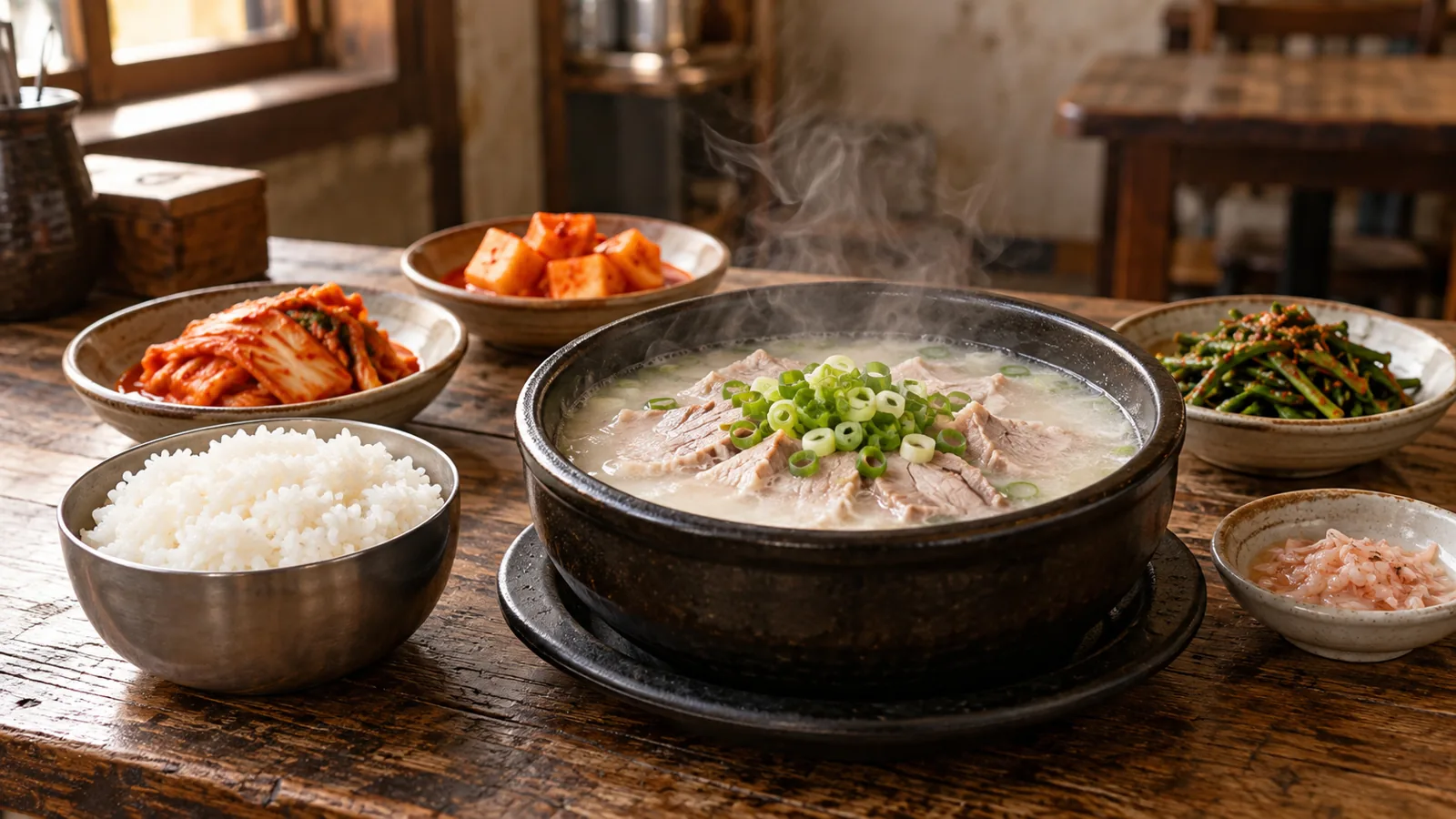
Dwaeji-gukbap (Busan Pork Rice Soup)
A fast, cheap, filling bowl that fed refugees and dock workers — and still Busan's go-to meal at any hour
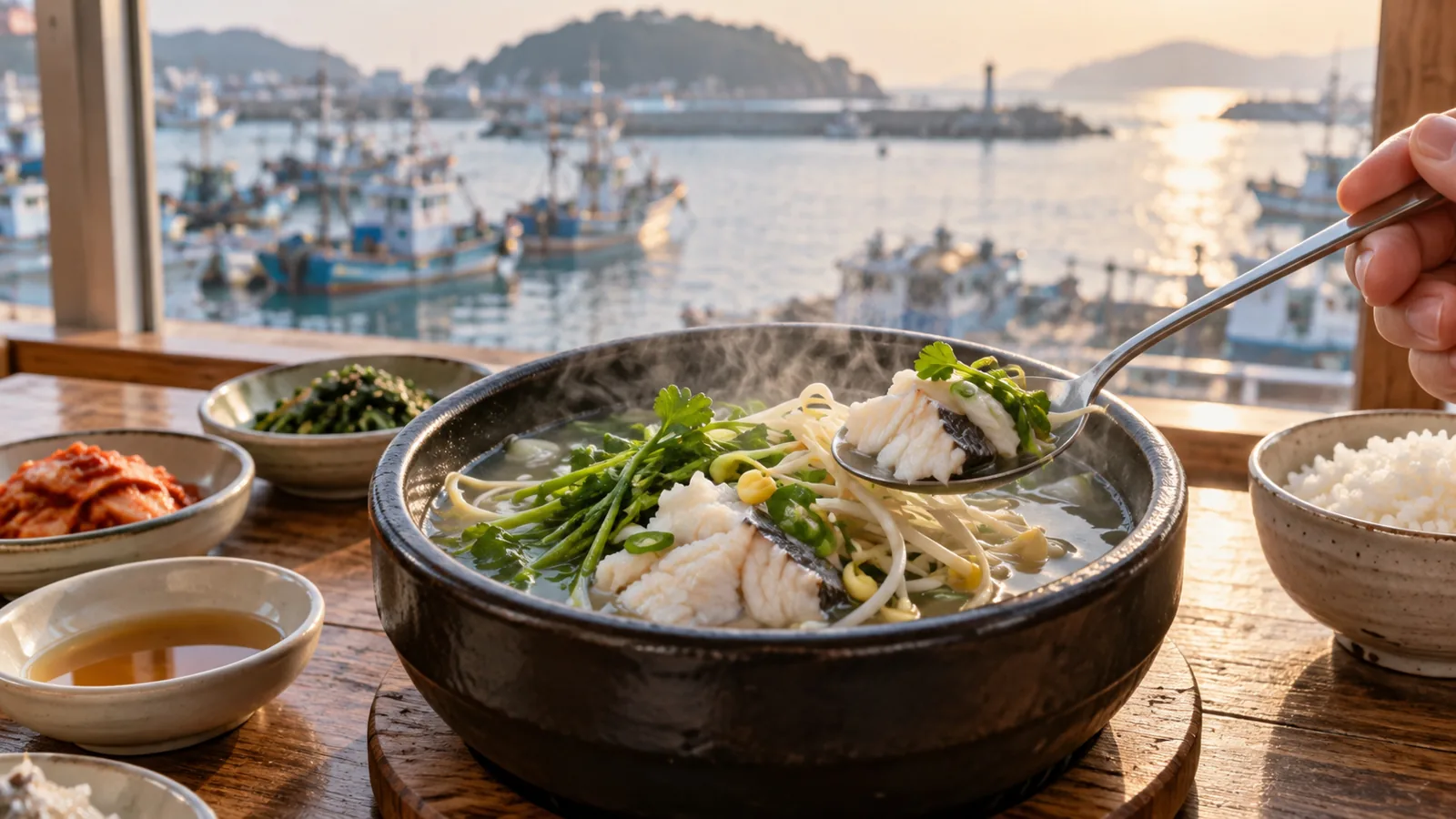
Bokguk (Pufferfish Soup)
A clear, refreshing bowl made from a fish that has to be handled by licensed cooks — Busan's classic morning-after soup
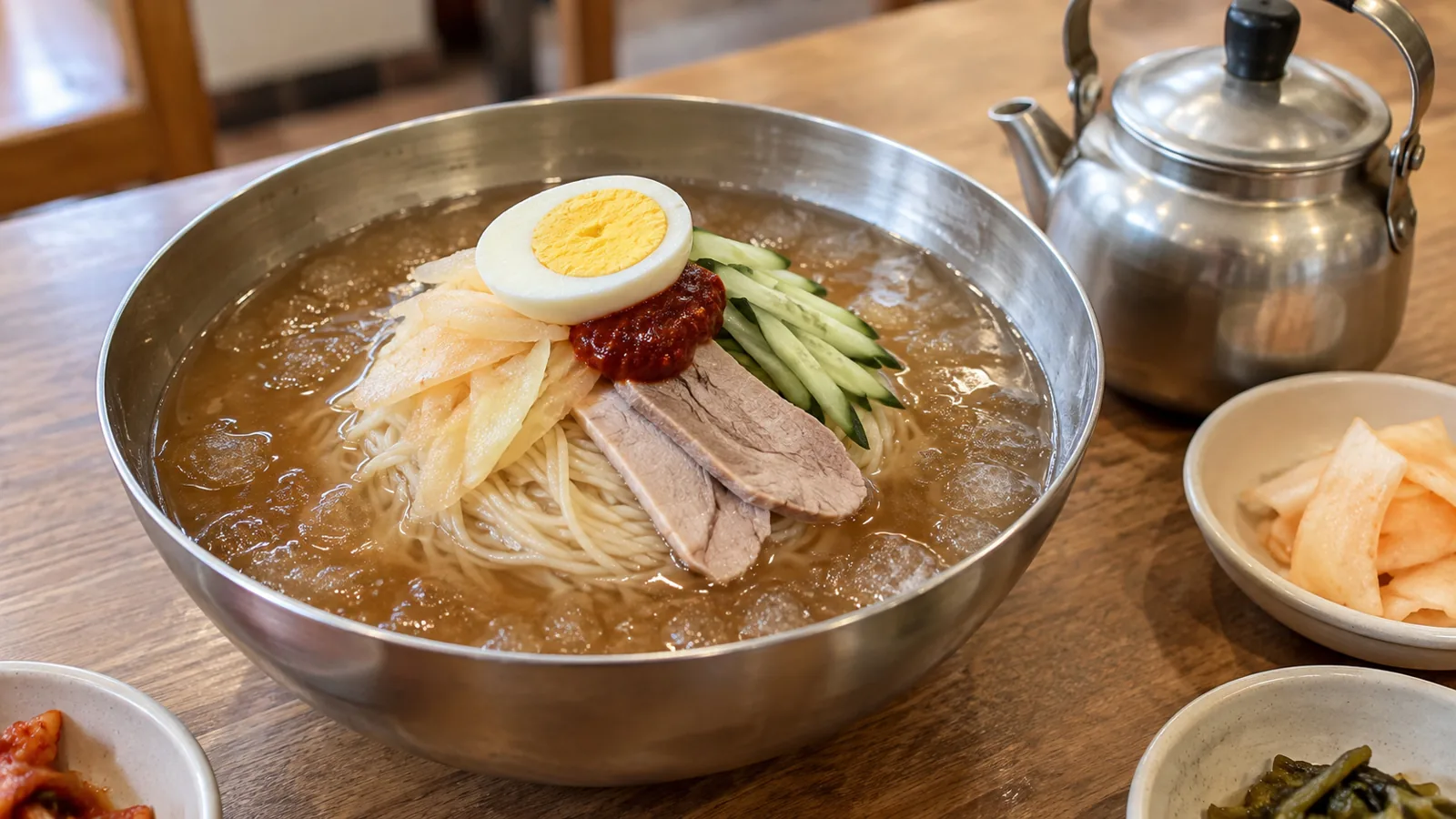
Milmyeon (Busan Wheat Noodles)
Born in the Korean War when refugees swapped buckwheat for aid flour — Busan's favourite summer noodle, eaten year-round
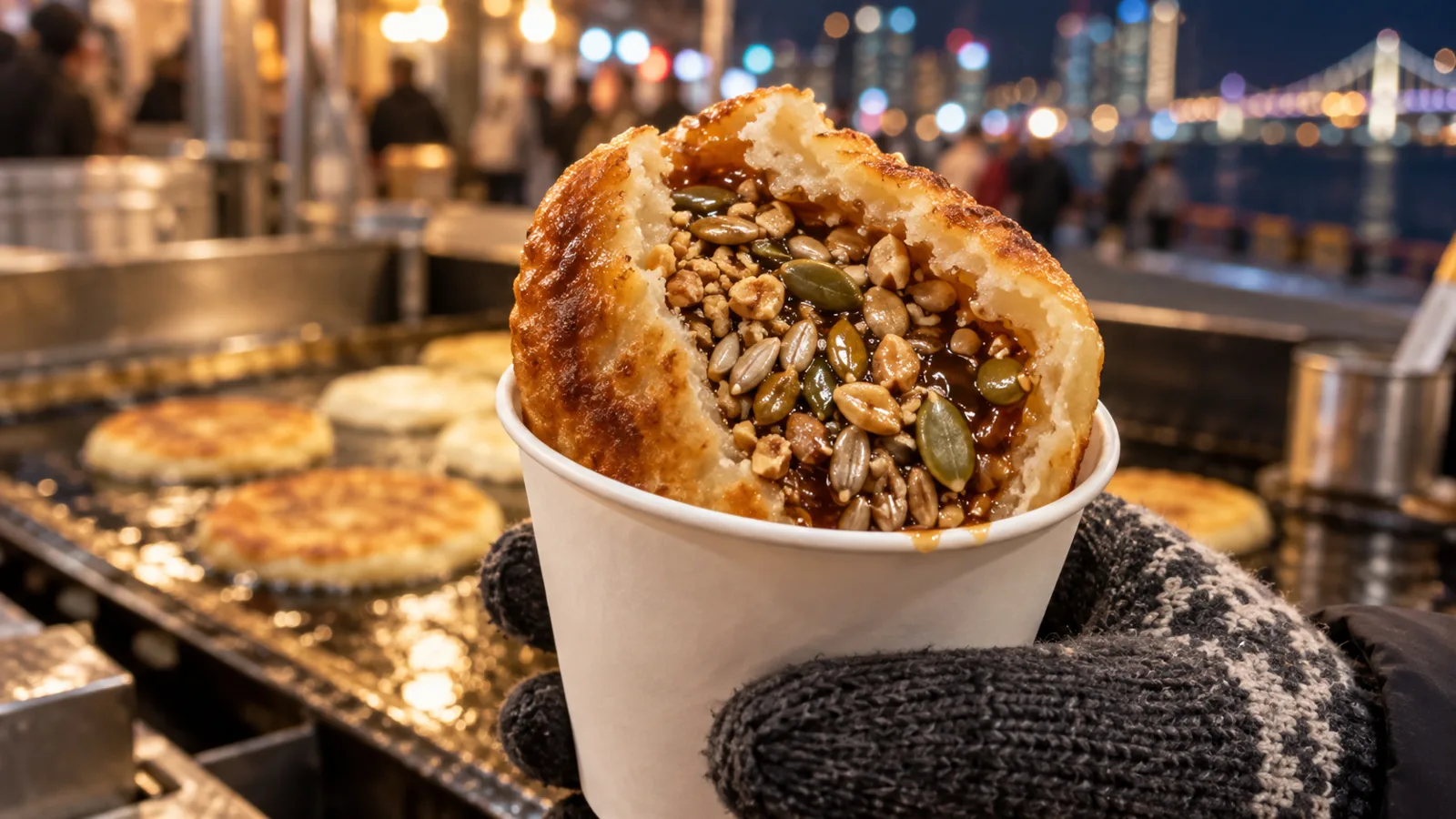
Ssiat Hotteok (Seed Hotteok)
A fried sweet pancake split open and stuffed with sunflower seeds, pumpkin seeds and peanuts — Nampo-dong's famous street snack
← All Busan food · What to eat in Busan · Busan festivals & events