Dongnae Pajeon — Busan's Steamed Green Onion Pancake: History, How It Differs, and Where to Eat It
Whole scallions, seafood and rice-flour batter cooked under a lid — a dish said to have been offered to the king
Dongnae pajeon (동래파전) is a thick green onion pancake from Dongnae in Busan. Whole scallions are laid side by side, topped with seafood, beef, rice-flour batter and egg, then cooked under a lid so it half-steams. Stories say a Joseon-era Dongnae magistrate offered it to the king, and that it was a banquet dish before it spread through the Dongnae market. It is still eaten around Dongnae today, and spring (March to May) is the best season for the green onions.
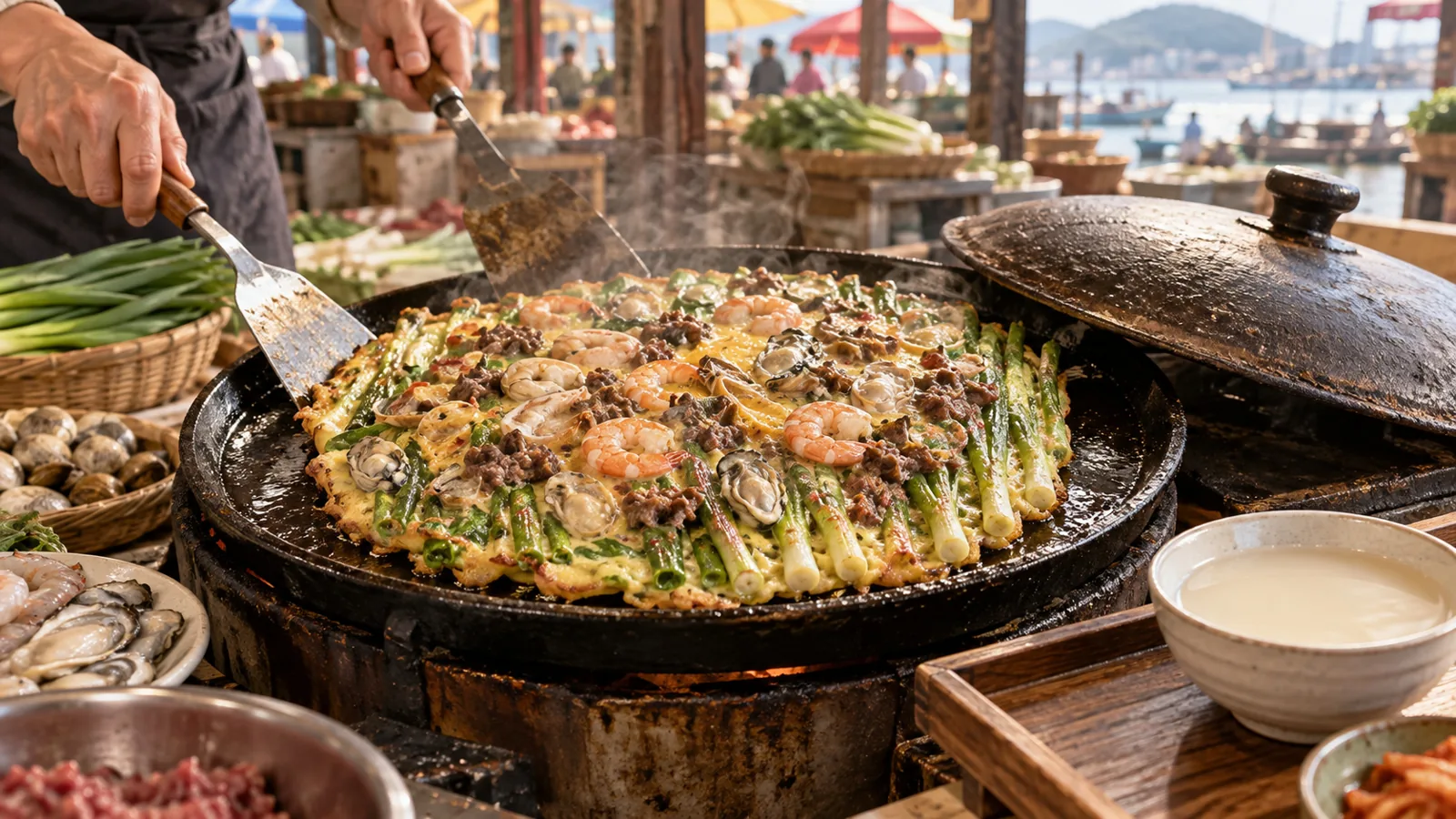
Dongnae pajeon in one line
A pancake made with rice flour and glutinous rice flour instead of wheat, and cooked under a lid rather than fried crisp in lots of oil. The outside turns golden while the inside stays soft and moist, and the scallions keep their fragrance and sweetness.
| Korean | 동래파전 (Dongnae pajeon) — Dongnae 동래 (a district of Busan) + pa 파 (green onion) + jeon 전 (pan-cooked pancake) |
|---|---|
| Made of | Scallions, water parsley, shellfish and seafood (clams, mussels, oysters, shrimp), beef, egg, rice and glutinous rice flour. Some shops mix in wheat-based frying flour. Not vegetarian, not for shellfish allergies. |
| Spice | Not spicy. Usually dipped in cho-gochujang (sweet-sour chili sauce) or soy sauce. |
| How it's served | One large, thick pancake per order — good for sharing between two or more, often with makgeolli (rice wine). |
| Price | A mid-priced shared dish. Prices are on the menu. |
Where it came from — a banquet dish that went to market
No written record pins down its exact origin, but several stories are told:
- A pancake for the king: A Joseon-era magistrate of Dongnae is said to have sent Dongnae pajeon to the king on Samjitnal, the third day of the third lunar month.
- A banquet food: When Dongnae was a regional government seat, pajeon is said to have been a special dish served at banquets held by the gyobangcheong (the office that trained female entertainers, gisaeng) for visiting officials and foreign envoys.
- Into the market: In the late Joseon era, after the gisaeng were freed from their status, some made a living selling food around the Dongnae market, and pajeon spread to ordinary people.
- Everyday food by the 1960s: It is thought to have become a popular dish around the 1960s. People used to joke that they went to the Dongnae market just to eat pajeon.
Some families in Dongnae have made pajeon for four generations, starting on market days in the 1950s. Busan's mix of nearby sea (for seafood) and fertile fields (for green onions) is often given as the reason the dish was born here.
What makes it different — scallions, rice flour and the lid
The green onions
Cooks use thin Korean scallions (jjokpa), laid whole and straight. Dongnae once grew its own, but with fewer local farms today most shops use green onions from Gijang, known for being tender and sweet.
Batter and toppings
A batter of non-glutinous and glutinous rice flour goes over the scallions, followed by water parsley, seafood such as clams, mussels, oysters and shrimp, beef, and beaten egg.
The lid
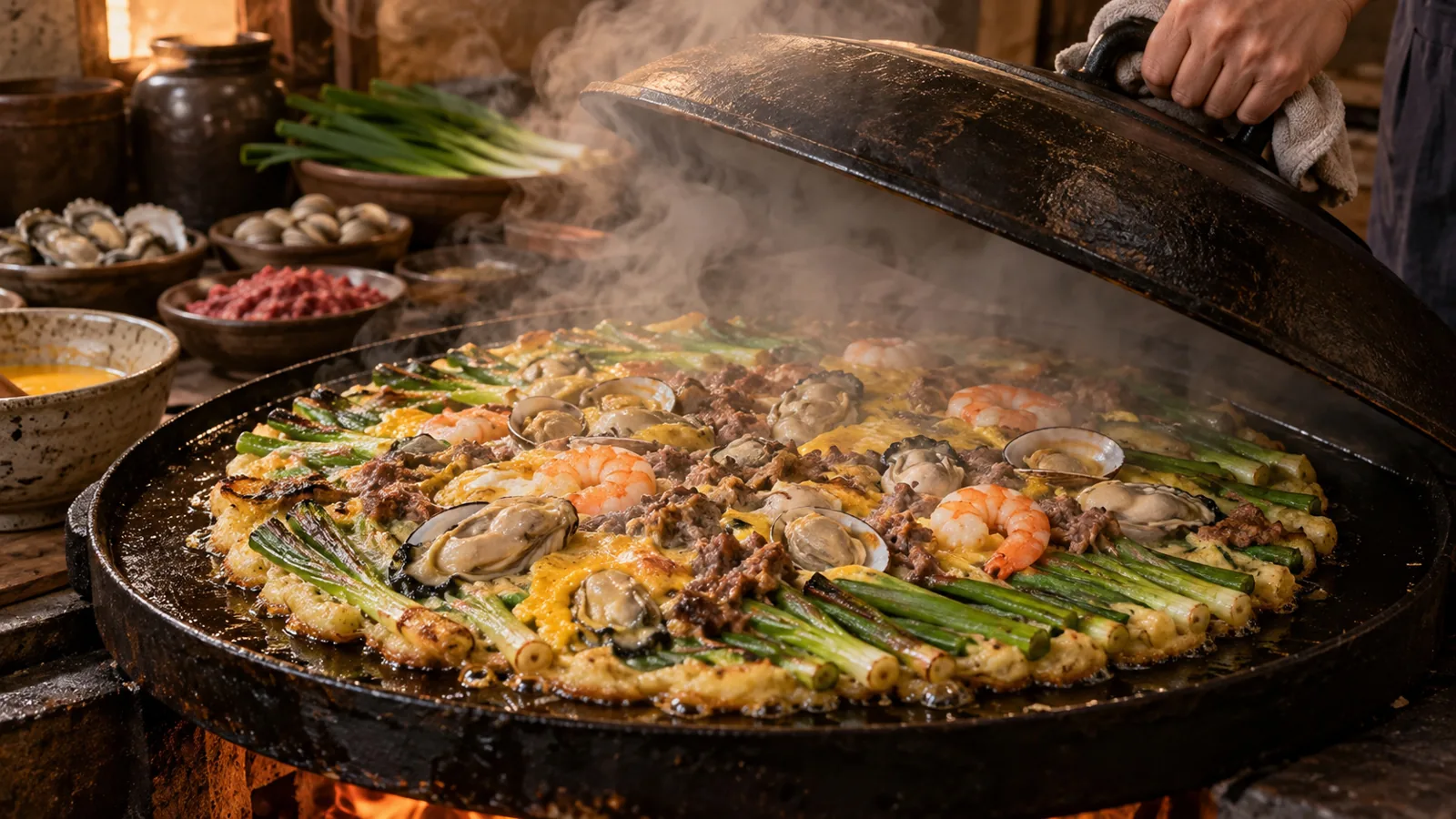
The pancake cooks on a round griddle, and at the end it is covered with a lid so it steams. This keeps the onion aroma in — the biggest difference from an ordinary pajeon.
| Ordinary pajeon | Dongnae pajeon | |
|---|---|---|
| Batter | Wheat flour or pancake mix | Rice flour and glutinous rice flour |
| Cooking | Pan-fried in oil until crisp | Cooked on a griddle, then steamed under a lid |
| Texture | Crispy | Moist and soft, strong onion flavour |
| Main ingredients | Green onion, seafood | Scallions, water parsley, seafood, beef, egg |
Some newer shops mix frying flour and gardenia water for a crisper outside, while others keep the old rice-flour-and-lid method — comparing the two is part of the fun.
How to eat it
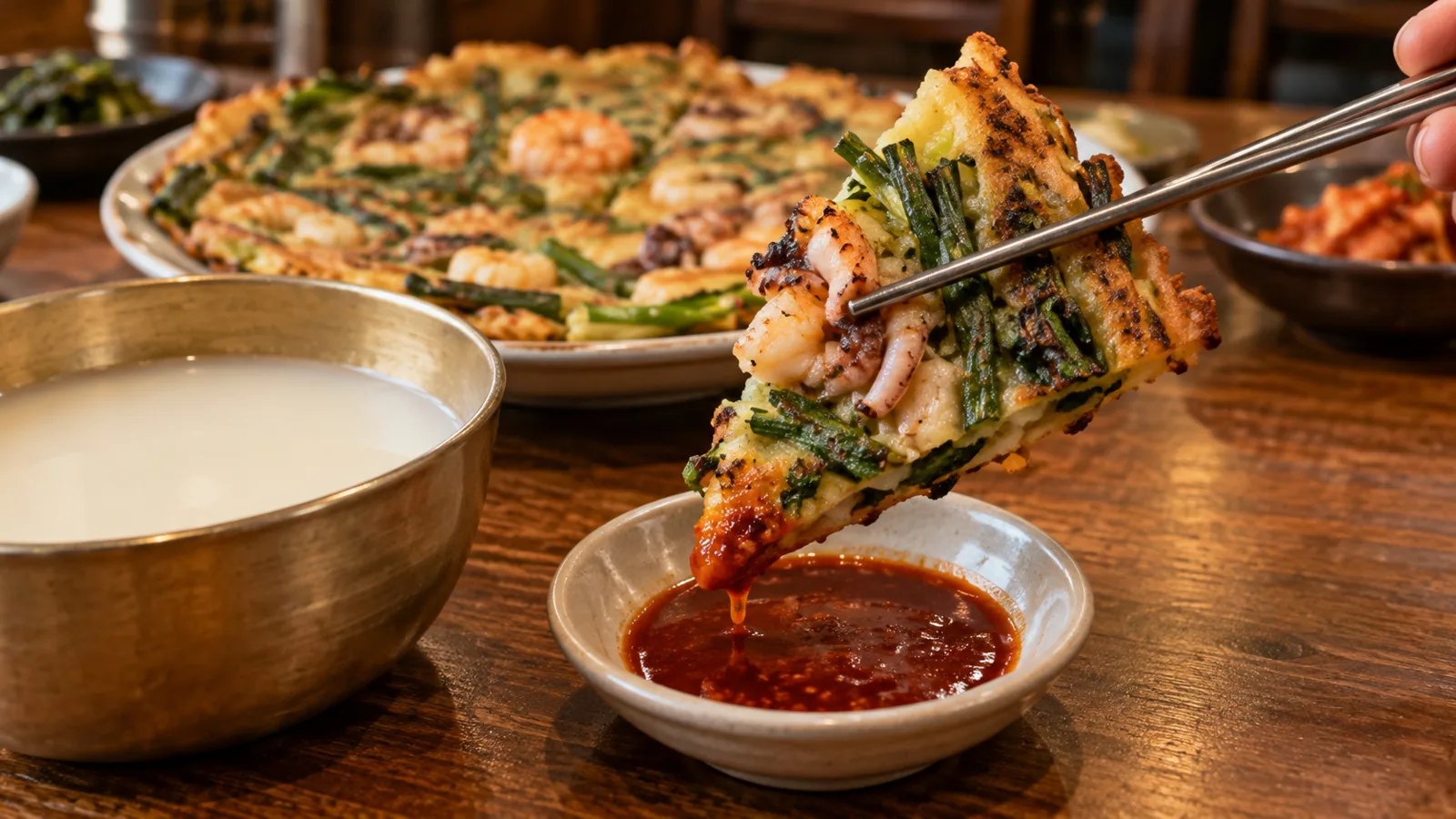
- Pull it apart with chopsticks: The inside is soft, so it tears easily along the scallions — no knife needed.
- Dip it: Many shops serve cho-gochujang (sweet-sour chili sauce) rather than only soy sauce. Try both.
- Add makgeolli: Busan's traditional Geumjeong Sanseong makgeolli, a slightly tart rice wine, is the classic match.
- Come in a group: One pancake is large and filling, so it's best shared.
- Best in spring: March to May, when green onions are at their sweetest and most tender — but it's served all year.
Useful Korean: "동래파전 하나 주세요" (Dongnae pajeon hana juseyo) — "One Dongnae pajeon, please." "막걸리 한 병 주세요" (makgeolli han byeong juseyo) — "A bottle of makgeolli, please."
Where to eat it in Busan
As the name says, it belongs to Dongnae-gu in north-central Busan, served by Busan Metro Lines 1 and 4. Look around the Dongnae Market area, which carries on the old Dongnae market, and the rest of Dongnae. Dongnae was the seat of the Joseon-era regional government, so a pajeon lunch fits well with a walk through the old town. If you enjoy the makgeolli, Geumjeongsan's Sanseong village, where it is brewed, is the next stop.
We list areas, not restaurant rankings. Opening days and hours vary by shop.
FAQ
What is Dongnae pajeon?
Dongnae pajeon is a thick green onion pancake from Dongnae, Busan. Whole scallions are topped with seafood, beef, rice-flour batter and egg, then cooked under a lid so it steams.
How is Dongnae pajeon different from regular pajeon?
It uses rice flour and glutinous rice flour instead of wheat and is steamed under a lid rather than fried crisp, so it is moist and soft with a strong green onion flavour.
Is it true Dongnae pajeon was offered to the king?
That is a story passed down — a Joseon-era Dongnae magistrate is said to have sent it to the king — but there is no exact written record to confirm it.
Is Dongnae pajeon vegetarian or gluten-free?
No. It contains seafood, shellfish, beef and egg. The traditional batter is rice flour, but some shops add wheat-based frying flour, so ask if you need to avoid gluten.
What do you drink with Dongnae pajeon?
Makgeolli, especially Busan's Geumjeong Sanseong makgeolli, a slightly tart rice wine that pairs well with the pancake.
Sources
- [오래된 미래] 귀한 연향 음식에서 대중의 음식으로…동래파전이 이어온 맛 — KNN, Aug 26, 2026
- [내고장 이 맛!] 부산 동래파전 — Seoul Shinmun, May 11, 2009
Ingredients, batter and prices differ by shop. This article is a food explainer, not a restaurant ranking or advertisement.
More Busan food
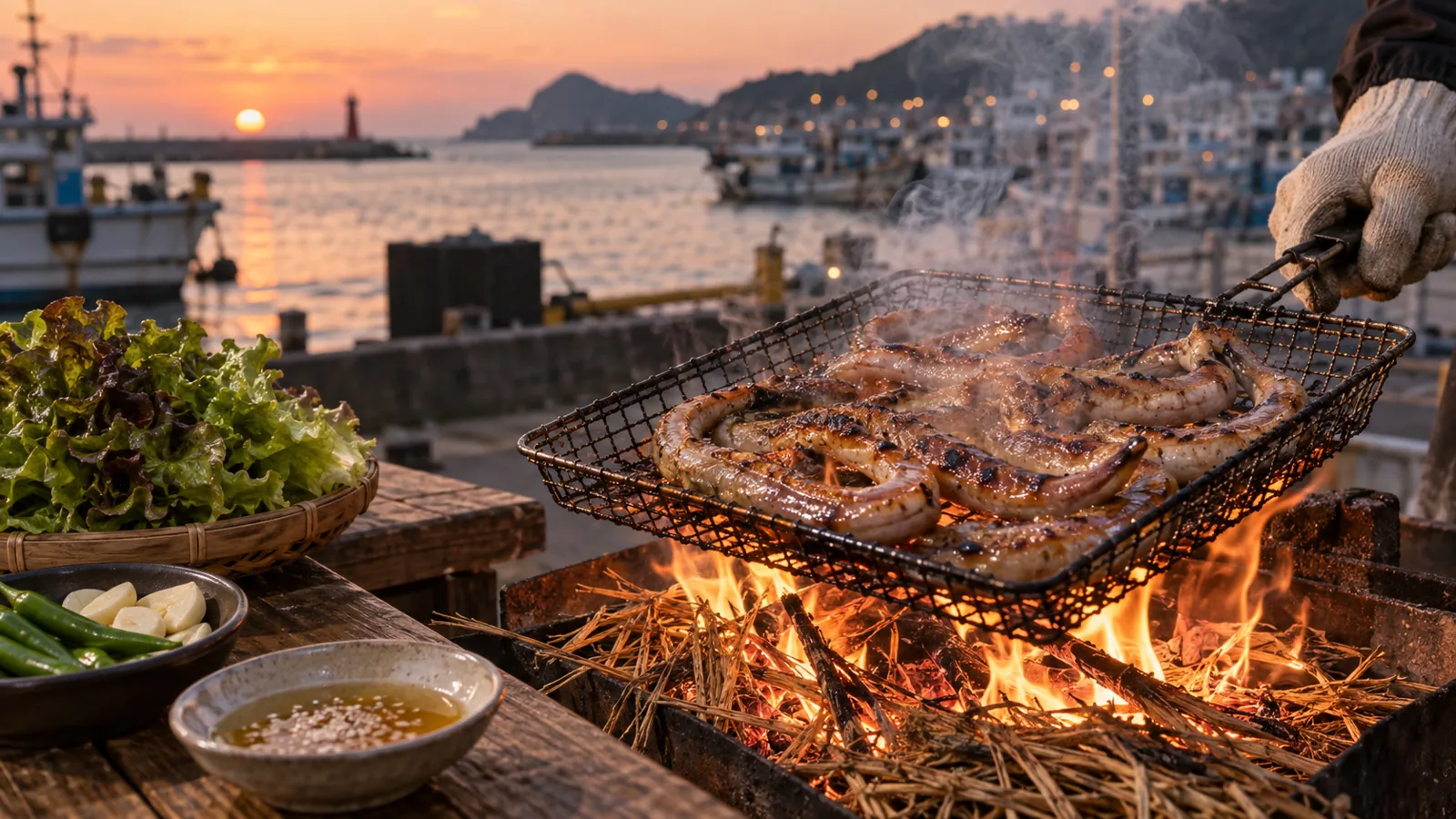
Gomjangeo (Grilled Hagfish)
Not an eel at all: a Busan drinking snack born next to leather factories, grilled over coal at Jagalchi and over straw in Gijang
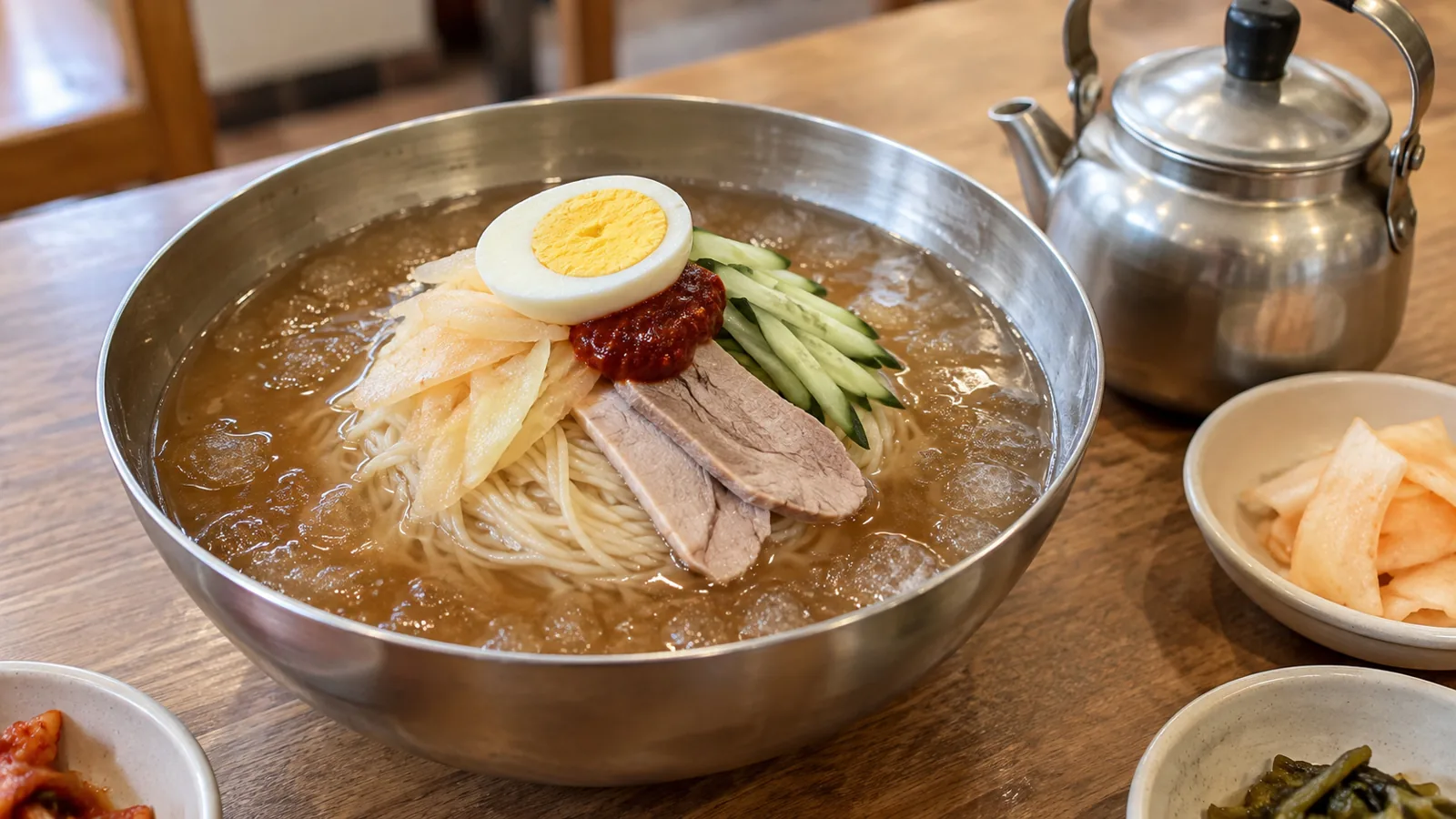
Milmyeon (Busan Wheat Noodles)
Born in the Korean War when refugees swapped buckwheat for aid flour — Busan's favourite summer noodle, eaten year-round
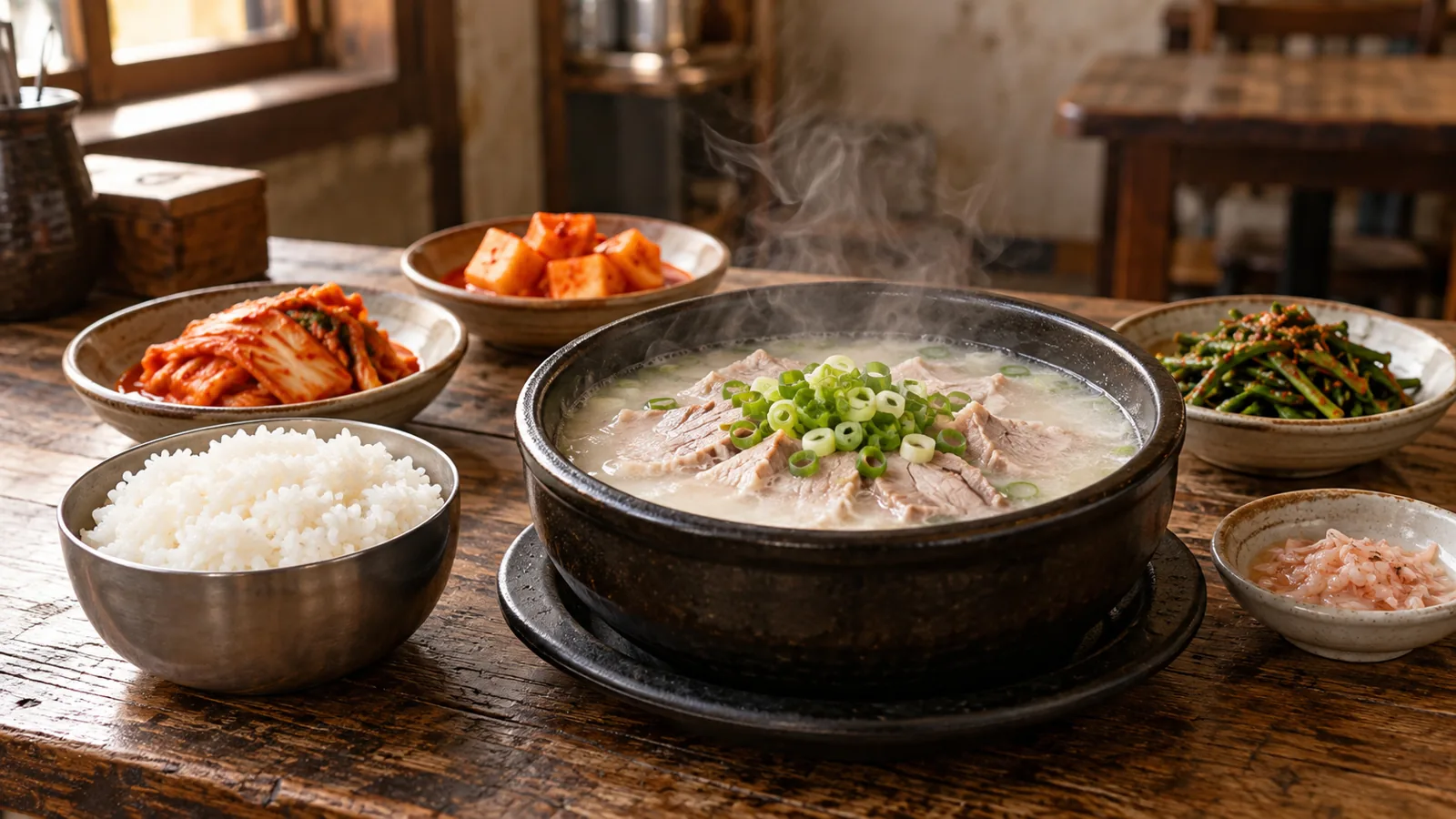
Dwaeji-gukbap (Busan Pork Rice Soup)
A fast, cheap, filling bowl that fed refugees and dock workers — and still Busan's go-to meal at any hour
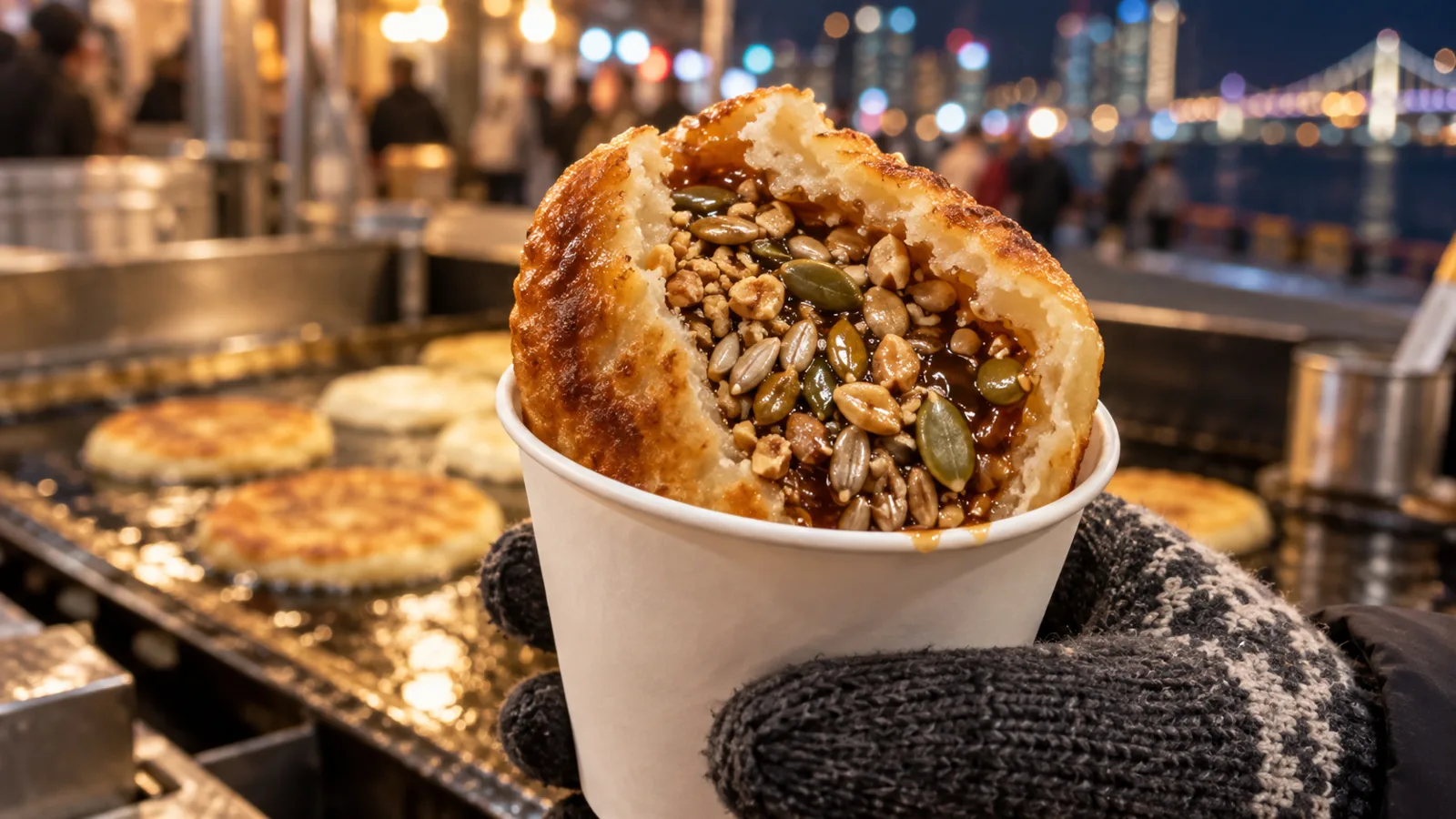
Ssiat Hotteok (Seed Hotteok)
A fried sweet pancake split open and stuffed with sunflower seeds, pumpkin seeds and peanuts — Nampo-dong's famous street snack
← All Busan food · What to eat in Busan · Busan festivals & events