Gomjangeo (Kkomjangeo) — Busan's Grilled Hagfish: What It Is, Straw-Fire vs Spicy Grill, and Where to Eat It
Not an eel at all: a Busan drinking snack born next to leather factories, grilled over coal at Jagalchi and over straw in Gijang
Gomjangeo (곰장어), also called kkomjangeo (꼼장어) and officially meokjangeo (먹장어), is hagfish — a jawless sea creature despite the 'eel' (jangeo) in its name. In Busan it is grilled with a spicy sauce over coal briquettes or roasted whole over a rice-straw fire and eaten with soju. One story says people began eating the meat left over after its tough skin was stripped for leather near Jagalchi; another ties it to refugees in Jagalchi and Gijang during the Korean War.
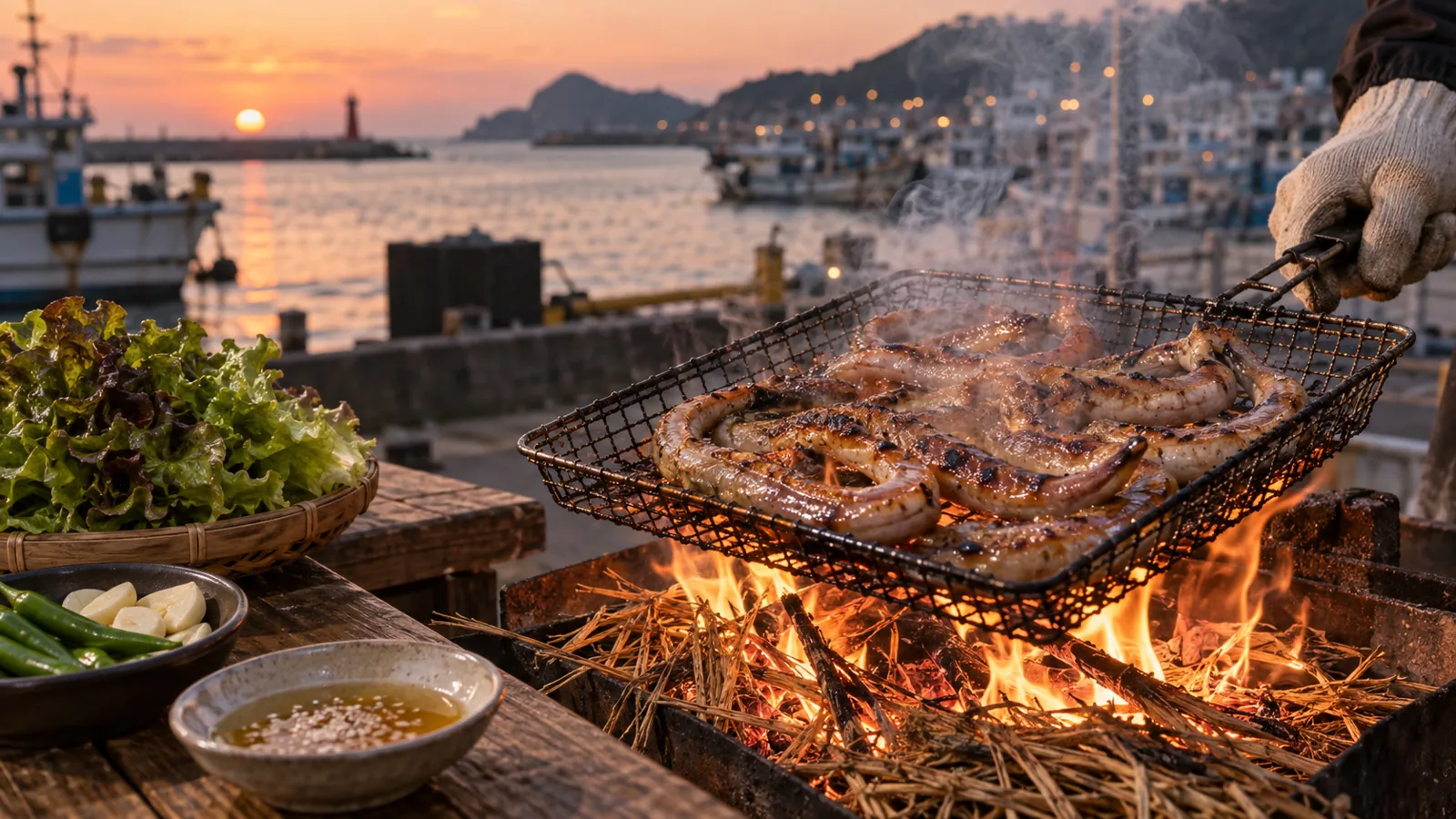
Gomjangeo in one line
Chewy, nutty hagfish grilled with chili sauce or roasted over straw, wrapped in lettuce or perilla leaves and eaten with soju. The name comes from the way it wriggles (kkomjirak) — hence 'gomjangeo' or 'kkomjangeo'.
| Korean | 곰장어 / 꼼장어 (gomjangeo / kkomjangeo) · standard name 먹장어 (meokjangeo) |
|---|---|
| What it is | Hagfish — a jawless, nearly blind sea creature with a round mouth. Not a true eel. In English, menus may say 'hagfish' or 'slime eel'. |
| Contains | Fish. The spicy version uses gochujang (usually made with wheat and soy), garlic, green onion and onion. Not vegetarian. |
| Spice | Spicy grill: medium to hot. Straw-fire and salt-grilled: not spicy. |
| Price | A mid-priced drinking meal, usually ordered by plate or weight. Domestic hagfish costs much more than imported — prices are on the menu. |
From leather to the dinner table — the origin story
- Skin first: Hagfish skin is far tougher than cowhide, and it was used for handbags, shoes and wallets. Until the 1970s hagfish leather was a valuable export.
- Next to the tanneries: When leather factories opened near Jagalchi Market in the colonial era, people grilled the meat left over after skinning — often told as the start of eating hagfish in Busan.
- Refugee stalls: During the Korean War, refugees settled around Jagalchi, and street stalls grilling hagfish appeared right beside the leather factories.
- Gijang's straw fire: In Gijang, villagers roasted live hagfish over burning rice straw and peeled off the charred skin — the origin of jjippul gomjangeo. Stories also tell of refugees surviving on hagfish shared by Gijang villagers.
- Across Busan: From the 1970s it spread to Bujeon Station, Dongnae Market and the Dongnae hot-spring area, and later became a drinking snack all over Korea.
Three ways it's cooked
| Style | How it's cooked | Eat it with |
|---|---|---|
| Straw-fire roast 짚불구이 (Gijang) | Whole hagfish roasted in its skin over burning rice straw, then the blackened skin is peeled off | Sesame oil and salt or soybean paste; lettuce with green chili and raw garlic, or Gijang seaweed |
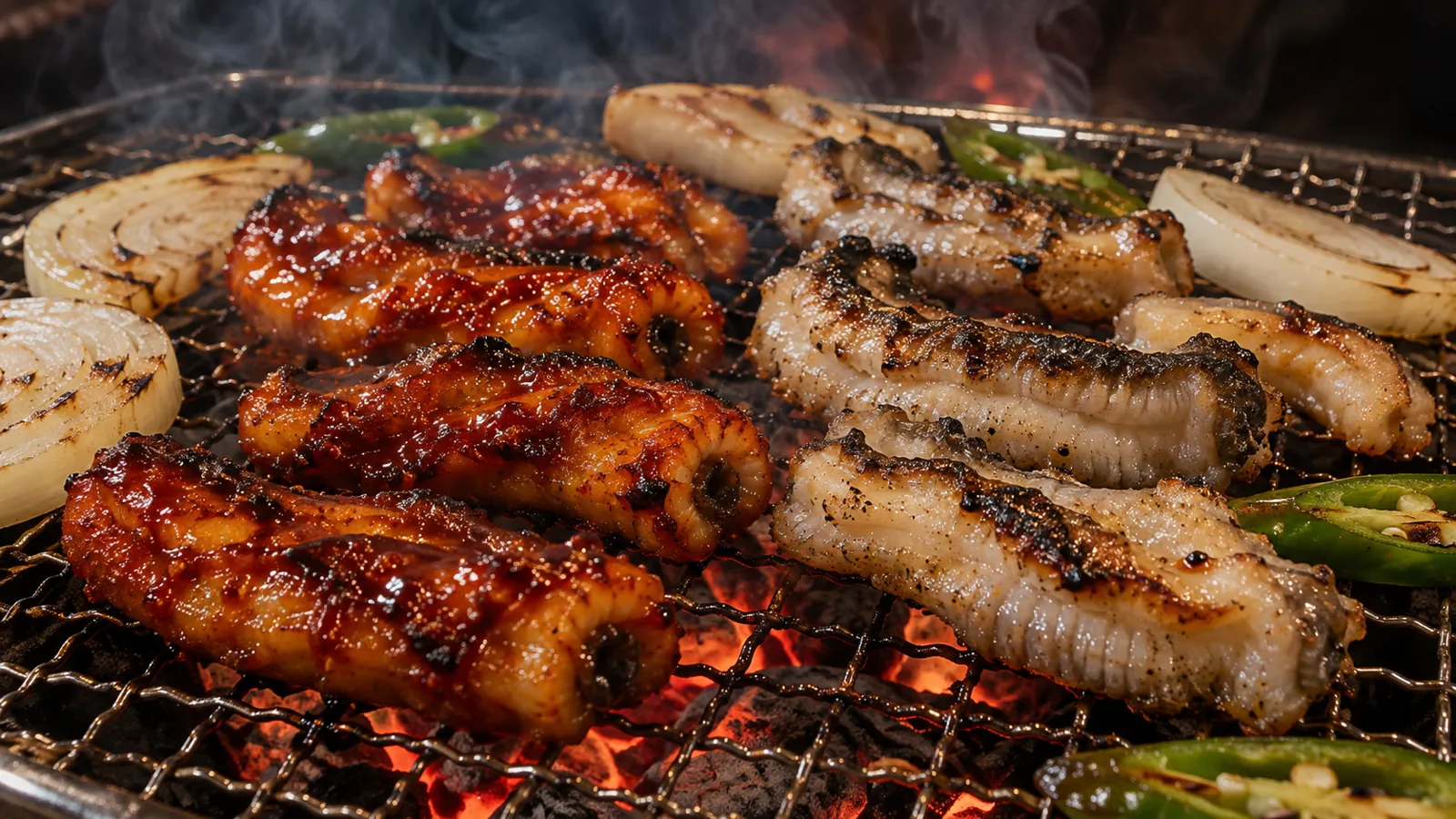
| Spicy grill 양념구이 (Jagalchi) | Cut pieces in gochujang sauce with green onion and onion, grilled over coal briquettes | Wrapped in perilla leaves |
| Salt grill 소금구이 | Grilled plain, no sauce | Salt and sesame oil dip |
Why rice straw?
Straw flares up fast and dies down quickly — just right for hagfish. Pine or oak burns too hot. Today the fish is usually roasted in a wire basket for about five minutes; soot and straw ash turn it black, and a gloved hand strips the skin to reveal golden meat. Many shops now clean it in the kitchen rather than at your table.
How to eat it
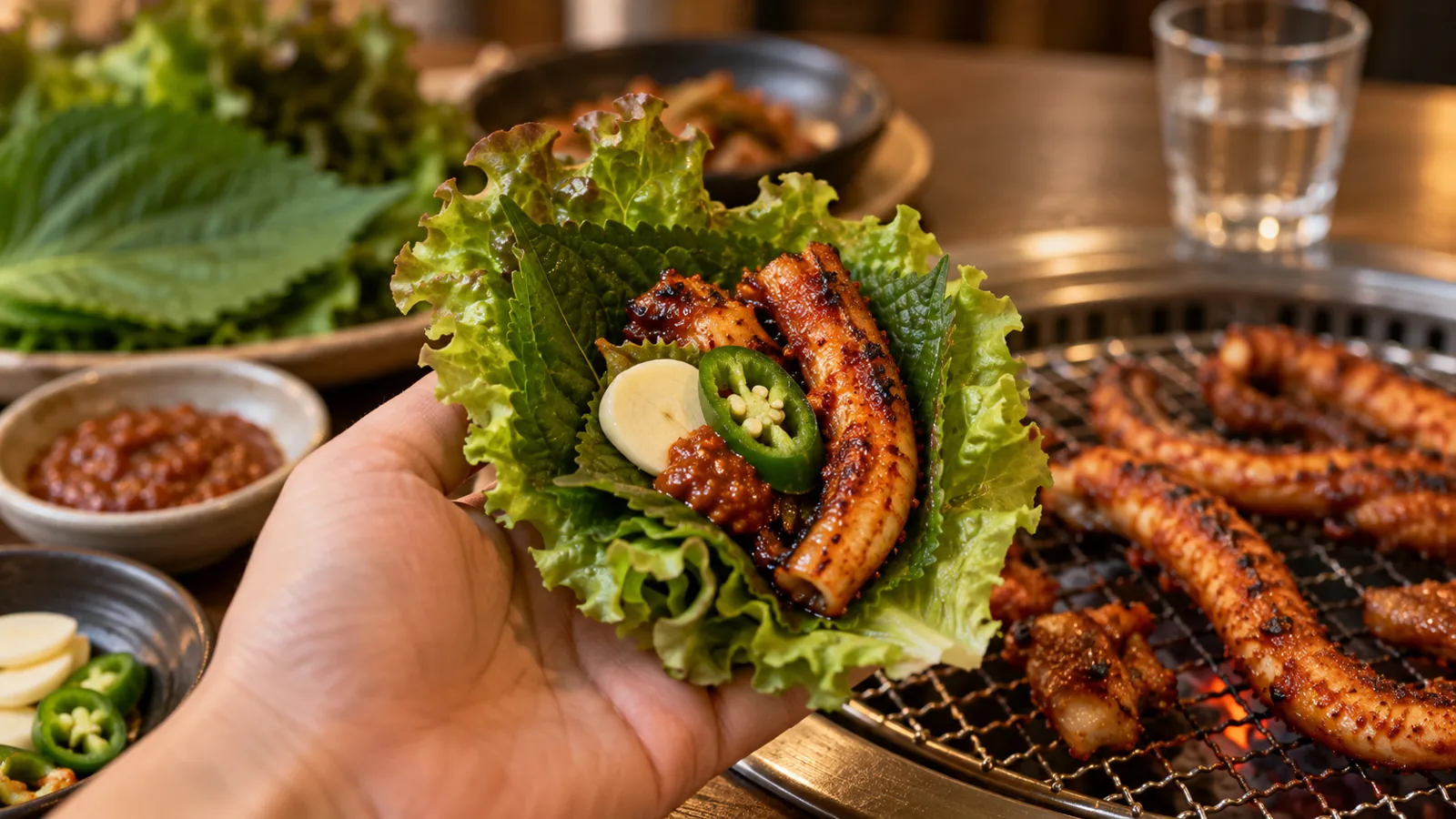
- Taste the straw-fire version plain first: Dip in sesame-oil salt or soybean paste to get the nutty flavour.
- Make wraps: Lettuce with chili and garlic for straw-fire hagfish; perilla leaves for the spicy grill.
- Order both if you're a group: Then fry rice in the leftover spicy sauce.
- Ask where it's from: Wild catches have fallen, and much hagfish is now imported (often from the US or Japan). Domestic hagfish is described as copper-coloured with a clear white line on the back, imported as darker. Origin labels are required, so check the menu.
Useful Korean: "꼼장어 양념구이 하나 주세요" (kkomjangeo yangnyeom-gui hana juseyo) — "One spicy grilled hagfish, please." "소금구이 있어요?" (sogeum-gui isseoyo?) — "Do you have salt-grilled?" "국산이에요?" (guksan-ieyo?) — "Is it Korean?"
Hagfish is a Korean taste that some visitors find challenging — its look and chewy texture are part of the experience. The spicy grill is the easiest way to start.
Where to eat it — Jagalchi and Gijang
- Around Jagalchi Market (Jagalchi Station, Metro Line 1): Busan's coal-briquette hagfish alley, said to have well over a hundred hagfish restaurants. Nearby you'll also find fish cakes at Bupyeong Kkangtong Market.
- Gijang-eup: Home of straw-fire hagfish. Drive from Haeundae over Dalmaji Hill to Gijang-eup and you'll see straw-fire hagfish restaurants; Gongsu village in Sirang-ri has a cluster of them.
- Dongnae and Bujeon: Where hagfish grills spread from the 1970s, around the markets.
Hagfish restaurants are busiest in the evening with drinks. If you'd rather a spicy dish with rice for lunch, try nakgopsae.
FAQ
What is gomjangeo in English?
Gomjangeo (also kkomjangeo) is hagfish, sometimes sold as 'slime eel'. Its standard Korean name is meokjangeo. Despite 'jangeo' (eel) in the name, it is a jawless fish, not a true eel.
What is the difference between gomjangeo and kkomjangeo?
None — they are the same food. Both names come from the way the fish wriggles; kkomjangeo is the more casual, emphatic pronunciation used on many Busan menus.
What is straw-fire hagfish (jjippul gomjangeo)?
A Gijang specialty: live hagfish roasted in its skin over burning rice straw, then peeled and dipped in sesame-oil salt or soybean paste. Straw burns hot and fast, which suits the fish.
Is gomjangeo spicy?
The spicy grilled version (yangnyeom-gui) is medium to hot because of the gochujang sauce. Straw-fire and salt-grilled hagfish are not spicy.
Where can I eat gomjangeo in Busan?
Coal-grilled spicy hagfish around Jagalchi Market and straw-fire hagfish in Gijang-eup are the two classics. You can also find it around Dongnae and Bujeon markets.
Sources
- [문화식객 이춘호의 미각기행] <15>장어 푸드인문학 (상)곰장어와 갯장어 — Maeil Shinmun, Jul 19, 2024
- 외국에선 골칫거리로 버려지는데… 한국 술상에선 없어서 못 파는 '생선' — Wikitree, Aug 30, 2026
- [테마가 있는 여행] 고소하다, 겨울바다의 맛…동남해변 맛기행 — Maeil Shinmun, Dec 5, 2009
Prices, origin and cooking styles differ by restaurant. This article is a food explainer, not a restaurant ranking or advertisement.
More Busan food
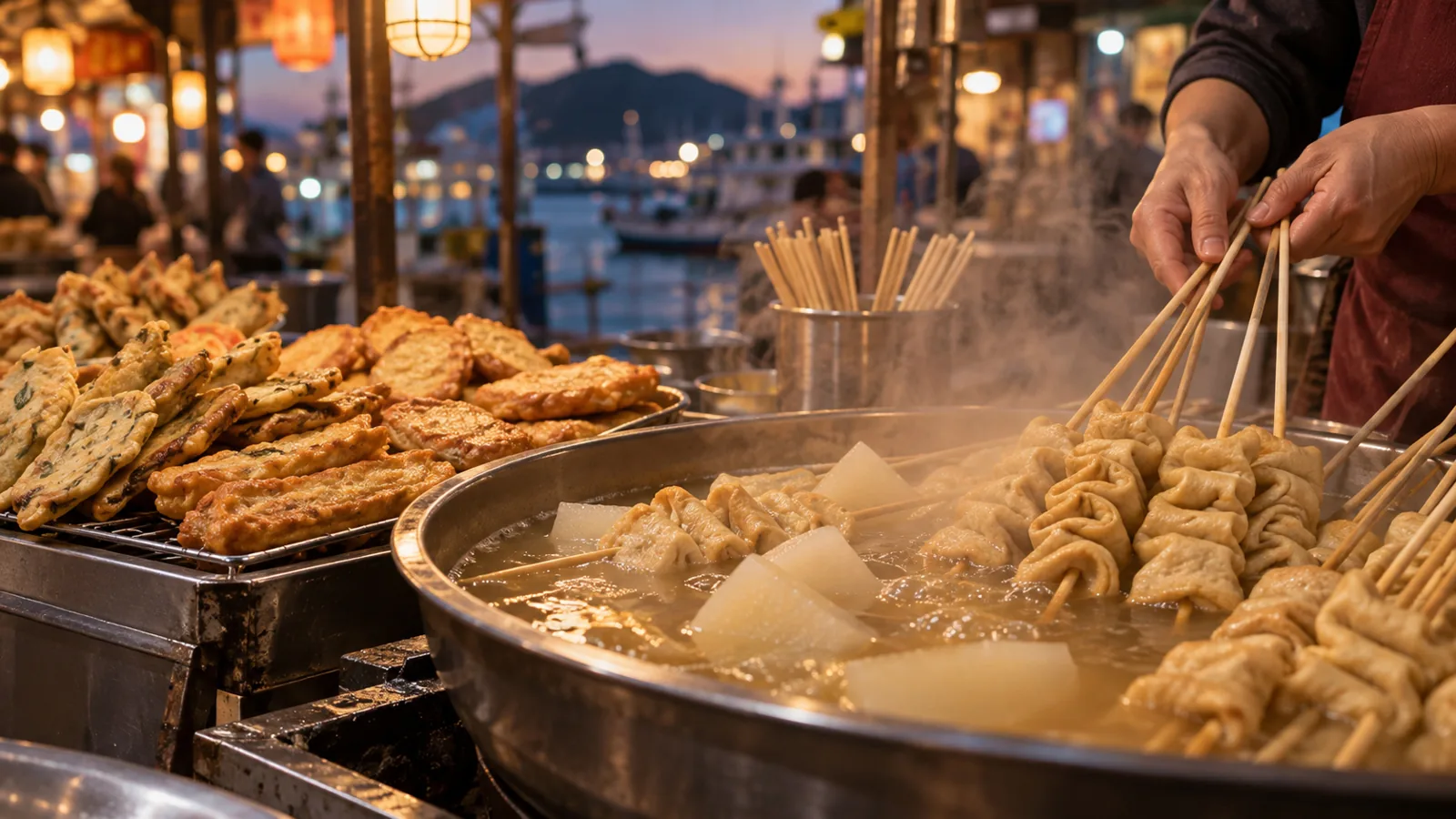
Busan Eomuk (Fish Cakes)
Ground fish, fried golden: a century-old Busan market food from Bupyeong Market to Yeongdo and Choryang
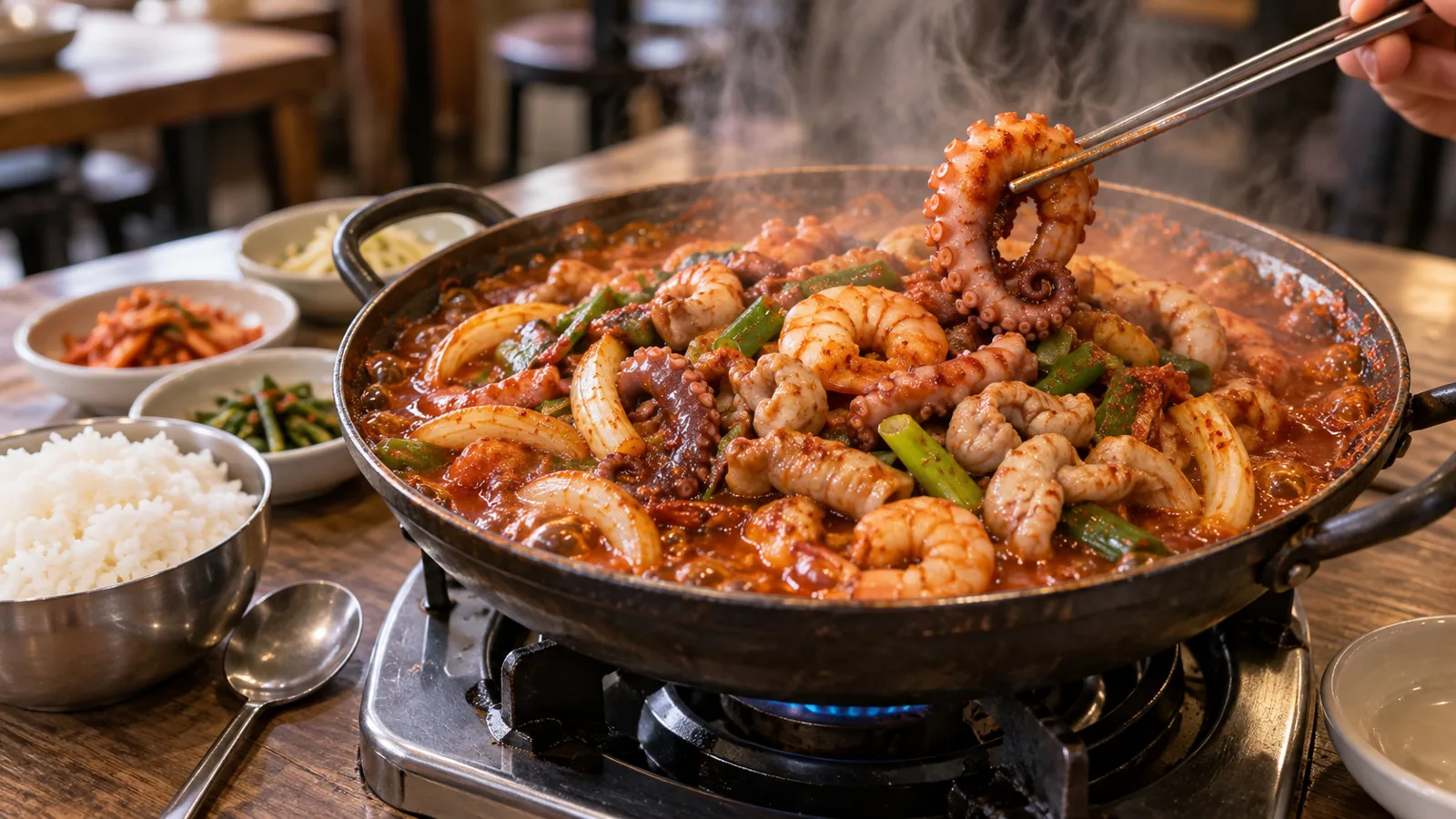
Nakgopsae (Spicy Octopus, Gopchang & Shrimp)
Nak-gop-sae = nakji (small octopus) + gopchang (intestines) + saeu (shrimp): a spicy pot born outside an old Busan textile mill
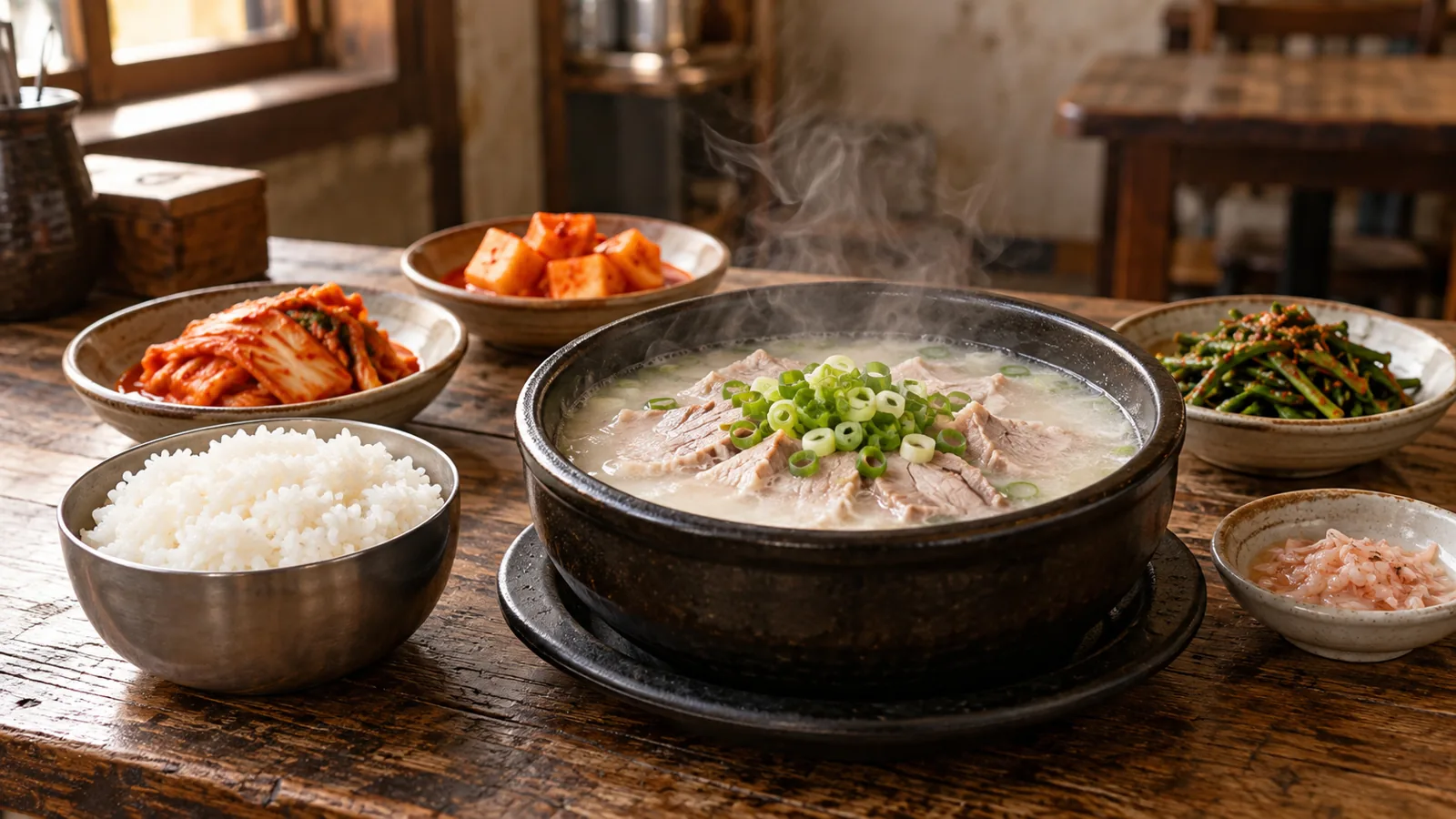
Dwaeji-gukbap (Busan Pork Rice Soup)
A fast, cheap, filling bowl that fed refugees and dock workers — and still Busan's go-to meal at any hour
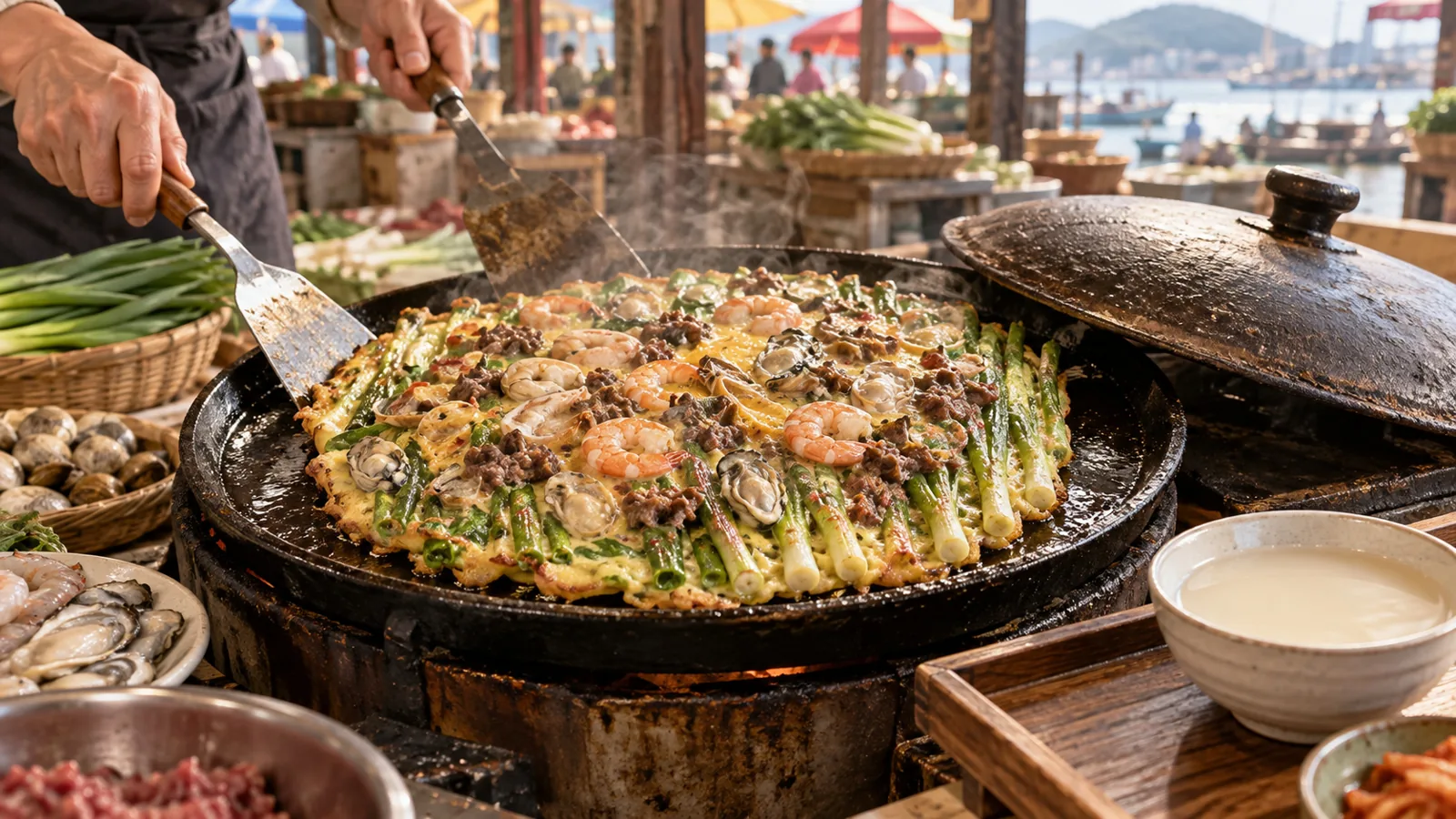
Dongnae Pajeon (Green Onion Pancake)
Whole scallions, seafood and rice-flour batter cooked under a lid — a dish said to have been offered to the king
← All Busan food · What to eat in Busan · Busan festivals & events