Nakgopsae — What It Means, What's in It and How to Eat Busan's Spicy Octopus Pot
Nak-gop-sae = nakji (small octopus) + gopchang (intestines) + saeu (shrimp): a spicy pot born outside an old Busan textile mill
Nakgopsae (낙곱새) is a Busan dish whose name joins the first syllables of its three main ingredients: nakji (small octopus), gopchang (intestines, usually beef) and saeu (shrimp). They are simmered in a red chili-flake sauce in a shallow pot at your table and eaten spooned over rice. It grew out of 'Jobang nakji', the spicy octopus that workers ate near the former Joseon Textile factory in Beomil-dong, Dong-gu.
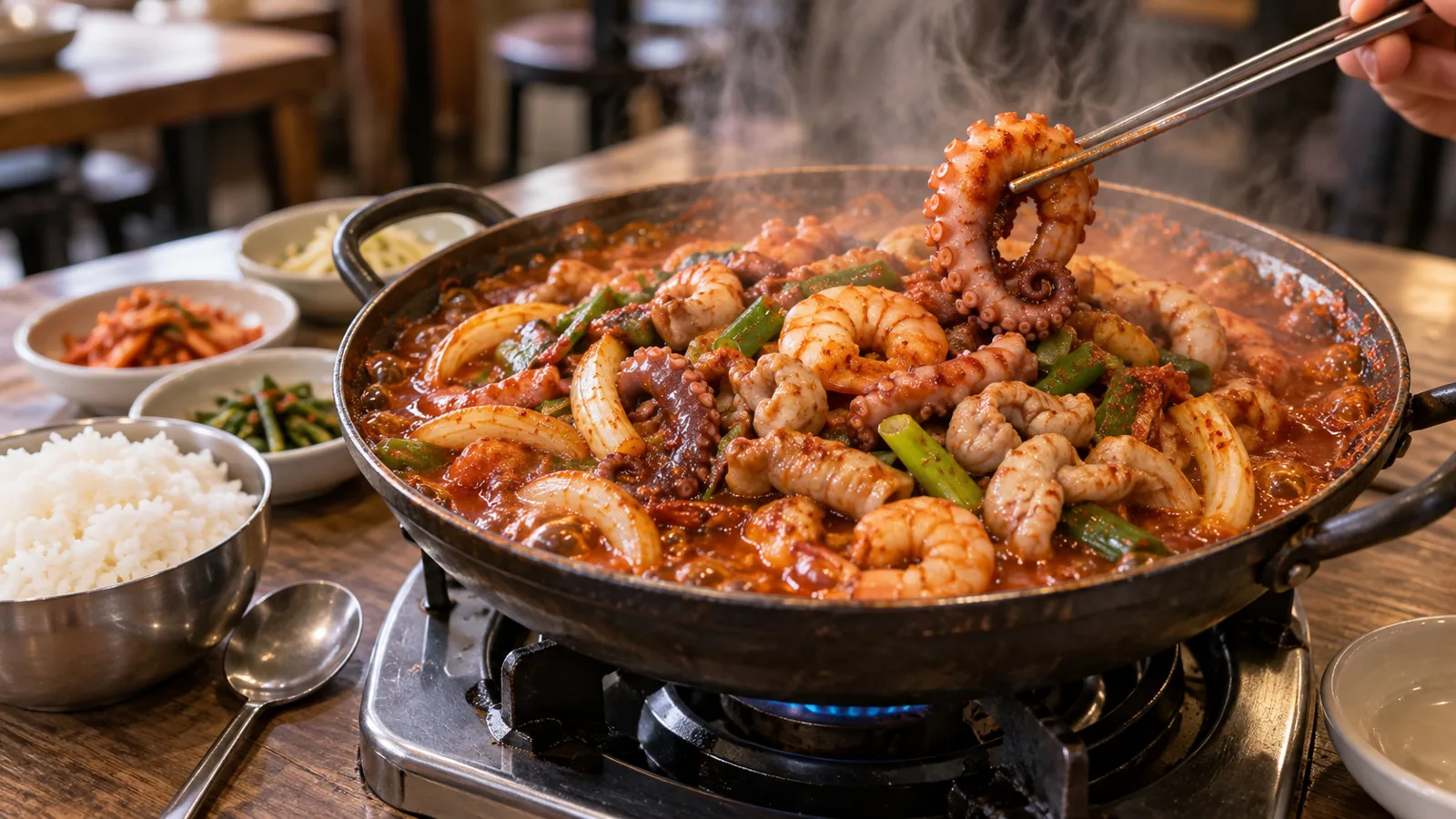
Nakgopsae in one line
Small octopus, intestines and shrimp go into one pot with a spicy sauce, cook down until saucy, and are eaten over rice. Chewy octopus, rich intestines and sweet shrimp give you sea and meat in one bite.
| Korean | 낙곱새 (nak-gop-sae) — nakji 낙지 (small octopus) + gopchang 곱창 (intestines) + saeu 새우 (shrimp) |
|---|---|
| Contains | Octopus (mollusc), shrimp (crustacean), intestines (usually beef), chili flakes, garlic, onion, green onion. The broth is often made with anchovy. Not vegetarian, not halal, not for shellfish allergies. |
| Spice | Medium to hot — it's built on chili flakes. Tell staff early if you can't handle heat. |
| How it's served | Usually ordered per person (often 2 or more), cooked in a shallow pot at the table, with rice. |
| Price | A mid-priced casual meal. Prices differ by shop and are posted on the menu. |
What does 'Jobang' mean? The origin story
- Jobang = Joseon Textile: 'Jobang' (조방) is short for Joseon Bangjik, the Joseon Textile Company. According to Busan Metropolitan City, in 1917, under Japanese colonial rule, Korea's first cotton mill was built where Beomil-dong, Dong-gu is today — a huge site with about 3,000 workers.
- A workers' drinking snack: Shops and people gathered around the mill, and locals called the area 'Jobang'. Spicy stir-fried octopus eaten there with drinks became known as Jobang nakji, and the name spread nationwide.
- After the mill: The company ran for about a decade after liberation and was wound up in 1968. Markets such as Jayu Market and Pyeonghwa Market and an intercity bus terminal took its place.
- Adding ingredients: Add shrimp and it's naksae; add intestines and it's nakgop; add both and you get nakgopsae. There's no clear record of who first combined all three.
Most nakji comes from the south and west coasts — places like Muan and Jangheung in South Jeolla — not from Busan's own waters — octopus from elsewhere became a Busan dish through the mill workers. Because 'Jobang' recalls the colonial period, some people prefer not to use the name.
What it tastes like
The sauce
Jobang-style sauce uses plenty of red chili flakes rather than gochujang, so it's spicy but relatively clean-tasting. Anchovy stock and lots of garlic go into an aged sauce base.
Vegetables
Just onion and green onion; their sweetness balances the heat.
Three ingredients
Octopus brings chewiness, intestines bring rich, fatty flavour, and shrimp add sweetness. The fat from the intestines melts into the sauce and deepens it — that's the appeal of nakgopsae over plain octopus.
Read the menu by the name
| Name | Main ingredients |
|---|---|
| 낙지볶음 nakji-bokkeum (Jobang nakji) | Octopus |
| 낙새 naksae | Octopus + shrimp |
| 낙곱 nakgop | Octopus + intestines |
| 낙곱새 nakgopsae | Octopus + intestines + shrimp |
Menus vary a little by shop, but the rule is the same: join the first syllables of the ingredients you want.
How to eat it — and where
- Eat as soon as it bubbles: Octopus gets tough if overcooked, so start once the pot boils and the ingredients are done.
- A little at a time over rice: Spoon some of the pot and sauce onto your rice and mix a little at a time — the Busan way.
- Say your spice level early: It can be quite hot; ask before they cook.
- Autumn is octopus season: Koreans say nakji is at its best in autumn.
Useful Korean: "낙곱새 2인분 주세요" (nakgopsae i-inbun juseyo) — "Nakgopsae for two, please." "덜 맵게 해 주세요" (deol maepge hae juseyo) — "Less spicy, please." "새우 빼 주세요" (saeu ppae juseyo) — "No shrimp, please" (ask if the shop can do it).
Where: The dish's home is Beomil-dong, Dong-gu — the road there is still called Jobang-ro, and Jayu and Pyeonghwa markets on the old mill site are close by (Beomil Station, Metro Line 1). Nakgopsae is also easy to find across Busan. On a cold day, pair your Busan food trip with dwaeji-gukbap.
FAQ
What does nakgopsae mean?
It joins the first syllables of nakji (small octopus), gopchang (intestines) and saeu (shrimp) — the three main ingredients, cooked together in a spicy sauce and eaten over rice.
How do you say nakgopsae in English?
There's no standard English name. Menus may say 'spicy octopus, beef tripe and shrimp' or 'spicy octopus hot pot'. Saying 'nakgopsae' (nak-gop-sae) works in any Busan restaurant.
What does 'Jobang' mean?
It's short for the Joseon Textile Company mill built in 1917 in Beomil-dong, Dong-gu. The area in front of the mill was called 'Jobang', and the spicy octopus workers ate there became 'Jobang nakji'.
Is nakgopsae very spicy?
Medium to hot, because the sauce is built on chili flakes. Ask for less spicy (덜 맵게) when you order; eating it with plenty of rice helps.
Can I eat nakgopsae with a shellfish allergy?
It's not recommended: it contains octopus and shrimp, and the stock is often made with anchovy. Some shops offer nakgop (no shrimp), but the octopus is still a mollusc.
Sources
- 부산 원조 낙지볶음 조방낙지의 '조방'을 아시나요 — Financial News (News1), Oct 3, 2021
- [향토음식] 부산 명물, '조방낙지볶음' — Korea Food Times, Sep 7, 2020
Prices, ingredients and spice levels differ by shop. This article is a food explainer, not a restaurant ranking or advertisement.
More Busan food
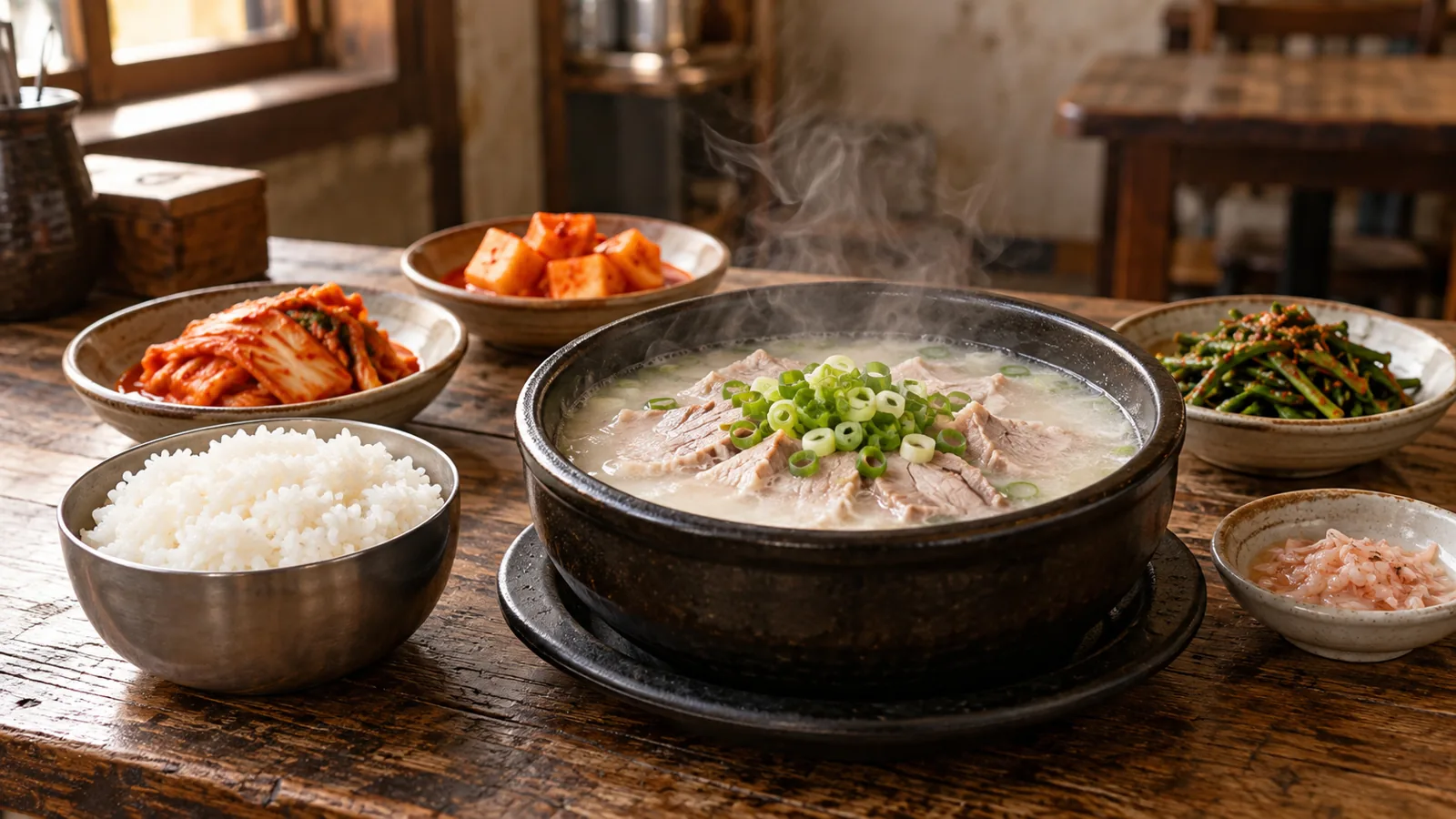
Dwaeji-gukbap (Busan Pork Rice Soup)
A fast, cheap, filling bowl that fed refugees and dock workers — and still Busan's go-to meal at any hour
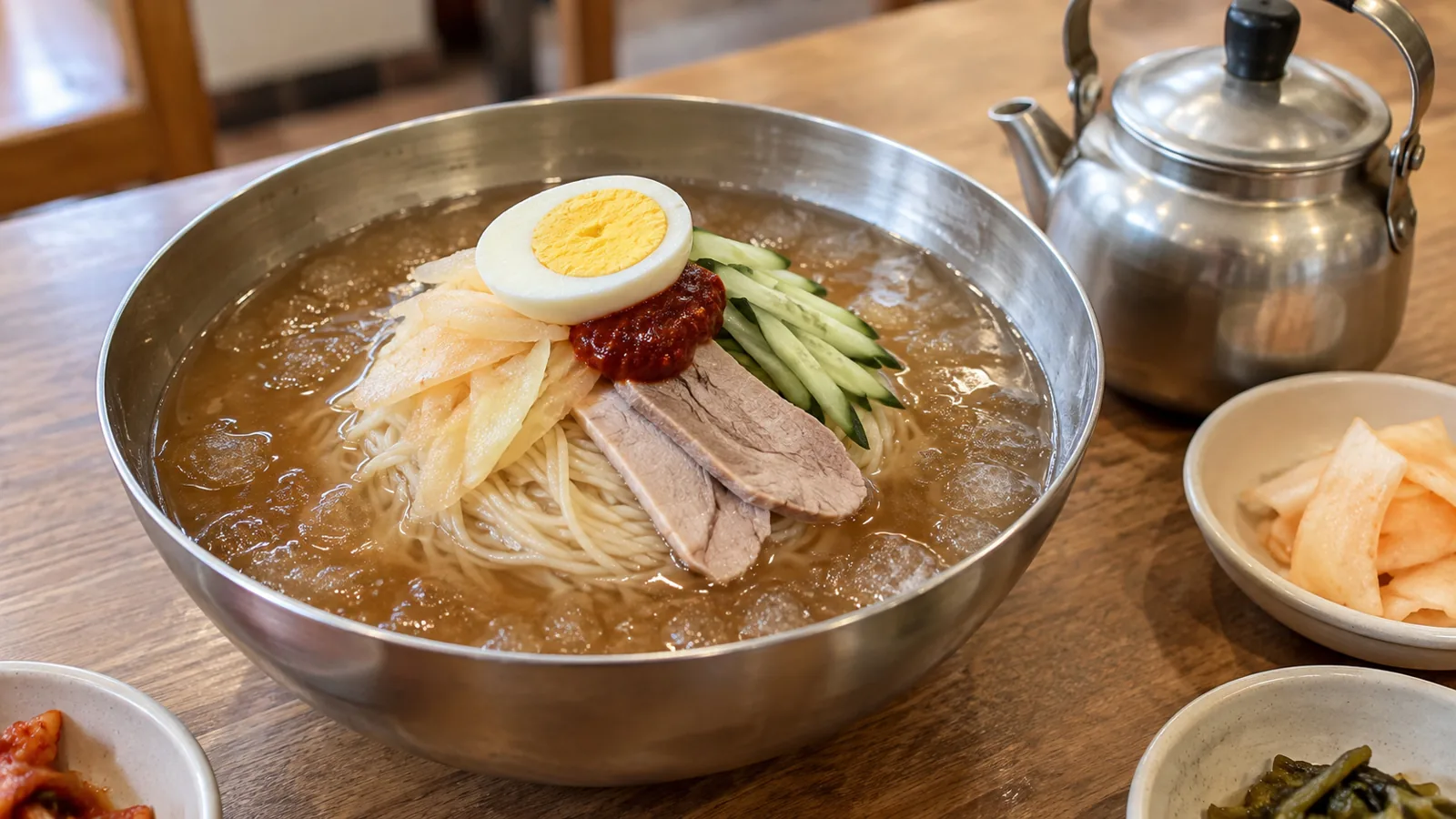
Milmyeon (Busan Wheat Noodles)
Born in the Korean War when refugees swapped buckwheat for aid flour — Busan's favourite summer noodle, eaten year-round
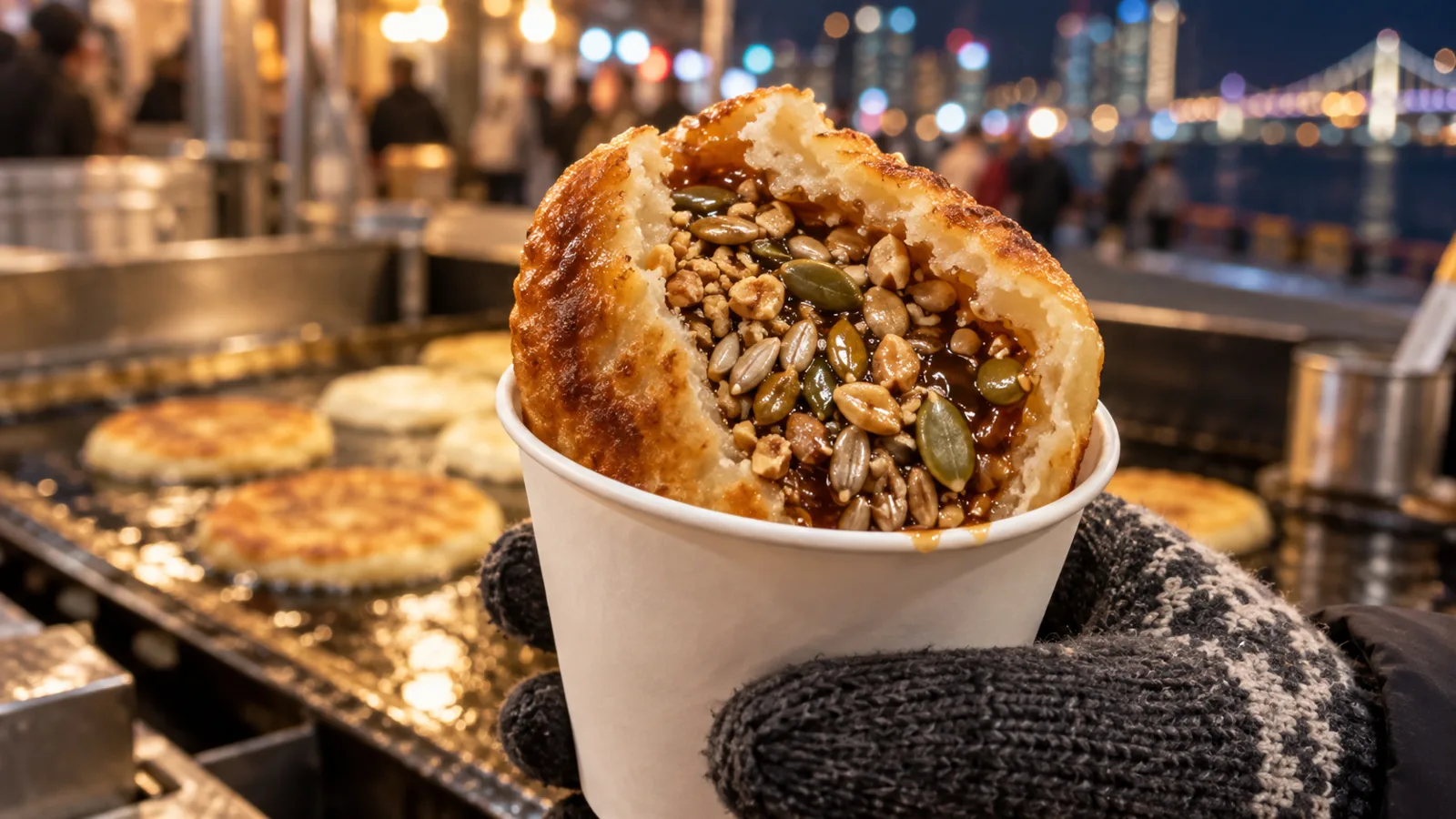
Ssiat Hotteok (Seed Hotteok)
A fried sweet pancake split open and stuffed with sunflower seeds, pumpkin seeds and peanuts — Nampo-dong's famous street snack
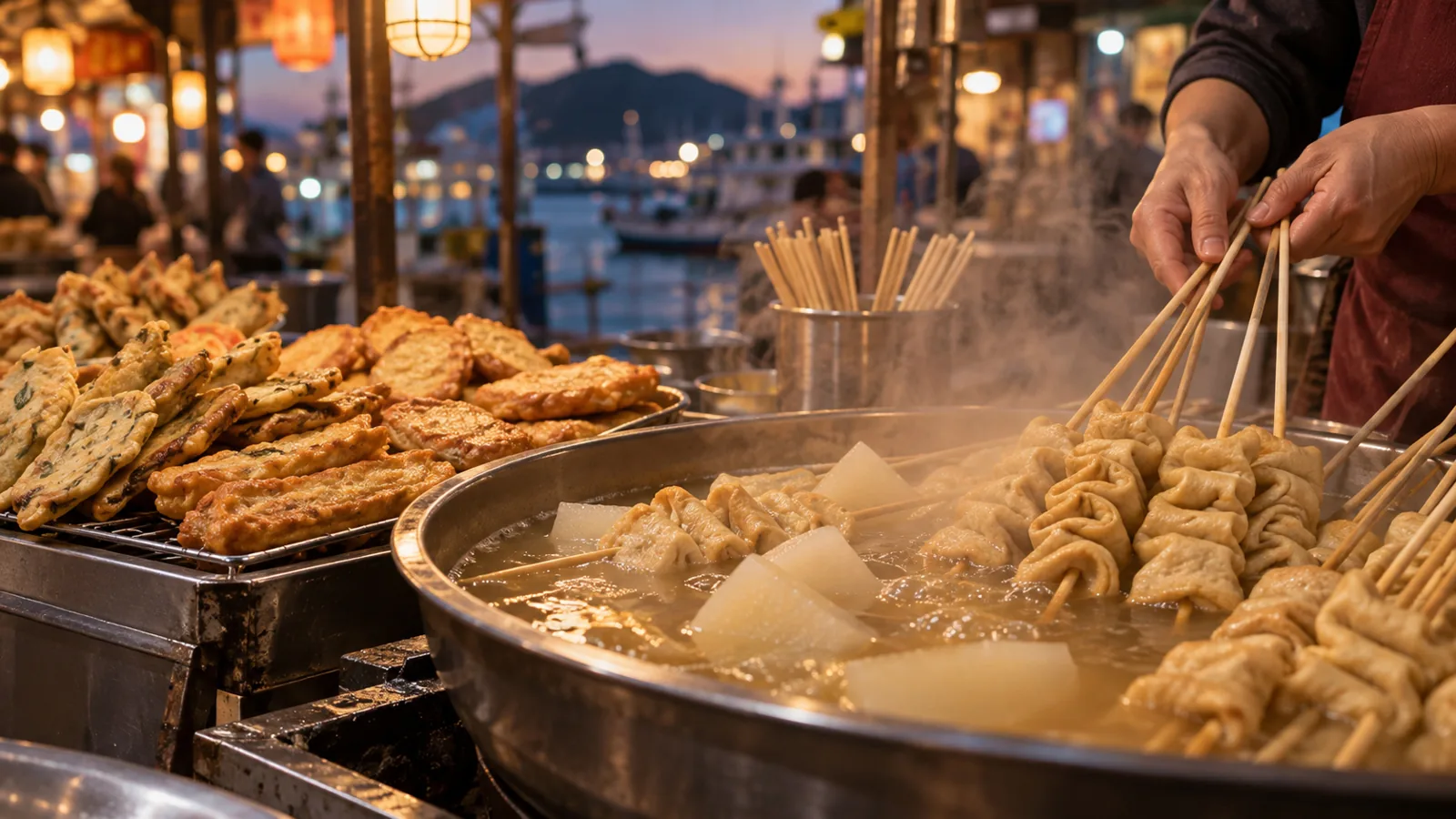
Busan Eomuk (Fish Cakes)
Ground fish, fried golden: a century-old Busan market food from Bupyeong Market to Yeongdo and Choryang
← All Busan food · What to eat in Busan · Busan festivals & events