Hoe-guksu — Busan's Spicy Raw-Fish Noodles with Skate: What It Is, vs Bibim-guksu, How to Eat It
Thick noodles, crunchy greens and chewy raw skate in sweet-sour chili sauce — with a kettle of hot anchovy broth on the side
Hoe-guksu (회국수, "raw-fish noodles") is a bowl of thick wheat noodles topped with raw vegetables and slices of raw fish, mixed with sweet, sour and spicy chili sauce (cho-gochujang). In Busan the fish is usually chewy raw skate (gaori). Local stories say it began at a noodle stall on the Yeongdo docks just after the Korean War, and became well known after the shop moved to Nampo-dong in the 1960s. Old hoe-guksu shops in Nampo-dong and Seomyeon still serve it with a warm anchovy broth to cool the heat.
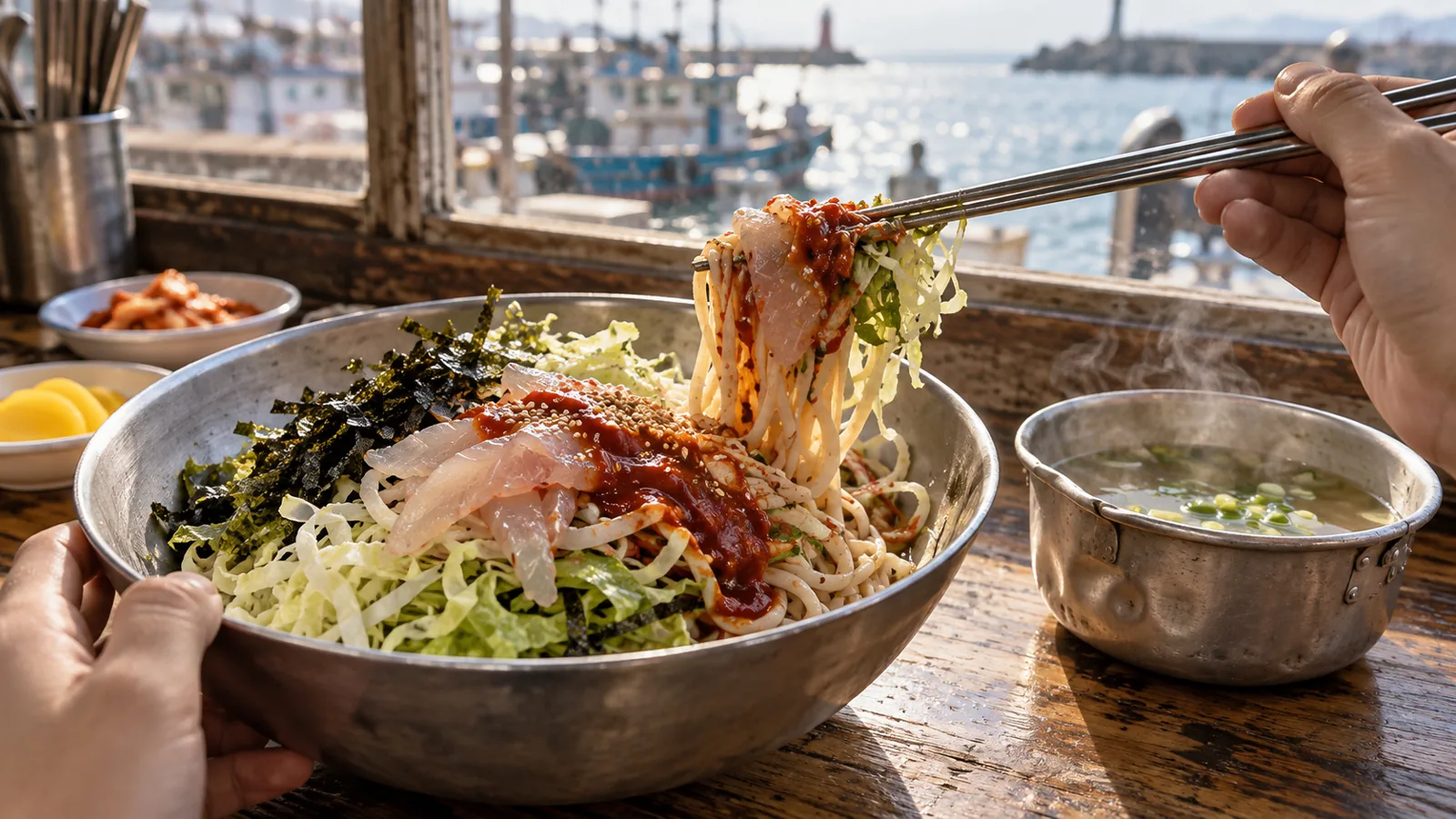
Hoe-guksu in one line
Noodles, fresh greens and raw skate mixed in bright red, sweet-sour chili sauce — somewhere between spicy mixed noodles (bibim-guksu) and a cold raw-fish soup (mul-hoe). The signature of Busan hoe-guksu is the warm anchovy broth served on the side.
| Korean | 회국수 (hoe-guksu) · 회 (hoe) = raw fish · 국수 (guksu) = noodles · 가오리 (gaori) = skate/ray · 초고추장 (cho-gochujang) = vinegar chili sauce |
|---|---|
| Made of | Thick wheat noodles (jungmyeon), lettuce, cabbage, seaweed, raw skate, chili paste, vinegar, sugar, sesame. Contains wheat; not vegetarian. |
| Spice | Medium — spicy at first, then sour and sweet. Extra sauce is usually on the table. |
| Served | Cold noodles, with a pot or cup of hot anchovy broth. Eaten all year. |
Where it came from — from the Yeongdo docks to Nampo-dong
There is no written record of the very first bowl, but this is the story Busan tells:
- A dockside noodle stall: Just after the Korean War, a grandmother selling noodles on the Yeongdo waterfront is said to have topped them with raw skate from the start.
- To Nampo-dong in the 1960s: When the shop moved to Nampo-dong in the 1960s, hoe-guksu became a downtown food, and from the mid-1980s many visitors came to try it.
- An everyday treat: Until the 1990s, children came with their parents and young couples with thin wallets came on cheap dates.
One old Nampo-dong shop is often called the "original", but there is no firm evidence that hoe-guksu itself started at a single shop — places in Seomyeon and elsewhere have their own decades-long histories.
In Busan, noodles were long a main meal rather than a side dish. Hoe-guksu put cheap fish from the sea and filling noodles into one bowl — port-city working people's food.
What it tastes like — noodles, skate, sauce and broth
Noodles
Most shops use thick jungmyeon noodles instead of thin somyeon, cooked so they keep a firm, chewy bite. Some insist on noodles dried in the sea wind.
The fish
Busan uses raw skate (gaori-hoe) for its crunchy, chewy texture, which goes well with the noodles. This is fresh skate — not the strong-smelling fermented skate (hongeo) of Korea's southwest. The vegetables — lettuce, cabbage, seaweed — go on raw.
Sauce and broth
The heart of the dish is the cho-gochujang (spicy, then sour and sweet, in the Gyeongsang style) and the anchovy broth. Each shop keeps its sauce recipe a secret. The broth comes in a kettle or a small aluminum pot, sometimes with chopped green onion or fish cake floating in it.
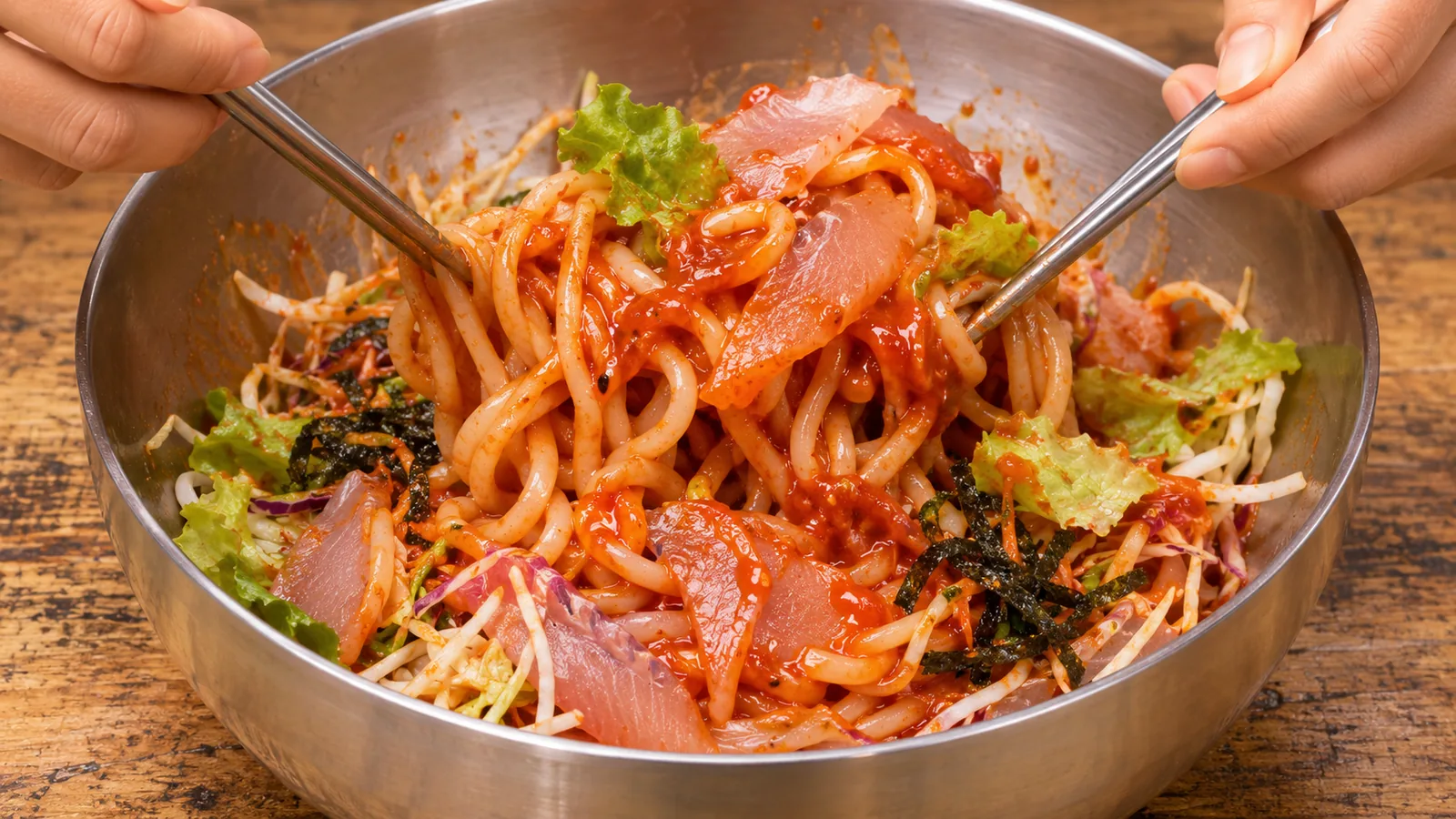
Hoe-guksu vs bibim-guksu — and other coasts' versions
| Busan hoe-guksu | Ordinary bibim-guksu | |
|---|---|---|
| Noodles | Thick jungmyeon | Usually thin somyeon |
| Topping | Raw skate + raw greens | Vegetables, egg, sometimes kimchi |
| Taste | Sourer, chewy-crunchy | Sweet-spicy |
| On the side | Hot anchovy broth | Sometimes broth |
Other coastal towns make raw-fish noodles too, with different fish: flounder or butterfish around Gampo port in Gyeongju, and pollock in Sokcho and Goseong on the east coast. Busan's skate version is its own port-city style.
How to eat it
- Mix well: The noodles, fish and sauce arrive in a bowl — mix until every strand is red and the greens are spread through.
- Taste, then add sauce: Extra chili sauce is usually on the table; add it after the first bite.
- One bite of everything: Pick up noodles, skate and greens together for chewy and crunchy at once.
- Sip the broth between bites: When the heat builds, drink the warm anchovy broth. Regulars refill it several times.
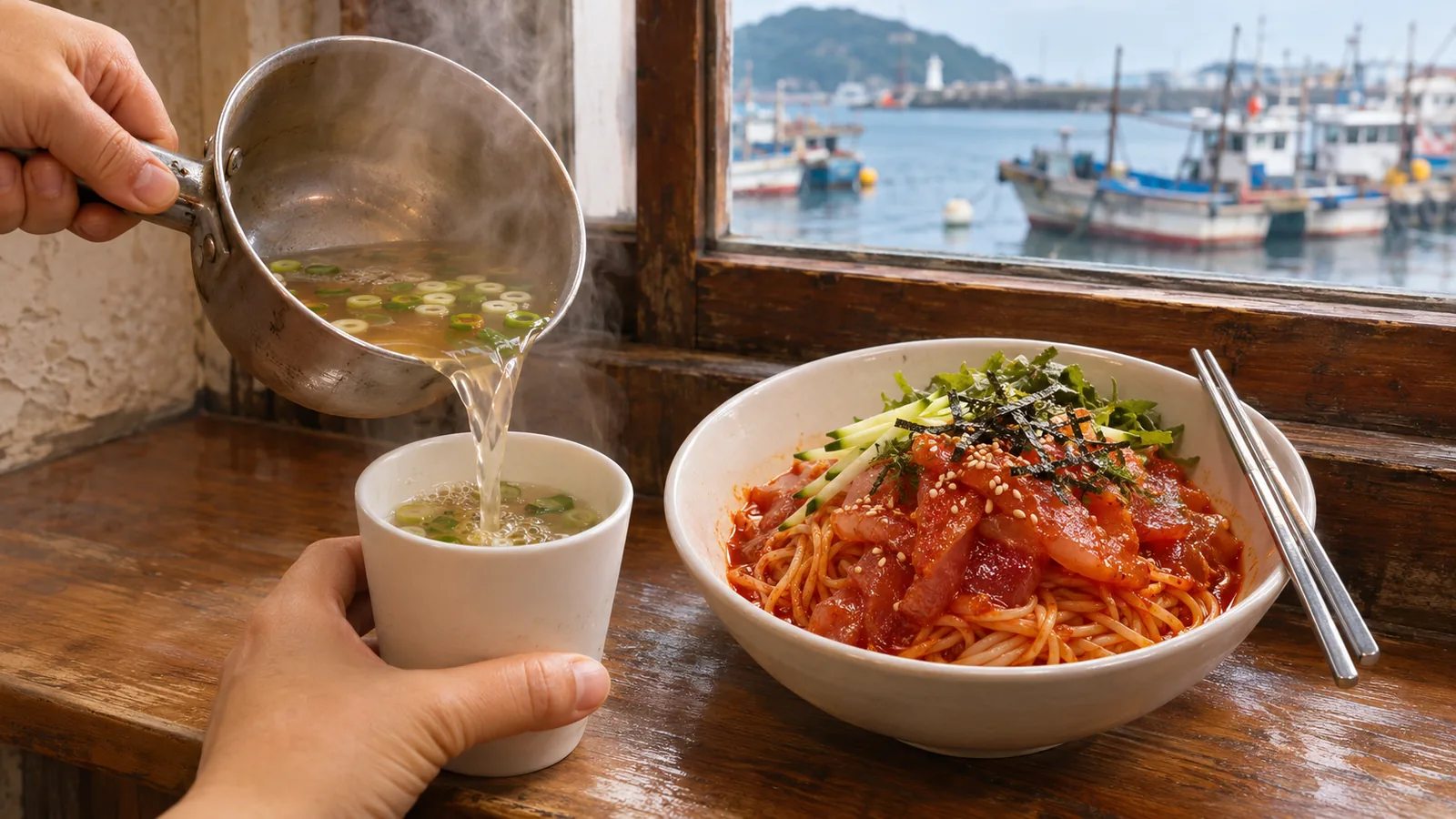
Useful Korean: "회국수 하나 주세요" (hoe-guksu hana juseyo) — "One raw-fish noodles, please." "덜 맵게 해 주세요" (deol maepge hae juseyo) — "Less spicy, please." If you can't eat raw fish, ask before ordering — not every shop has a version without it.
Where to eat it in Busan
- Nampo-dong: Where the old hoe-guksu shops are, a short walk from Jagalchi Market and Gukje Market — pair it with seed hotteok and bibim-dangmyeon.
- Seomyeon: Decades-old noodle shops in the downtown shopping area, near pork soup alley.
Shops are small and fill quickly at lunch. Prices and hours vary — check before you go. We list areas, not restaurant rankings. If you are pregnant or have a weak immune system, you may want to avoid raw fish.
FAQ
What is hoe-guksu?
Hoe-guksu is a Busan noodle dish: thick wheat noodles with raw vegetables and slices of raw skate, mixed with sweet-sour chili sauce and served with hot anchovy broth on the side.
What fish is in Busan hoe-guksu?
Usually raw skate (gaori), chosen for its chewy, crunchy texture. Other coastal towns use flounder, butterfish or pollock instead.
Is it the same as fermented skate (hongeo)?
No. Busan hoe-guksu uses fresh raw skate, not the strongly fermented skate famous in Korea's southwest, so it has no ammonia smell.
What is the difference between hoe-guksu and bibim-guksu?
Hoe-guksu uses thicker noodles, adds raw fish and raw greens, tastes more sour, and comes with hot anchovy broth. Bibim-guksu is a sweet-spicy mixed noodle without raw fish.
Where can I eat hoe-guksu in Busan?
Old shops in Nampo-dong (near Jagalchi and Gukje Market) and in Seomyeon have served it for decades.
Sources
- 부산의 맛 <15> 회국수 — Kookje Shinmun, Apr 5, 2010
- [이춘호기자의 푸드로드] 종류·맛 천차만별 국수들 "부산서 국수는 부식 아니라 주식이지예" — Yeongnam Ilbo, Aug 28, 2020
Recipes, prices and opening hours differ by shop. This article is a food explainer, not a restaurant ranking or advertisement, and not medical advice.
More Busan food
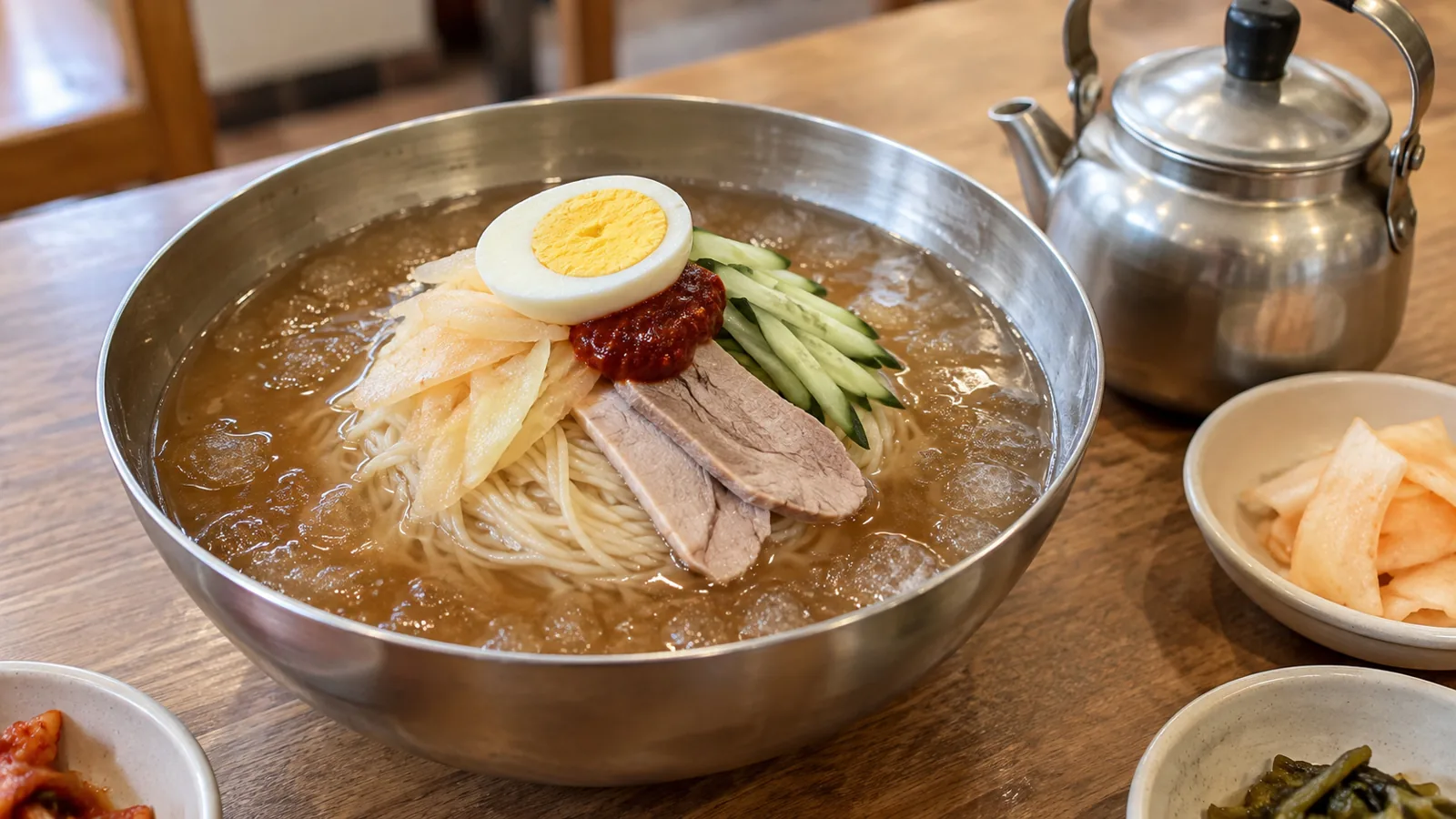
Milmyeon (Busan Wheat Noodles)
Born in the Korean War when refugees swapped buckwheat for aid flour — Busan's favourite summer noodle, eaten year-round
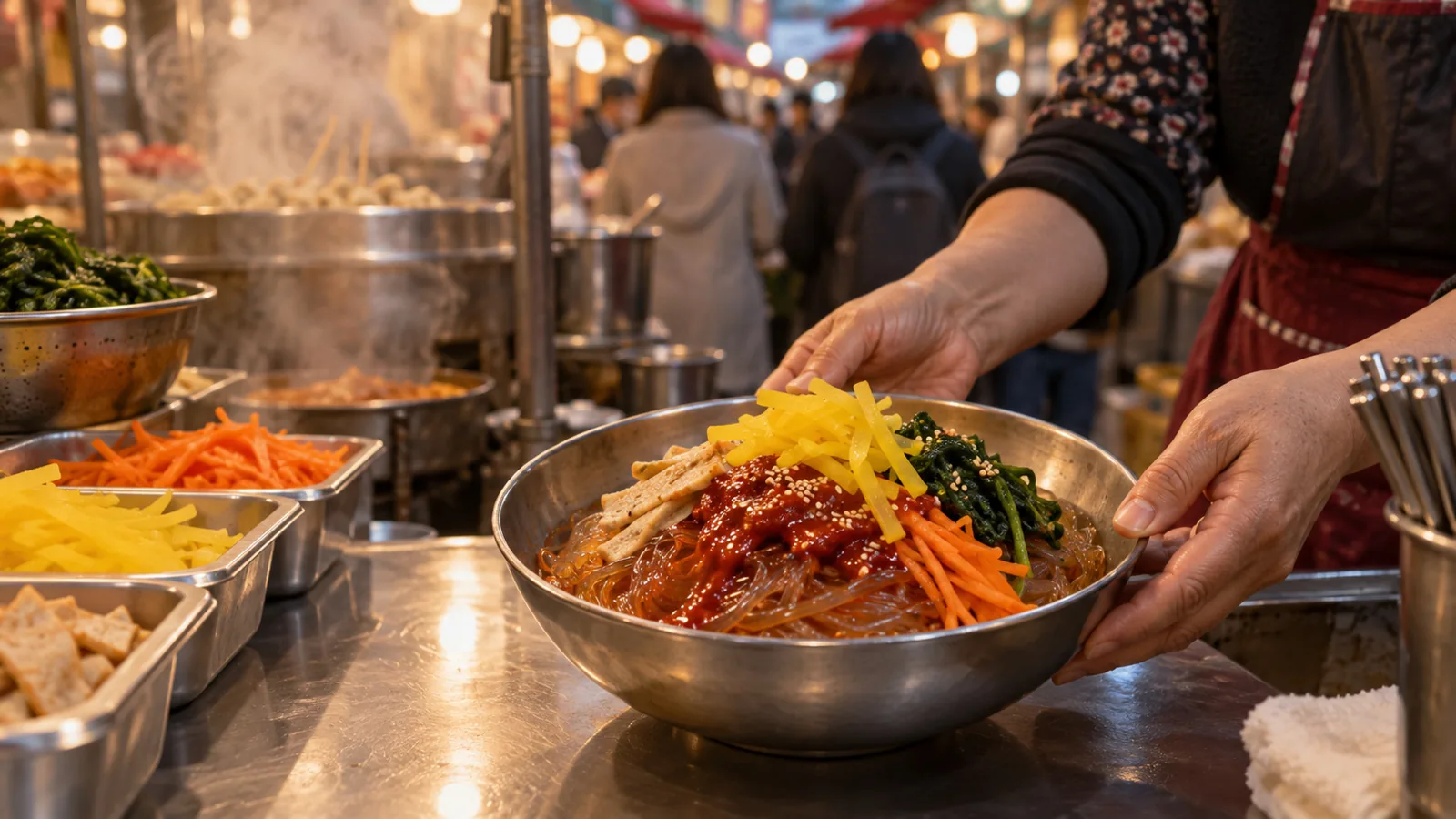
Bibim Dangmyeon (Spicy Glass Noodles)
Pre-boiled glass noodles, a sweet-spicy sauce and simple toppings — a market bowl that is ready the moment you sit down
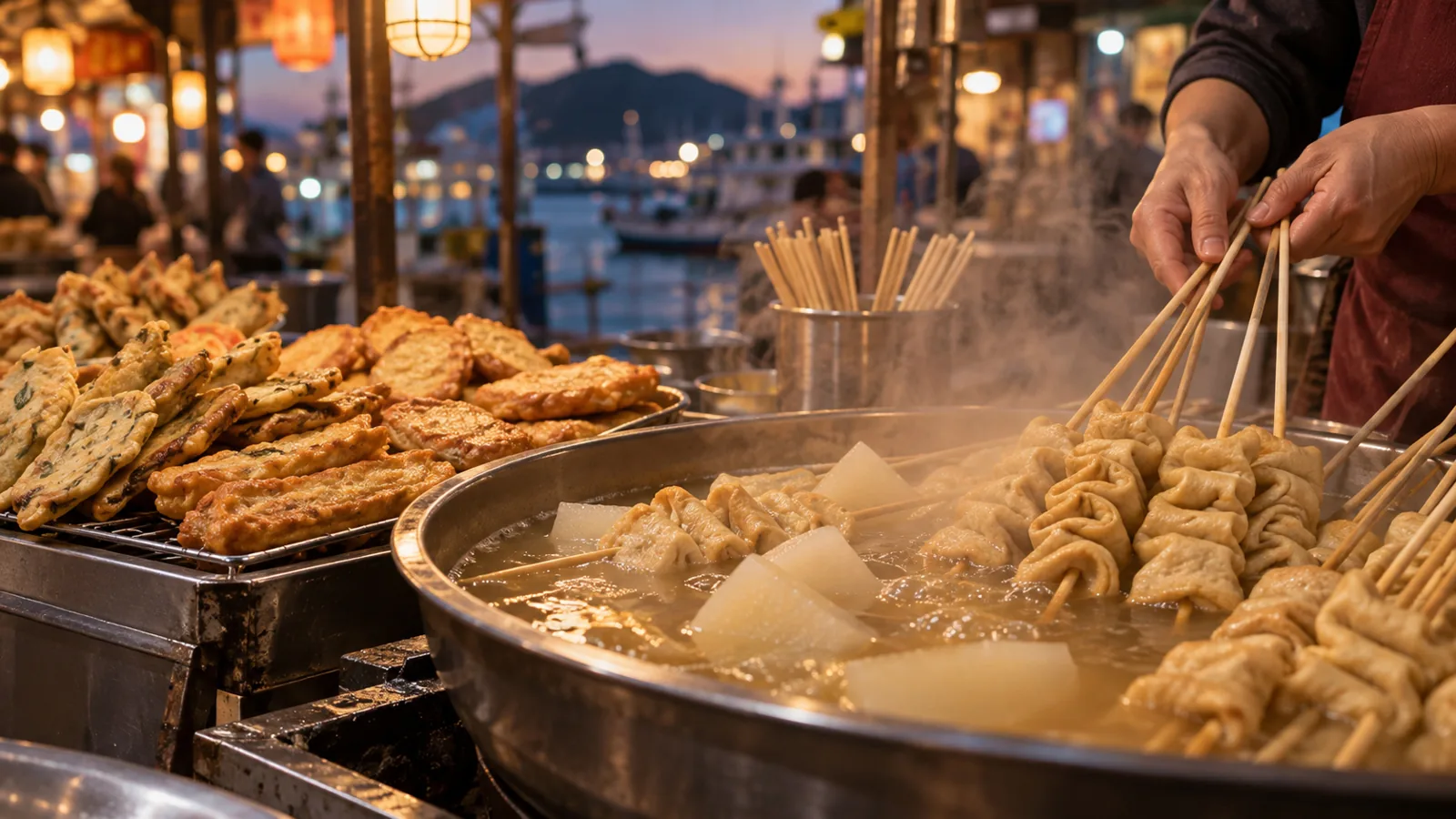
Busan Eomuk (Fish Cakes)
Ground fish, fried golden: a century-old Busan market food from Bupyeong Market to Yeongdo and Choryang
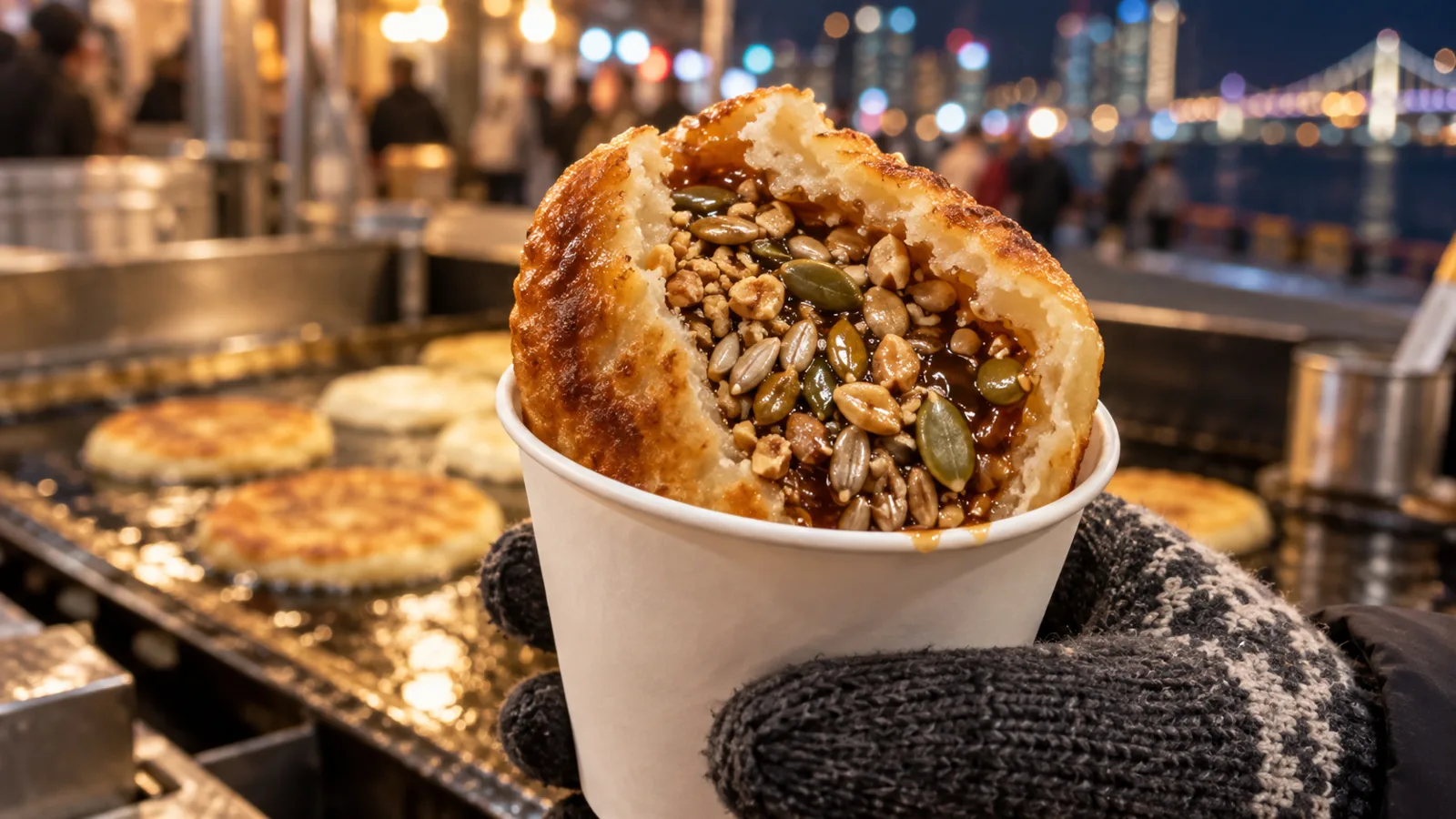
Ssiat Hotteok (Seed Hotteok)
A fried sweet pancake split open and stuffed with sunflower seeds, pumpkin seeds and peanuts — Nampo-dong's famous street snack
← All Busan food · What to eat in Busan · Busan festivals & events